AI Paper Summary

Auto Added by WPeMatico

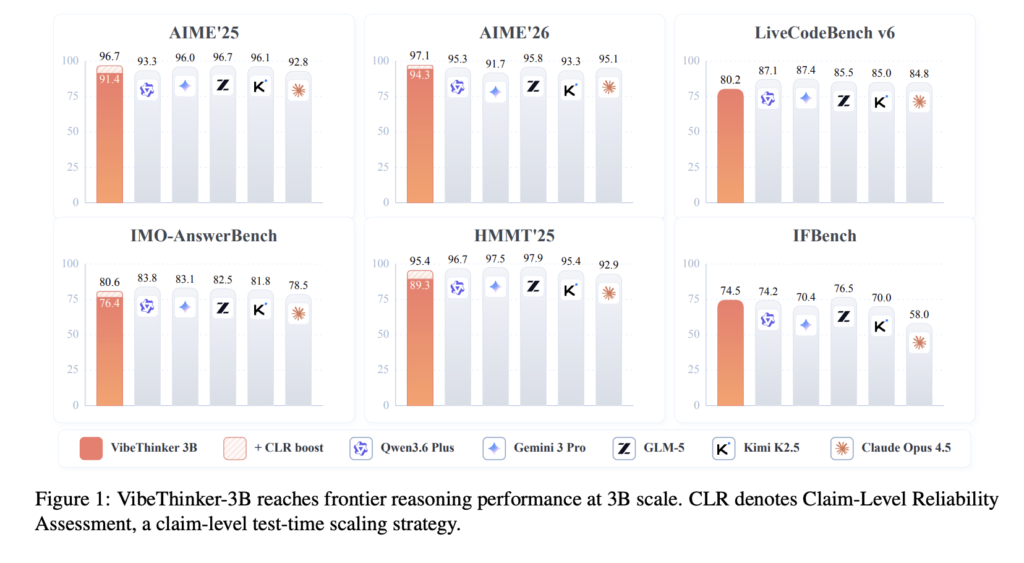
VibeThinker-3B: A 3B Dense Reasoning Model Built on Qwen2.5-Coder-3B With the Spectrum-to-Signal Post-Training Pipeline

While recent breakthroughs in AI reasoning have largely been driven by massive scale, pouring in billions of parameters to cross complex cognitive thresholds—VibeThinker-3B is charting a completely different path. Created by researchers from Sina Weibo Inc (China), this 3-billion-parameter model proves that efficiency can punch far above its weight class. Released under an open-source MIT […]
VibeThinker-3B: A 3B Dense Reasoning Model Built on Qwen2.5-Coder-3B With the Spectrum-to-Signal Post-Training Pipeline Read More »

OpenAI Releases LifeSciBench, a 750-Task Benchmark Grading AI Models on Real Life-Science Research With Expert-Written Rubric

Most biology benchmarks ask narrow, fact-based questions with clean answers. Scientists weigh imperfect evidence and make decisions. OpenAI released LifeSciBench and it targets that gap directly. Even the strongest model passes roughly one task in three. The benchmark is far from saturated. What is LifeSciBench LifeSciBench contains 750 expert-authored tasks. They span seven workflows and

OpenAI Releases LifeSciBench, a 750-Task Benchmark Grading AI Models on Real Life-Science Research With Expert-Written Rubric Read More »

MiniMax Sparse Attention (MSA): a Two-Branch Block-Sparse Attention Trained on a 109B-Parameter MoE With a 3T-Token Budget

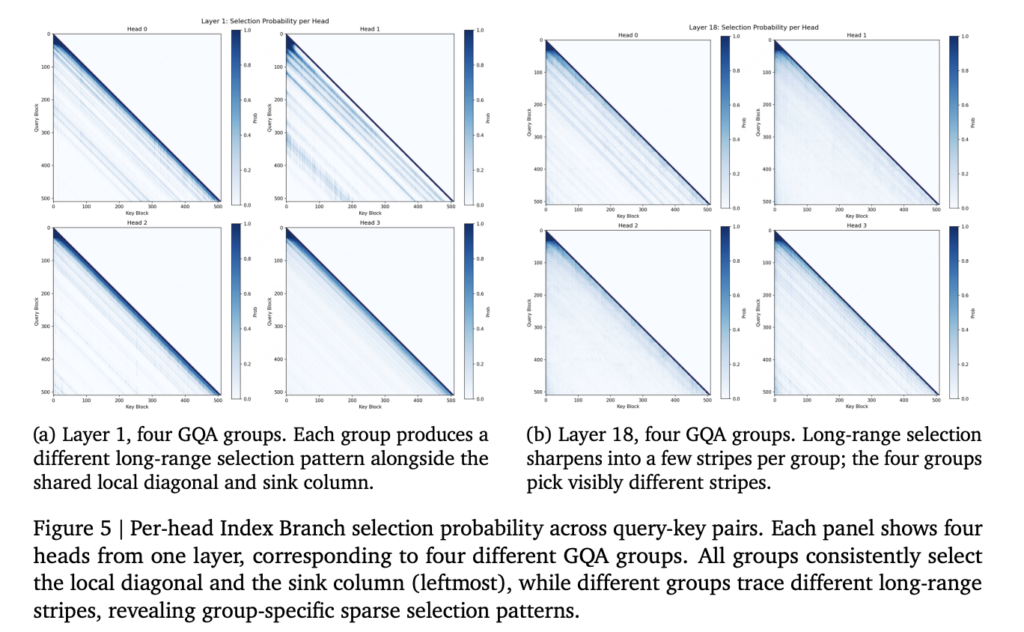
MiniMax released MSA (MiniMax Sparse Attention), a sparse attention method built directly on Grouped Query Attention (GQA). It targets one bottleneck: the quadratic cost of softmax attention at long context. The MiniMax research team tested it inside a 109B-parameter Mixture-of-Experts model trained with native multimodal data. They also open-sourced an inference kernel and shipped a

MiniMax Sparse Attention (MSA): a Two-Branch Block-Sparse Attention Trained on a 109B-Parameter MoE With a 3T-Token Budget Read More »

Meet Flash-KMeans: An IO-Aware, Exact K-Means That Runs Over 200× Faster Than FAISS on GPUs

k-means has been an offline tool for decades. You run it once to preprocess data, then move on. A team of researchers from UC Berkeley and UT Austin released Flash-KMeans, a new open-source library that targets a different setting. Modern AI pipelines now call k-means inside training and inference loops. At that frequency, latency per

Meet Flash-KMeans: An IO-Aware, Exact K-Means That Runs Over 200× Faster Than FAISS on GPUs Read More »

A New Study from Harvard and Perplexity Finds AI Agents Perform 26 Minutes of Autonomous Work per Session vs 33 Seconds for Search

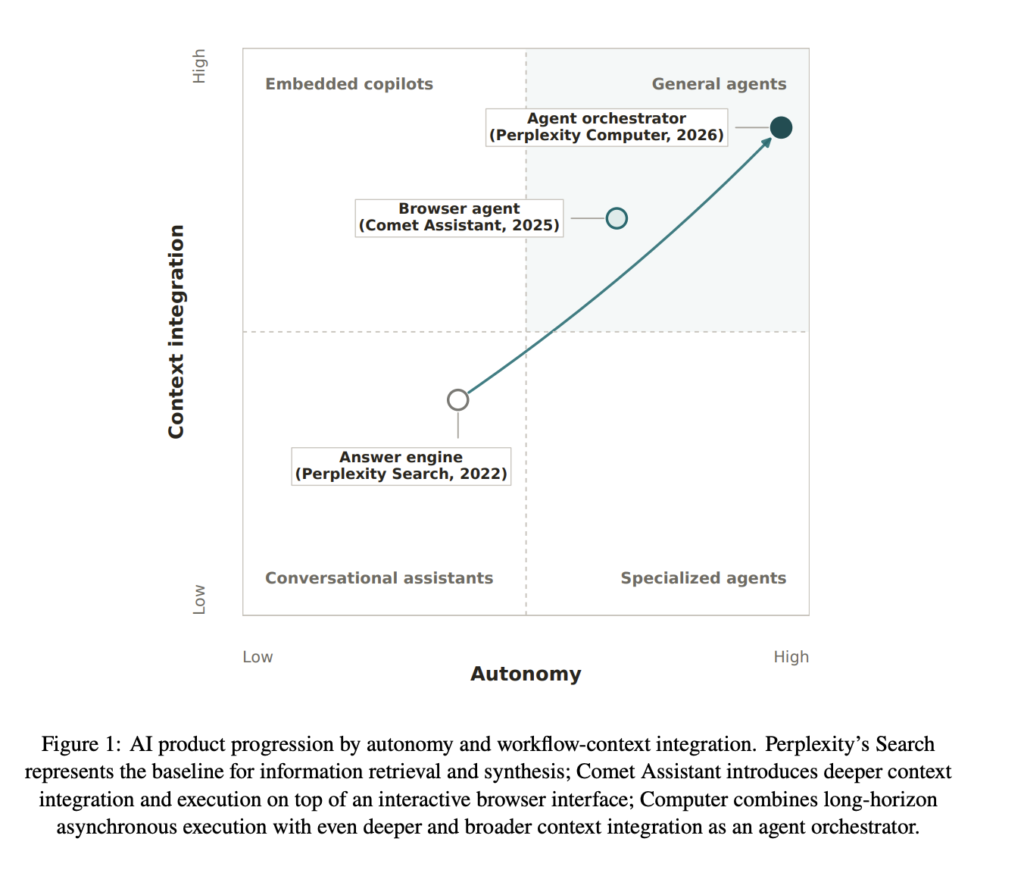
A new working research from Perplexity and Harvard offers field evidence on what AI agents do to knowledge work. It draws on production data from two Perplexity products: Search and Computer. The setup is a natural comparison. Search is a conversational answer engine. Computer is an agent that plans and executes tasks end to end.

A New Study from Harvard and Perplexity Finds AI Agents Perform 26 Minutes of Autonomous Work per Session vs 33 Seconds for Search Read More »

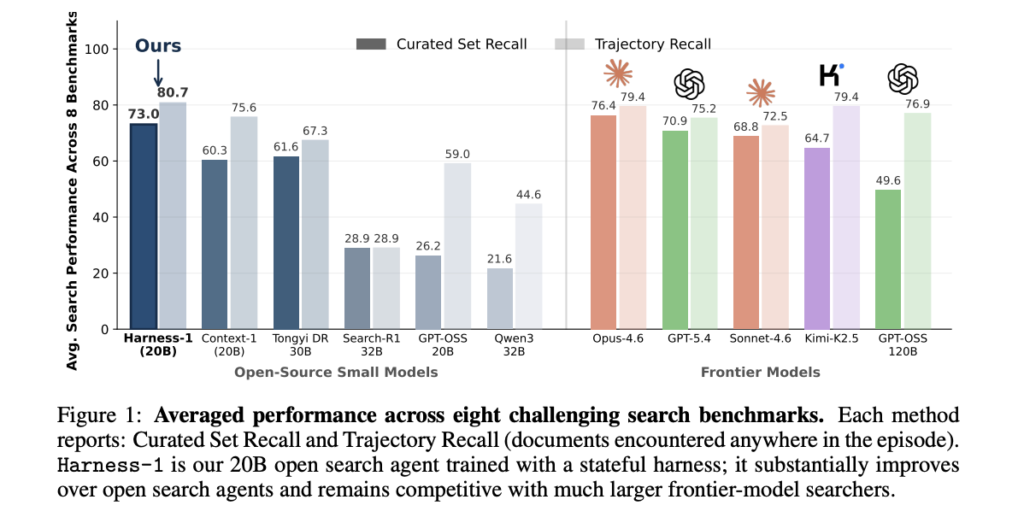
Meet Harness-1: A 20B Retrieval Subagent Trained With Reinforcement Learning Inside a Stateful Search Harness on gpt-oss-20b

Most search agents are trained as policies over a growing transcript. The model decides how to search. It must also remember what it saw, which evidence matters, and which claims it checked. A team of researchers from University of Illinois Urbana-Champaign, UC Berkeley, and Chroma argues this asks too much. Reinforcement learning ends up optimizing

Meet Harness-1: A 20B Retrieval Subagent Trained With Reinforcement Learning Inside a Stateful Search Harness on gpt-oss-20b Read More »

NVIDIA AI Releases Nemotron 3 Ultra: An Open 550B Mixture-of-Experts Hybrid Mamba-Transformer for Long-Running Agents

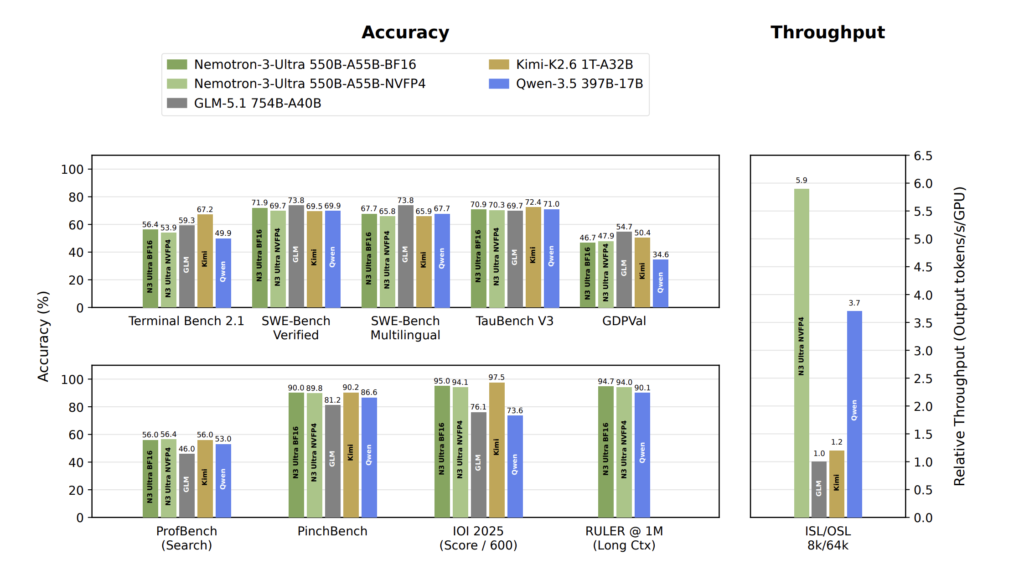
NVIDIA has released Nemotron 3 Ultra, the largest model in its Nemotron 3 family. It targets a specific problem: long-running agents that plan, call tools, and reason across many turns. As agents run longer, token counts grow and inference cost climbs. Nemotron 3 Ultra is designed to keep accuracy high while making that inference faster

NVIDIA AI Releases Nemotron 3 Ultra: An Open 550B Mixture-of-Experts Hybrid Mamba-Transformer for Long-Running Agents Read More »

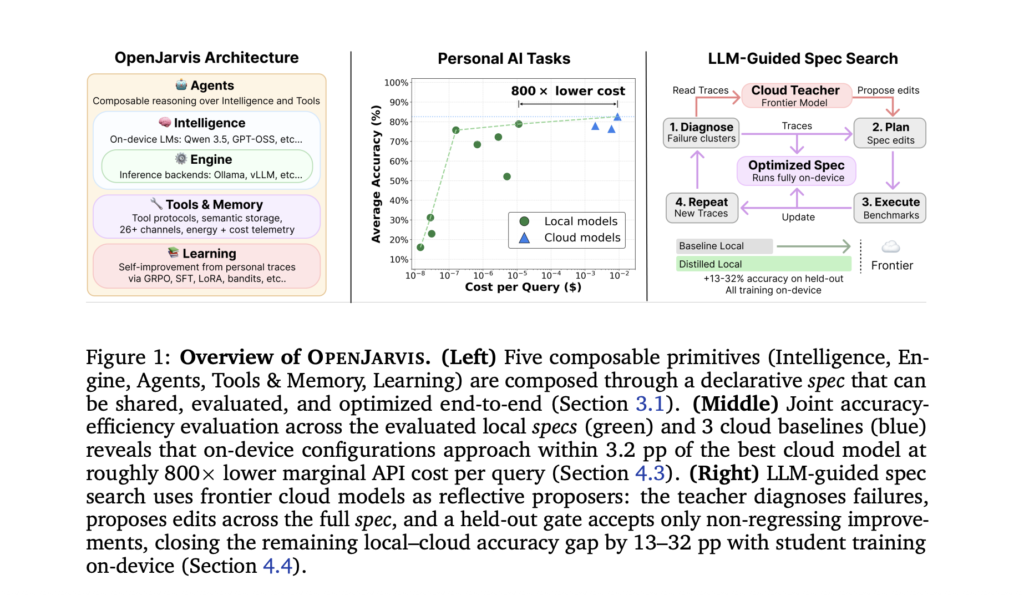
Meet OpenJarvis: A Local-First Framework for On-Device Personal AI Agents with Tools, Memory, and Learning

Researchers at Stanford University and Lambda Labs, have published the research paper for OpenJarvis, an open-source framework that runs inference, agents, memory, and learning entirely on-device. The open-weight models configured through OpenJarvis land within 3.2 percentage points of the best cloud model on average, at roughly 800× lower marginal API cost per query and roughly

Meet OpenJarvis: A Local-First Framework for On-Device Personal AI Agents with Tools, Memory, and Learning Read More »

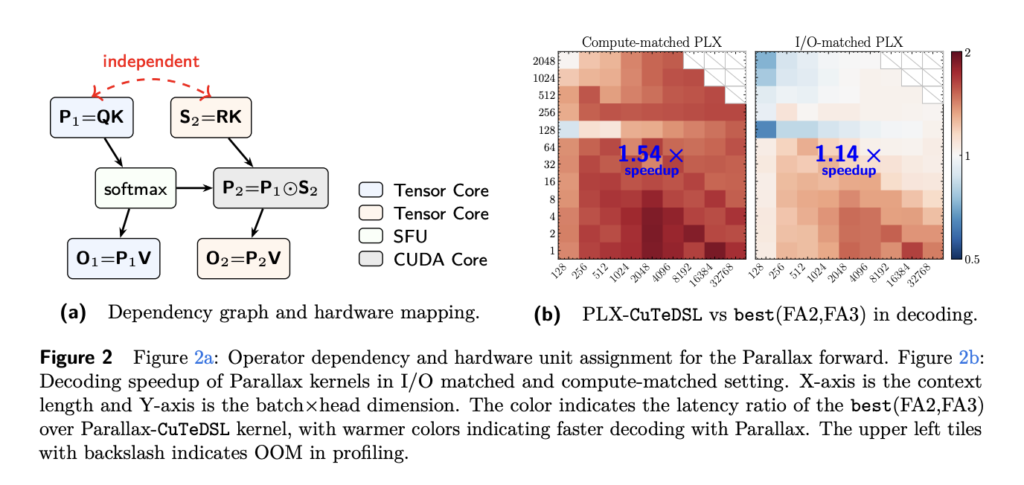
Parallax: A Parameterized Local Linear Attention That Keeps Softmax and Adds a Learned Covariance Correction Branch

The Transformer’s attention mechanism has barely changed since 2017. Most efficiency work has tried to replace softmax attention outright. A new paper takes a different route. It keeps softmax attention and bolts on a correction branch. A team of researchers from Northwestern University, Tilde Research, and University of Washington introduce a parameterized Local Linear Attention

Parallax: A Parameterized Local Linear Attention That Keeps Softmax and Adds a Learned Covariance Correction Branch Read More »

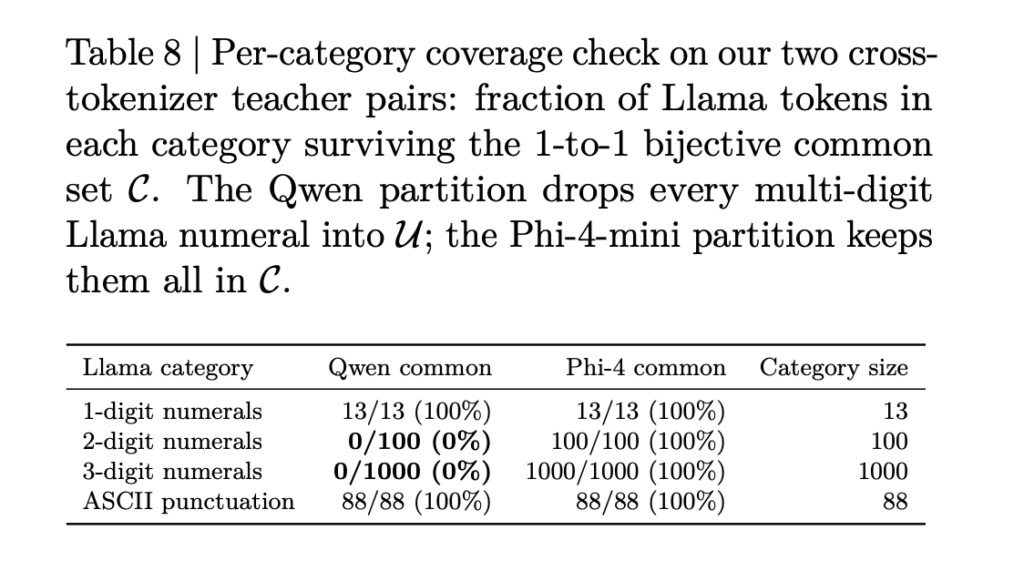
NVIDIA Introduces X-Token: Projection-Guided Cross-Tokenizer KD That Outperforms GOLD by +3.82 Average Points on Llama-3.2-1B

Knowledge distillation (KD) transfers “dark knowledge” from a large teacher model to a smaller student. The student learns from the teacher’s full output probability distribution over tokens, not just correct answers. This is done via per-position Kullback–Leibler (KL) divergence over next-token probability distributions. This formulation requires a shared tokenizer. A practitioner committed to Llama-3.2-1B cannot

NVIDIA Introduces X-Token: Projection-Guided Cross-Tokenizer KD That Outperforms GOLD by +3.82 Average Points on Llama-3.2-1B Read More »