Shaip Blogs

Auto Added by WPeMatico

Robot Training Data Strategy

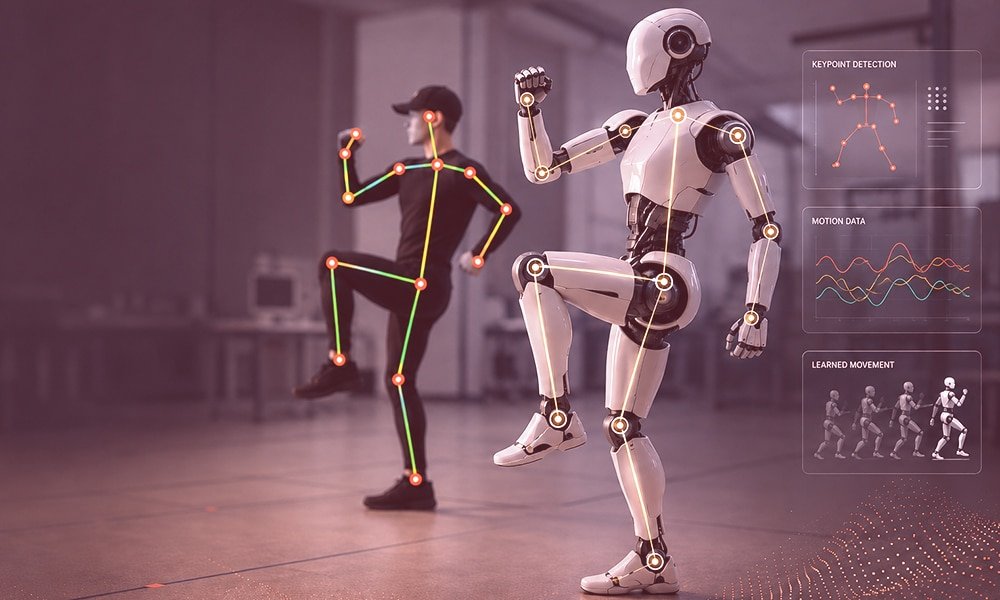
Robot Training Data Strategy: Teleoperation vs Simulation vs Human Video for Embodied AI

Building a robot policy that works in the real world isn’t a computer problem anymore — it’s a data problem. Embodied AI teams have three options for fueling their models: teleoperation, simulation, and human video. Each comes with a different cost curve, a different fidelity profile, and a different ceiling on what your robot can […]

Robot Training Data Strategy: Teleoperation vs Simulation vs Human Video for Embodied AI Read More »

Physical AI Dataset Stack

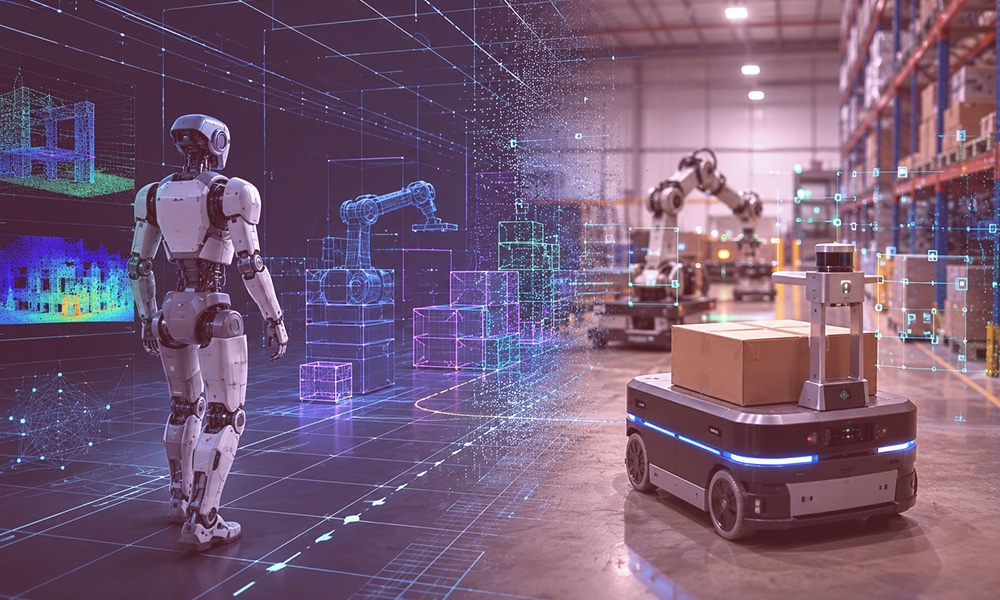
The Physical AI Dataset Stack: Human Demonstrations, Robot Actions, VLA Data, and Long-Horizon Tasks

Most physical AI teams know they need data. Few know they need a stack of it. The capabilities a deployed humanoid, AV, or warehouse robot needs — perception, action, instruction following, multi-step workflow execution — each map to a different layer of training data, with different collection methods, annotation depth, and quality controls. The physical

The Physical AI Dataset Stack: Human Demonstrations, Robot Actions, VLA Data, and Long-Horizon Tasks Read More »

Physical AI

Physical AI is Redefining Autonomous Intelligence

For the past decade, artificial intelligence mostly lived on a screen. It answered questions, finished sentences, sorted images, and recommended the next thing to watch. That era is ending. The next wave of AI has hands, wheels, rotors, and sensors — and it’s being asked to operate reliably in warehouses, hospitals, farms, and city streets.

Physical AI is Redefining Autonomous Intelligence Read More »

VLM vs VLA

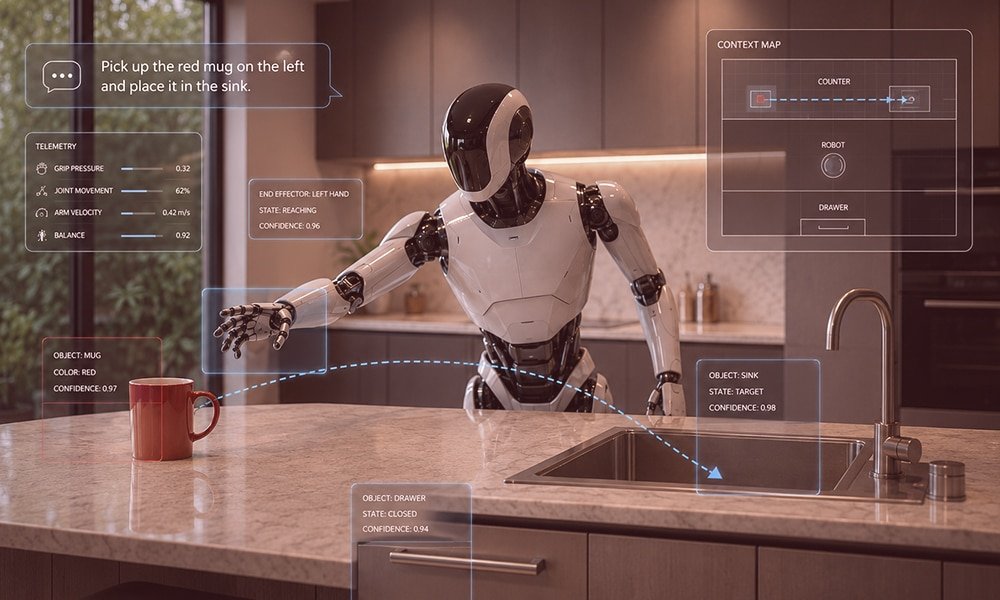
VLM vs VLA: Why Vision-Language Models Are Not Enough for Robotics

Two model classes get conflated in robotics conversations: vision-language models and vision-language-action models. They sound similar, both ingest images and text, and both come from the same lineage of multimodal pretraining. But for anyone trying to deploy an AI system that moves — not just describes — the distinction is decisive. VLM vs VLA is

VLM vs VLA: Why Vision-Language Models Are Not Enough for Robotics Read More »

VLA models

VLA Models: What Vision-Language-Action Models Need from Training Data

The shift from chatbots to robots that follow natural-language commands runs through a single class of models. VLA models — vision-language-action models — combine visual perception, language understanding, and action generation in one neural network. Their power is real, but it depends almost entirely on the training data they ingest. This guide explains what VLA

VLA Models: What Vision-Language-Action Models Need from Training Data Read More »

Tactile Sensing Data

Tactile Sensing Data: The Training Signal Behind Robots That Can Actually Feel

Robots can see. Internet-scale image datasets and a decade of refined models made that possible. But ask a robot to actually pick up a half-crushed carton, thread a cable, or hand a tool to a surgeon, and the wheels come off. Not because the cameras failed. Because nothing in the robot’s training ever taught it

Tactile Sensing Data: The Training Signal Behind Robots That Can Actually Feel Read More »

Robotics Data Annotation

How to Annotate Robotics Data: Objects, Actions, Intent, Motion, and Failure Modes

A robot that picks the wrong box, freezes in front of a person, or drops a fragile part rarely fails because of bad code. It fails because something it was taught to recognize wasn’t labeled correctly — or wasn’t labeled at all. Robotics data annotation is what stands between raw sensor streams and a robot

How to Annotate Robotics Data: Objects, Actions, Intent, Motion, and Failure Modes Read More »

Humanoid Robot Training Data

Humanoid Robot Training Data: What Teams Need Before Deployment

Humanoid robots are crossing the gap from lab demos to real warehouses, kitchens, and factory floors — but most teams discover the hard part isn’t the model. It’s the data behind it. Foundation models can recognize a cup; deploying a humanoid that picks one up, hands it to an elderly person, and adapts when the

Humanoid Robot Training Data: What Teams Need Before Deployment Read More »

Physical AI Training Data

Physical AI Training Data: The Missing Layer Between Vision and Action

A familiar pattern has emerged in robotics and autonomous systems: a flagship demo runs beautifully on stage, the same system stumbles in a live warehouse two weeks later, and the post-mortem blames “reality” for being messier than the test environment. Some voices in the field argue the missing layer is hardware — better grippers, force-torque

Physical AI Training Data: The Missing Layer Between Vision and Action Read More »

Egocentric Dataset

What Is an Egocentric Dataset? A Guide for Robotics & Embodied AI

An egocentric dataset is a structured collection of first-person video and sensor recordings — captured from a head, chest, or wrist-mounted camera — used to train robotics and embodied AI systems on how people see, move, and act. It’s the closest match to what a robot’s onboard camera will see during operation, which is why

What Is an Egocentric Dataset? A Guide for Robotics & Embodied AI Read More »