
Summary

Auto Added by WPeMatico

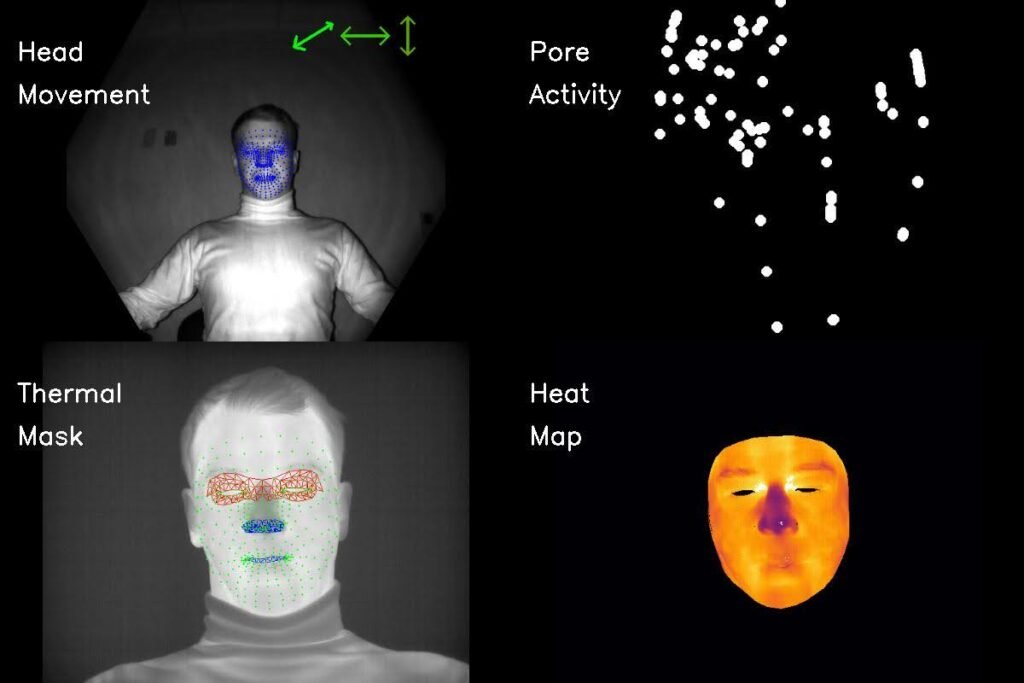
Altec Research has built a prototype that tracks head movement, facial skin temperature and pore activity.

The Pentagon wants $30 million to build an AI-powered lie detector

The US government wants to spend $30.3 million over the next five years on an improved form of lie detector, according to a Department of Defense budget request. The program, called “Polygraph+” or “Polygraph Next”, will focus on scoring algorithms that use artificial intelligence and machine learning and on a technique called “standoff sensing”, which […]

The Pentagon wants $30 million to build an AI-powered lie detector Read More »

Young organs may not be a fountain of youth for recipients

Around this time last year I was attending an aging conference in Manchester, listening to a talk about fly aging, when my phone started pinging. News outlets were reporting that a hot mic had caught Russia’s and China’s leaders discussing the possibility of living forever. “With the developments of biotechnology, human organs can be continuously

Young organs may not be a fountain of youth for recipients Read More »

AI is dominating the conversation at Climate Week

This week, world leaders descended on Manhattan for the UN General Assembly. It’s also New York Climate Week—investors, policymakers, advocates, and journalists are colliding at panels, talks, and fancy dinners. With so many climate voices in one place, the discourse can feel a little louder than usual. This year, the unavoidable topic is artificial intelligence.

AI is dominating the conversation at Climate Week Read More »

Could AI really kill us all? Your questions, answered.

On Wednesday, MIT Technology Review hosted a live Roundtables event for subscribers that asked the question everyone’s asking right now: Could AI really kill us all? But attendees had so many more questions than we had time to answer in the 30 minute session. So we asked our senior AI editor Will Douglas Heaven and

Could AI really kill us all? Your questions, answered. Read More »

The specter of AI-enabled bioweapons is a wake-up call for biotech

In recent weeks, leaders of some of the biggest AI companies have warned that the very tech they are developing is dangerous. Last weekend, Anthropic CEO Dario Amodei argued that AI carries serious risk and that progress should be slowed. OpenAI CEO Sam Altman responded on X: “I agree with Dario that we need to pace the

The specter of AI-enabled bioweapons is a wake-up call for biotech Read More »

Meet the innovators under 35 shaping climate tech

Each year, the editorial team at MIT Technology Review puts together a list of 35 innovators under 35—a group of researchers, inventors, and other young minds worth following. The team worked on the newest edition of the list for months, and the final slate includes nine individuals from all over the world in the climate

Meet the innovators under 35 shaping climate tech Read More »

Meet a mouse whose brain cortex is made up of human cells

Multiple cameras tracked a mouse as it wandered around a small arena. A computer charted its position and speed, leaving Pong-like traces on a monitor.  The reason to watch this rodent so carefully? Nearly half its brain volume had been replaced with human cells. The effort to mix the brain tissues of distant species is

Meet a mouse whose brain cortex is made up of human cells Read More »

AI models need more data about biology, and OpenAI is paying to create it

Last year, the clinical trial policy analyst Ruxandra Teslo posted an idea for super-charging medical AI systems: use data from failed biotech companies. By bidding at their bankruptcy proceedings, she proposed, it might be possible to obtain detailed regulatory filings, manufacturing strategies, and safety data—information usually kept hidden as valuable trade secrets. She called these

AI models need more data about biology, and OpenAI is paying to create it Read More »

Donated livers can be made biologically younger

Once an organ is removed from a donor’s body, the clock starts ticking. Surgeons usually flush the organ with a preservative solution, bag it, and put it on ice—where it immediately starts to degrade. The team has a matter of hours to get it into a recipient’s body. There’s another option—one that has been growing

Donated livers can be made biologically younger Read More »