
AI Career

Auto Added by WPeMatico

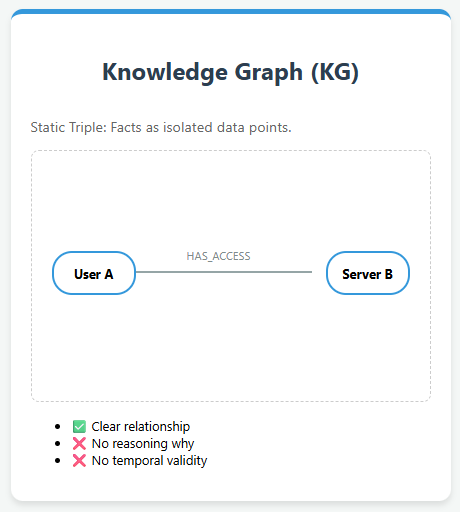
What are Context Graphs?

Knowledge Graphs and their limitations With the rapid growth of AI applications, Knowledge Graphs (KGs) have emerged as a foundational structure for representing knowledge in a machine-readable form. They organize information as triples—a head entity, a relation, and a tail entity—forming a graph-like structure where entities are nodes and relationships are edges. This representation allows […]
What are Context Graphs? Read More »

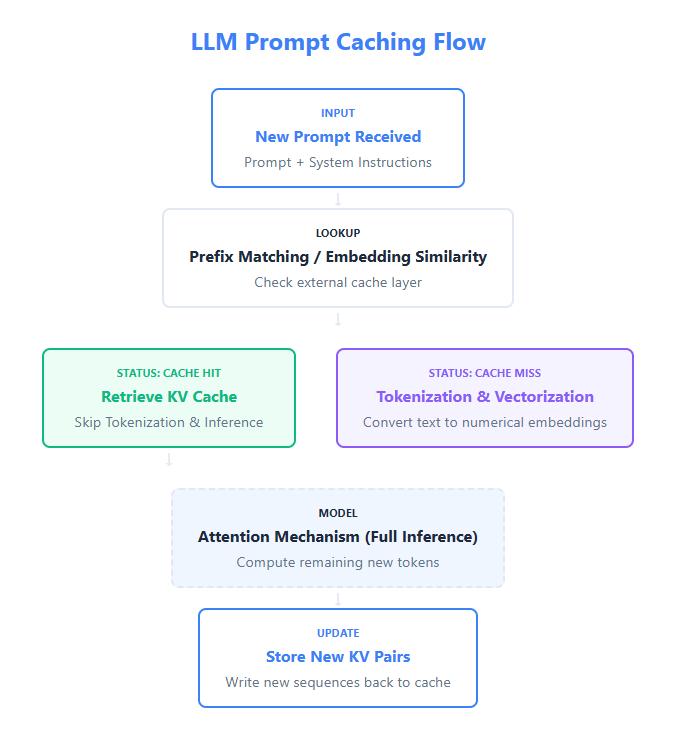
AI Interview Series #5: Prompt Caching

Question: Imagine your company’s LLM API costs suddenly doubled last month. A deeper analysis shows that while user inputs look different at a text level, many of them are semantically similar. As an engineer, how would you identify and reduce this redundancy without impacting response quality? What is Prompt Caching? Prompt caching is an optimization

AI Interview Series #5: Prompt Caching Read More »

AI Interview Series #4: Explain KV Caching

Question: You’re deploying an LLM in production. Generating the first few tokens is fast, but as the sequence grows, each additional token takes progressively longer to generate—even though the model architecture and hardware remain the same. If compute isn’t the primary bottleneck, what inefficiency is causing this slowdown, and how would you redesign the inference

AI Interview Series #4: Explain KV Caching Read More »

AI Interview Series #4: Transformers vs Mixture of Experts (MoE)

Question: MoE models contain far more parameters than Transformers, yet they can run faster at inference. How is that possible? Difference between Transformers & Mixture of Experts (MoE) Transformers and Mixture of Experts (MoE) models share the same backbone architecture—self-attention layers followed by feed-forward layers—but they differ fundamentally in how they use parameters and compute.

AI Interview Series #4: Transformers vs Mixture of Experts (MoE) Read More »