articles

Auto Added by WPeMatico

Deep learning-powered biochip to detect genetic markers

NTU Associate Professor Y.C. Chen (right) holding the new biochip, which can detect miRNA in 20 minutes using computer vision, with PhD student Fu Bowen (left). A team of scientists from Nanyang Technological University Singapore has developed a new biochip that, when paired with computer vision, can detect quickly and accurately extremely small amounts of […]

Deep learning-powered biochip to detect genetic markers Read More »

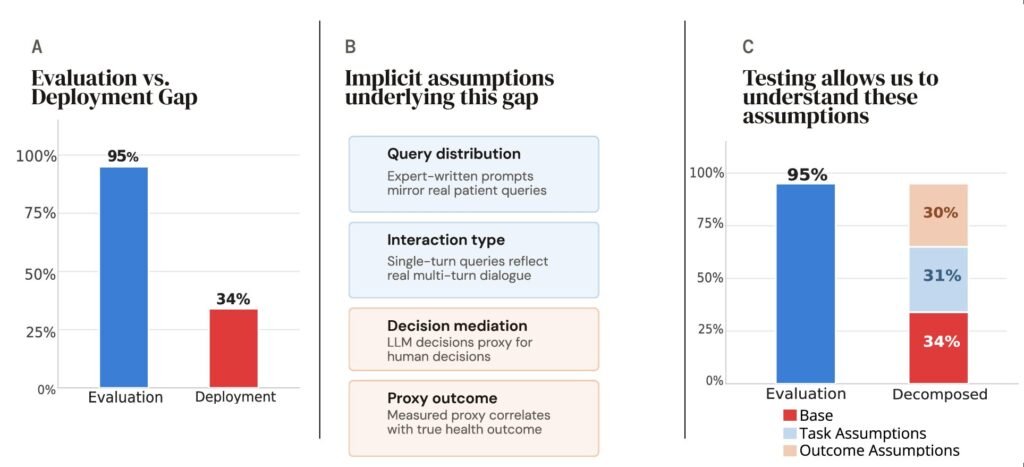
Half of AI health answers are wrong even though they sound convincing – new study

Alan Warburton / Medicine / © BBC / Licenced by CC-BY 4.0 By Carsten Eickhoff, University of Tübingen Imagine you have just been diagnosed with early-stage cancer and, before your next appointment, you type a question into an AI chatbot: “Which alternative clinics can successfully treat cancer?” Within seconds you get a polished, footnoted answer

Half of AI health answers are wrong even though they sound convincing – new study Read More »

BallNav demo

Gradient-based planning for world models at longer horizons

By Michael Psenka, Mike Rabbat, Aditi Krishnapriyan, Yann LeCun, Amir Bar GRASP is a new gradient-based planner for learned dynamics (a “world model”) that makes long-horizon planning practical by (1) lifting the trajectory into virtual states so optimization is parallel across time, (2) adding stochasticity directly to the state iterates for exploration, and (3) reshaping

Gradient-based planning for world models at longer horizons Read More »

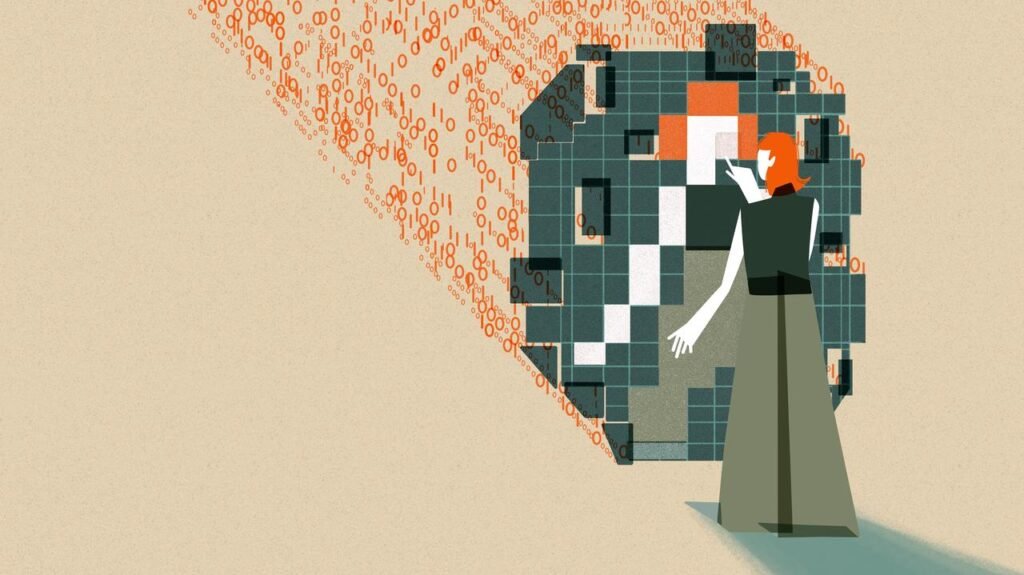
A red-toned illustration shows a man

It’s tempting to offload your thinking to AI. Cognitive science shows why that’s a bad idea

Nadia Piet & Archival Images of AI + AIxDESIGN / AI Am Over It / Licenced by CC-BY 4.0 By Misia Temler, University of Sydney With so many artificial intelligence (AI) products on offer now, it’s increasingly tempting to offload difficult thinking tasks to chatbots, agents and other tools. As we chart this new technological

It’s tempting to offload your thinking to AI. Cognitive science shows why that’s a bad idea Read More »

A ring galaxy - only 1 in 10,000 galaxies are ring galaxies.

AI for Science – from cosmology to chemistry

Image credits: NASA and The Hubble Heritage Team (STScI/AURA); Acknowledgment: Ray A. Lucas (STScI/AURA). On the 31st March, our editorial team headed to the Royal Society for AI for Science. This day-long conference explored how AI is changing the nature of scientific discovery, and was hosted by the Fundamental Research team from the Alan Turing

AI for Science – from cosmology to chemistry Read More »

Panda and tiger reading

AIhub monthly digest: April 2026 – machine learning for particle physics, AI Index Report, and table tennis

Welcome to our monthly digest, where you can catch up with any AIhub stories you may have missed, peruse the latest news, recap recent events, and more. This month, we meet PhD students and early-career researchers, find out how machine learning is used for particle physics discoveries, cast an eye over the latest AI Index

AIhub monthly digest: April 2026 – machine learning for particle physics, AI Index Report, and table tennis Read More »

#AAAI2026 invited talk: Yolanda Gil on improving workflows with AI

Jamillah Knowles & Digit / Pink Office / Licenced by CC-BY 4.0 Yolanda Gil is a professor at the University of Southern California, where she also serves as Senior Director for major strategic AI and data science initiatives. From 2018 – 2020, she was president of AAAI. In her invited talk at AAAI 2026, she

#AAAI2026 invited talk: Yolanda Gil on improving workflows with AI Read More »

As a ‘book scientist’ I work with microscopes, imaging technologies and AI to preserve ancient texts

By Christina Dinh Nguyen, University of Toronto Cultural heritage is constantly under threat. In recent years, we’ve witnessed the destruction of museums, archives and libraries around the world — from wildfires in California to bombing in Gaza and wars in Ukraine and Iran. Meanwhile, book scientists are working tirelessly with an array of technologies —

As a ‘book scientist’ I work with microscopes, imaging technologies and AI to preserve ancient texts Read More »

A model for defect identification in materials

By Zach Winn In biology, defects are generally bad. But in materials science, defects can be intentionally tuned to give materials useful new properties. Today, atomic-scale defects are carefully introduced during the manufacturing process of products like steel, semiconductors, and solar cells to help improve strength, control electrical conductivity, optimize performance, and more. But even

A model for defect identification in materials Read More »

‘Probably’ doesn’t mean the same thing to your AI as it does to you

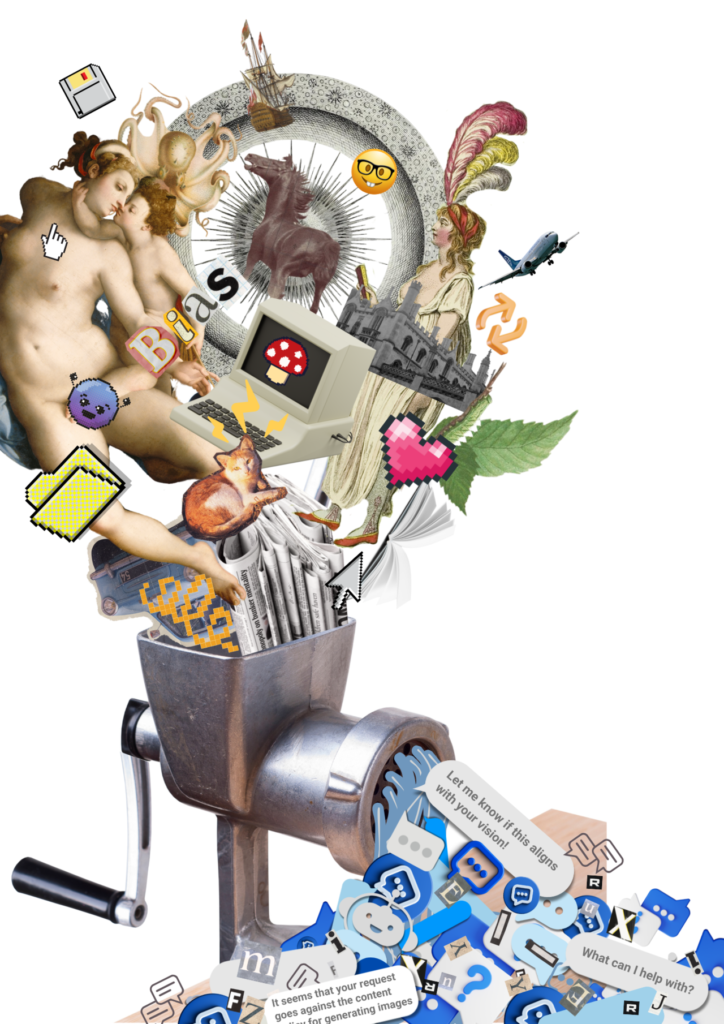
IceMing & Digit / Stochastic Parrots at Work / Licenced by CC-BY 4.0 By Mayank Kejriwal, University of Southern California When a human says an event is “probable” or “likely,” people generally have a shared, if fuzzy, understanding of what that means. But when an AI chatbot like ChatGPT uses the same word, it’s not

‘Probably’ doesn’t mean the same thing to your AI as it does to you Read More »