Large Language Model

Auto Added by WPeMatico

TII Releases Falcon Perception: A 0.6B-Parameter Early-Fusion Transformer for Open-Vocabulary Grounding and Segmentation from Natural Language Prompts

In the current landscape of computer vision, the standard operating procedure involves a modular ‘Lego-brick’ approach: a pre-trained vision encoder for feature extraction paired with a separate decoder for task prediction. While effective, this architectural separation complicates scaling and bottlenecks the interaction between language and vision. The Technology Innovation Institute (TII) research team is challenging […]

TII Releases Falcon Perception: A 0.6B-Parameter Early-Fusion Transformer for Open-Vocabulary Grounding and Segmentation from Natural Language Prompts Read More »

Step by Step Guide to Build an End-to-End Model Optimization Pipeline with NVIDIA Model Optimizer Using FastNAS Pruning and Fine-Tuning

In this tutorial, we build a complete end-to-end pipeline using NVIDIA Model Optimizer to train, prune, and fine-tune a deep learning model directly in Google Colab. We start by setting up the environment and preparing the CIFAR-10 dataset, then define a ResNet architecture and train it to establish a strong baseline. From there, we apply

Step by Step Guide to Build an End-to-End Model Optimization Pipeline with NVIDIA Model Optimizer Using FastNAS Pruning and Fine-Tuning Read More »

Arcee AI Releases Trinity Large Thinking: An Apache 2.0 Open Reasoning Model for Long-Horizon Agents and Tool Use

The landscape of open-source artificial intelligence has shifted from purely generative models toward systems capable of complex, multi-step reasoning. While proprietary ‘reasoning’ models have dominated the conversation, Arcee AI has released Trinity Large Thinking. This release is an open-weight reasoning model distributed under the Apache 2.0 license, positioning it as a transparent alternative for developers

Arcee AI Releases Trinity Large Thinking: An Apache 2.0 Open Reasoning Model for Long-Horizon Agents and Tool Use Read More »

Arcee AI Releases Trinity Large Thinking: An Apache 2.0 Open Reasoning Model for Long-Horizon Agents and Tool Use

The landscape of open-source artificial intelligence has shifted from purely generative models toward systems capable of complex, multi-step reasoning. While proprietary ‘reasoning’ models have dominated the conversation, Arcee AI has released Trinity Large Thinking. This release is an open-weight reasoning model distributed under the Apache 2.0 license, positioning it as a transparent alternative for developers

Arcee AI Releases Trinity Large Thinking: An Apache 2.0 Open Reasoning Model for Long-Horizon Agents and Tool Use Read More »

Defeating the ‘Token Tax’: How Google Gemma 4, NVIDIA, and OpenClaw are Revolutionizing Local Agentic AI: From RTX Desktops to DGX Spark

Run Google’s latest omni-capable open models faster on NVIDIA RTX AI PCs, from NVIDIA Jetson Orin Nano, GeForce RTX desktops to the new DGX Spark, to build personalized, always-on AI assistants like OpenClaw without paying a massive “token tax” for every action. The landscape of modern AI is shifting rapidly. We are moving away from

Defeating the ‘Token Tax’: How Google Gemma 4, NVIDIA, and OpenClaw are Revolutionizing Local Agentic AI: From RTX Desktops to DGX Spark Read More »

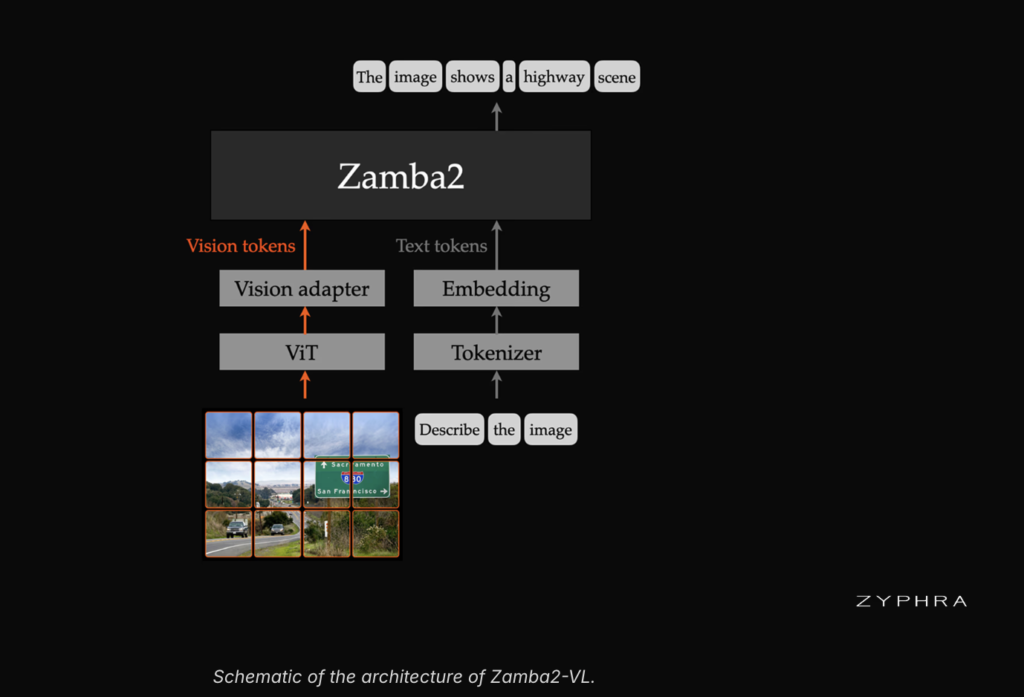
IBM Releases Granite 4.0 3B Vision: A New Vision Language Model for Enterprise Grade Document Data Extraction

IBM has announced the release of Granite 4.0 3B Vision, a vision-language model (VLM) engineered specifically for enterprise-grade document data extraction. Departing from the monolithic approach of larger multimodal models, the 4.0 Vision release is architected as a specialized adapter designed to bring high-fidelity visual reasoning to the Granite 4.0 Micro language backbone. This release

IBM Releases Granite 4.0 3B Vision: A New Vision Language Model for Enterprise Grade Document Data Extraction Read More »

Z.ai Launches GLM-5V-Turbo: A Native Multimodal Vision Coding Model Optimized for OpenClaw and High-Capacity Agentic Engineering Workflows Everywhere

In the field of vision-language models (VLMs), the ability to bridge the gap between visual perception and logical code execution has traditionally faced a performance trade-off. Many models excel at describing an image but struggle to translate that visual information into the rigorous syntax required for software engineering. Zhipu AI’s (Z.ai) GLM-5V-Turbo is a vision

Z.ai Launches GLM-5V-Turbo: A Native Multimodal Vision Coding Model Optimized for OpenClaw and High-Capacity Agentic Engineering Workflows Everywhere Read More »

Liquid AI Released LFM2.5-350M: A Compact 350M Parameter Model Trained on 28T Tokens with Scaled Reinforcement Learning

In the current landscape of generative AI, the ‘scaling laws’ have generally dictated that more parameters equal more intelligence. However, Liquid AI is challenging this convention with the release of LFM2.5-350M. This model is actually a technical case study in intelligence density with additional pre-training (from 10T to 28T tokens) and large-scale reinforcement learning The

Liquid AI Released LFM2.5-350M: A Compact 350M Parameter Model Trained on 28T Tokens with Scaled Reinforcement Learning Read More »

Alibaba Qwen Team Releases Qwen3.5 Omni: A Native Multimodal Model for Text, Audio, Video, and Realtime Interaction

The landscape of multimodal large language models (MLLMs) has shifted from experimental ‘wrappers’—where separate vision or audio encoders are stitched onto a text-based backbone—to native, end-to-end ‘omnimodal’ architectures. Alibaba Qwen team latest release, Qwen3.5-Omni, represents a significant milestone in this evolution. Designed as a direct competitor to flagship models like Gemini 3.1 Pro, the Qwen3.5-Omni

Alibaba Qwen Team Releases Qwen3.5 Omni: A Native Multimodal Model for Text, Audio, Video, and Realtime Interaction Read More »

NVIDIA AI Unveils ProRL Agent: A Decoupled Rollout-as-a-Service Infrastructure for Reinforcement Learning of Multi-Turn LLM Agents at Scale

NVIDIA researchers introduced ProRL AGENT, a scalable infrastructure designed for reinforcement learning (RL) training of multi-turn LLM agents. By adopting a ‘Rollout-as-a-Service’ philosophy, the system decouples agentic rollout orchestration from the training loop. This architectural shift addresses the inherent resource conflicts between I/O-intensive environment interactions and GPU-intensive policy updates that currently bottleneck agent development. The

NVIDIA AI Unveils ProRL Agent: A Decoupled Rollout-as-a-Service Infrastructure for Reinforcement Learning of Multi-Turn LLM Agents at Scale Read More »