Applications

Auto Added by WPeMatico

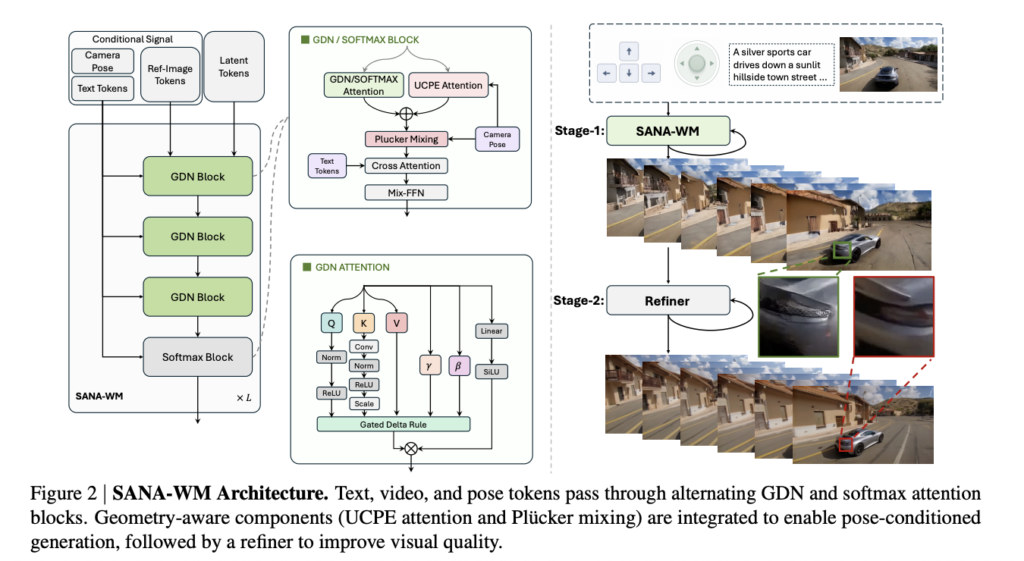
NVIDIA Introduces SANA-WM: A 2.6B-Parameter Open-Source World Model That Generates Minute-Scale 720p Video on a Single GPU

World models (systems that synthesize realistic video sequences from an initial image and a set of actions) are becoming central to embodied AI, simulation, and robotics research. The core challenge is scaling these systems to generate minute-long, high-resolution video without requiring prohibitively large clusters for both training and inference. Most competitive open-source baselines either require […]
NVIDIA Introduces SANA-WM: A 2.6B-Parameter Open-Source World Model That Generates Minute-Scale 720p Video on a Single GPU Read More »

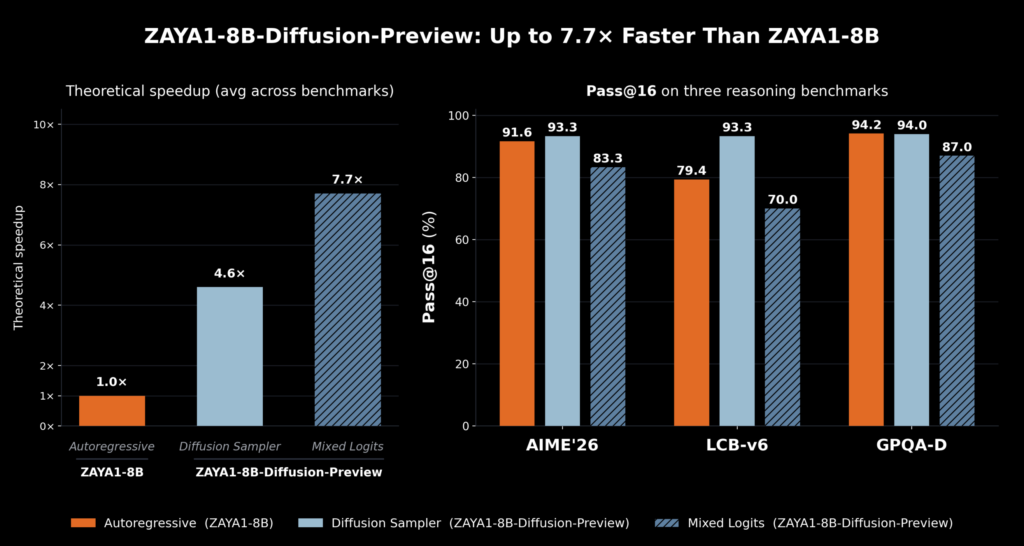
Zyphra Releases ZAYA1-8B-Diffusion-Preview: The First MoE Diffusion Model Converted From an Autoregressive LLM With Up to 7.7x Speedup

Zyphra, the San Francisco-based AI lab behind the ZAYA1 model family, released ZAYA1-8B-Diffusion-Preview — a preview of its early work in diffusion-language models. The release demonstrates that an existing autoregressive language model can be converted into a discrete diffusion model with no systematic loss of evaluation performance, while delivering substantial inference speedups on AMD hardware.

Zyphra Releases ZAYA1-8B-Diffusion-Preview: The First MoE Diffusion Model Converted From an Autoregressive LLM With Up to 7.7x Speedup Read More »

⚠

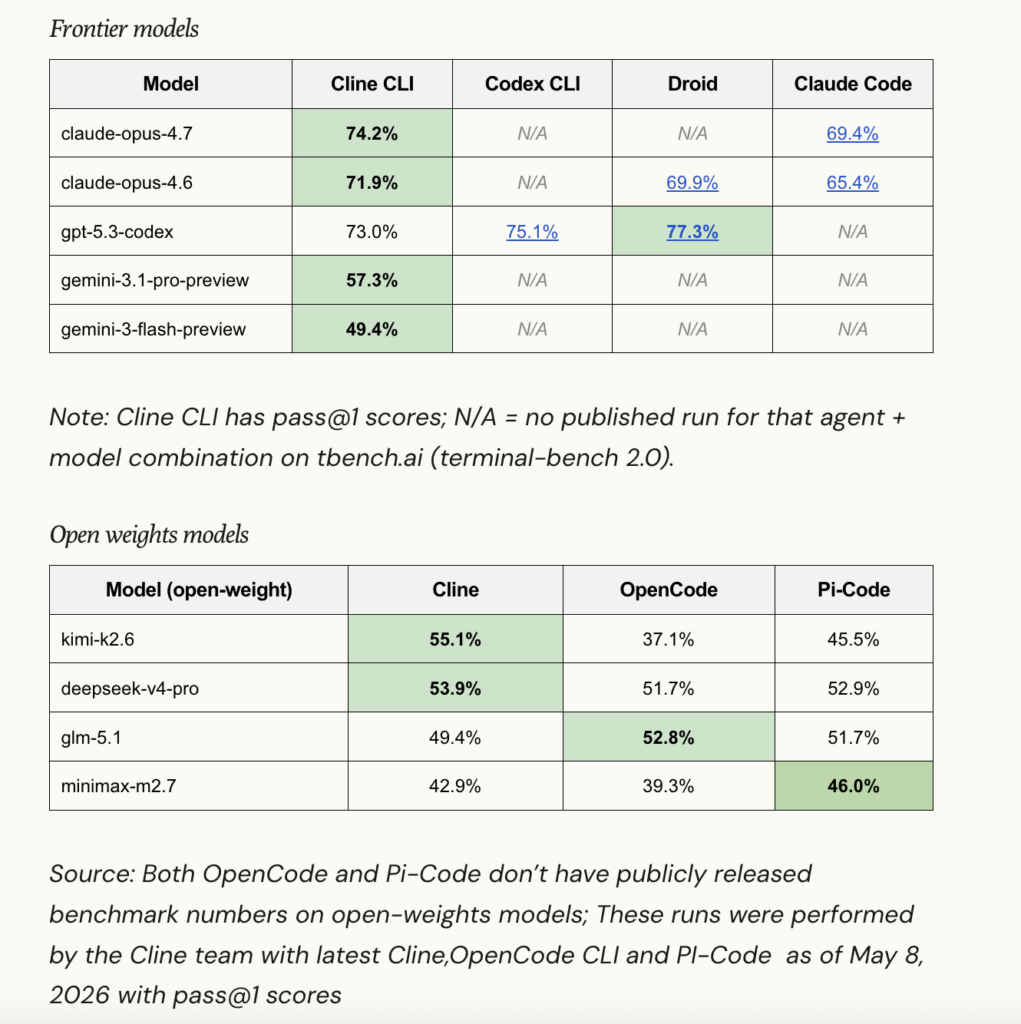
Best AI Agents for Software Development Ranked: A Benchmark-Driven Look at the Current Field

The AI coding agent market looks almost unrecognizable compared to 2024 or even early 2025. What started as inline autocomplete has evolved into fully autonomous systems that read GitHub issues, navigate multi-file codebases, write fixes, execute tests, and open pull requests — without a human typing a single line of code. By early 2026, roughly

Best AI Agents for Software Development Ranked: A Benchmark-Driven Look at the Current Field Read More »

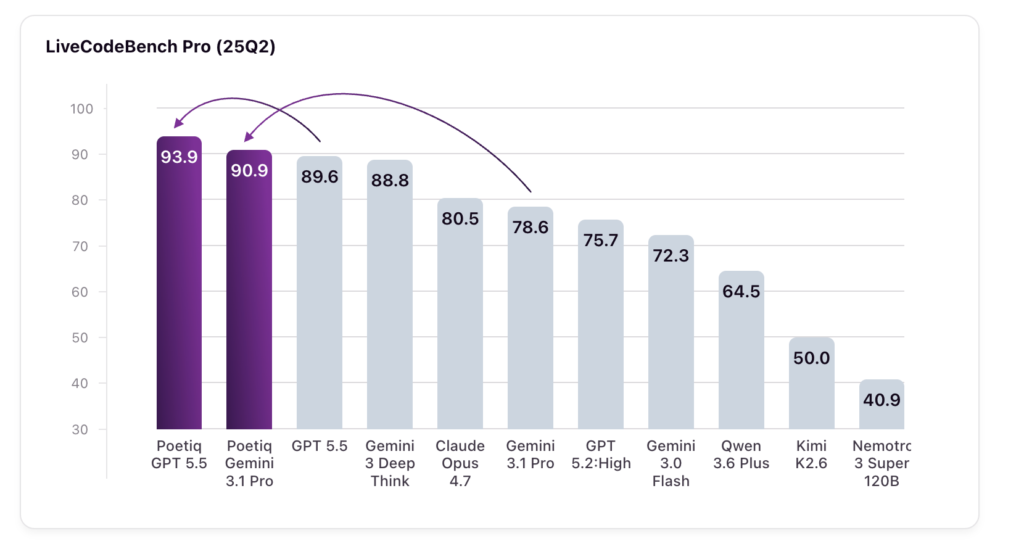
Poetiq’s Meta-System Automatically Builds a Model-Agnostic Harness That Improved Every LLM Tested on LiveCodeBench Pro Without Fine-Tuning

Poetiq has just published some very interesting results showing its Meta-System reached a new state-of-the-art on LiveCodeBench Pro (LCB Pro), a competitive coding benchmark, by automatically building and optimizing its own inference harness — without fine-tuning any underlying model or accessing model internals. The result: GPT 5.5 High with Poetiq’s harness scores 93.9% on LCB

Poetiq’s Meta-System Automatically Builds a Model-Agnostic Harness That Improved Every LLM Tested on LiveCodeBench Pro Without Fine-Tuning Read More »

Cline Releases Cline SDK: An Open-Source Agent Runtime Now Powering Its CLI and Kanban, With IDE Extensions Being Migrated

Cline became ‘agentic’ before it was cool, but building on the bleeding edge usually leads to some structural debt. Over time, the agent loop and the VS Code extension became a package deal—making it a headache to maintain or move to new environments. Its tough to just keep layering features on a rigid core. Cline,

Cline Releases Cline SDK: An Open-Source Agent Runtime Now Powering Its CLI and Kanban, With IDE Extensions Being Migrated Read More »

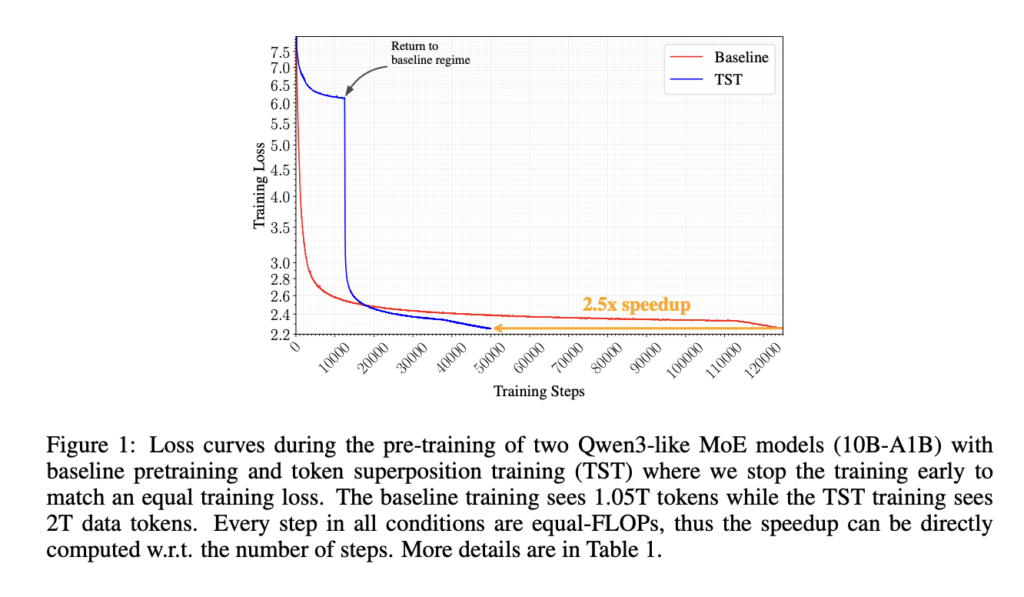
Nous Research Releases Token Superposition Training to Speed Up LLM Pre-Training by Up to 2.5x Across 270M to 10B Parameter Models

Pre-training large language models is expensive enough that even modest efficiency improvements can translate into meaningful cost and time savings. Nous Research is releasing Token Superposition Training (TST), a method that substantially reduces pre-training wall-clock time at fixed compute without touching the model architecture, optimizer, tokenizer, parallelism strategy, or training data. At the 10B-A1B mixture-of-experts

Nous Research Releases Token Superposition Training to Speed Up LLM Pre-Training by Up to 2.5x Across 270M to 10B Parameter Models Read More »

Enterprise AI Governance in 2026: Why the Tools Employees Use Are Ahead of the Policies That Cover Them

By the time a company’s legal team finishes drafting its generative AI acceptable use policy, a meaningful percentage of its engineers, analysts, and product managers have already moved past it. Not deliberately. Not maliciously. Just practically. This is the core dynamic of what the industry now calls shadow AI: the unauthorized, ungoverned use of AI

Enterprise AI Governance in 2026: Why the Tools Employees Use Are Ahead of the Policies That Cover Them Read More »

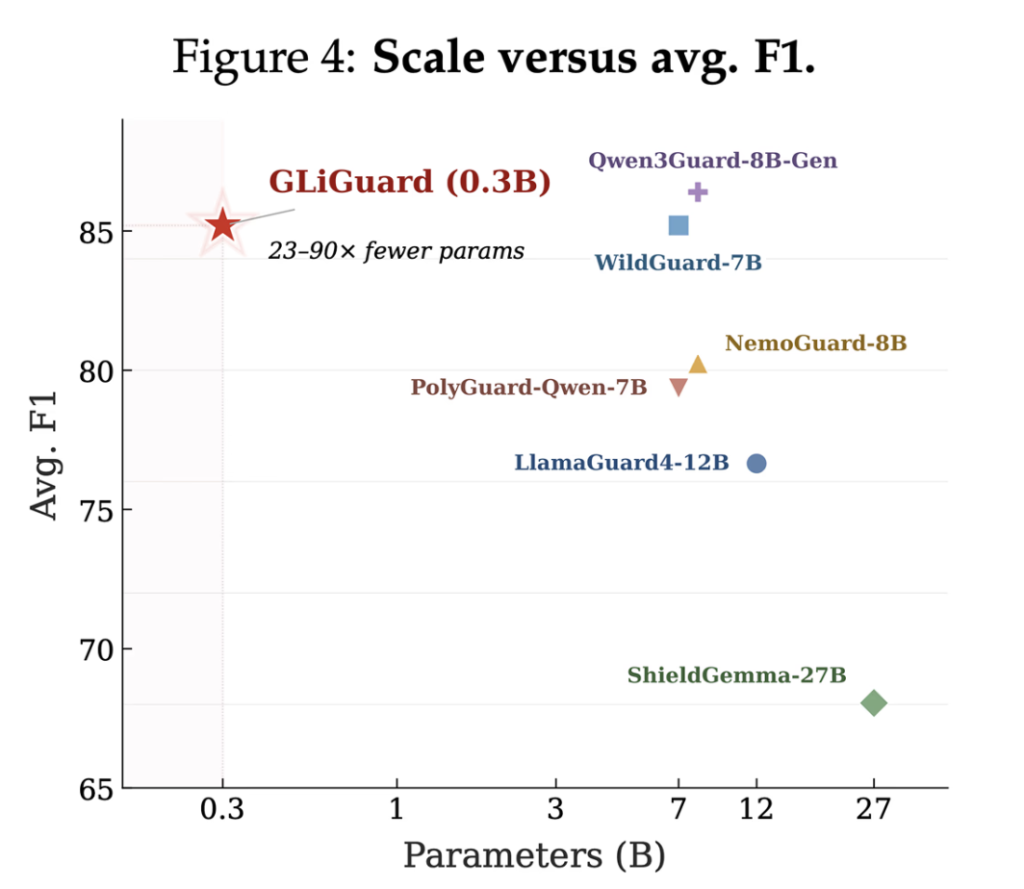
Fastino Labs Open-Sources GLiGuard: A 300M Parameter Safety Moderation Model That Matches or Exceeds Accuracy of Models 23–90x Its Size

As LLM-powered applications move into production — and as AI agents take on more consequential tasks like browsing the web, writing and executing code, and interacting with external services — safety moderation has quietly become one of the most operationally expensive parts of the stack. Most developers who’ve deployed a production LLM system know the

Fastino Labs Open-Sources GLiGuard: A 300M Parameter Safety Moderation Model That Matches or Exceeds Accuracy of Models 23–90x Its Size Read More »

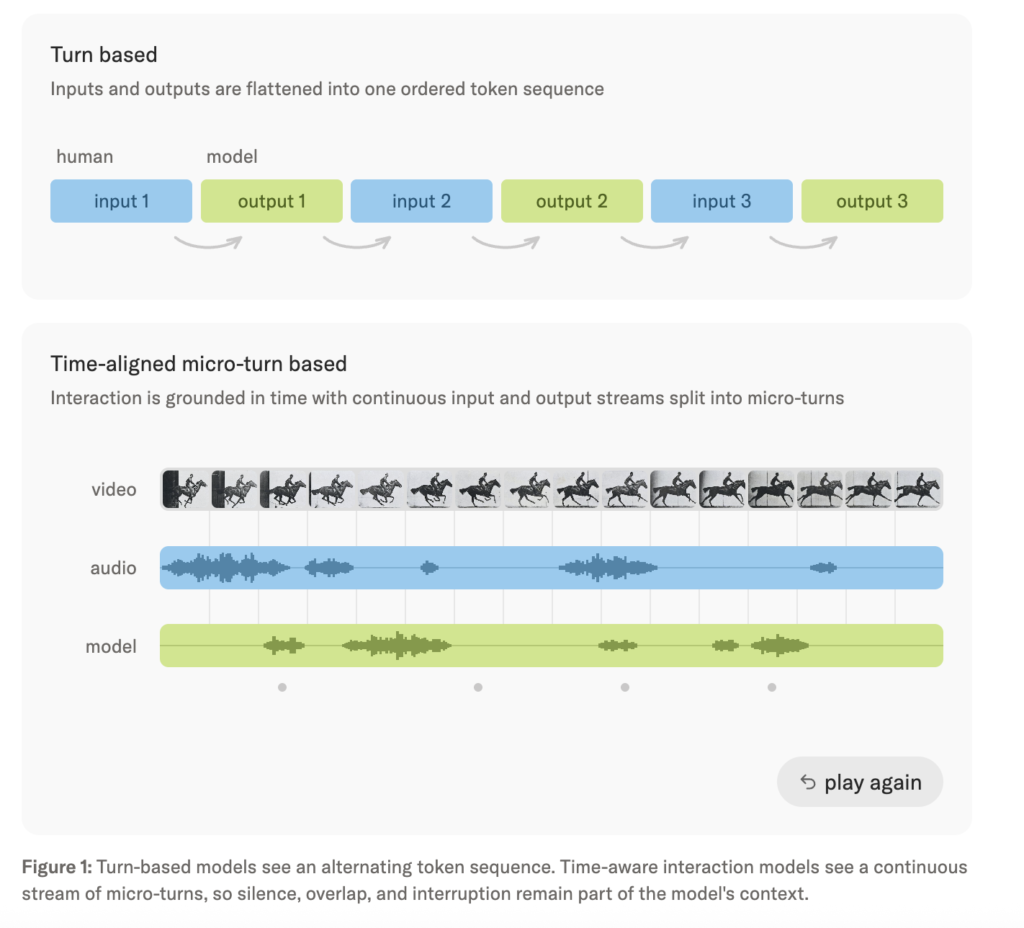
Mira Murati’s Thinking Machines Lab Introduces Interaction Models: A Native Multimodal Architecture for Real-Time Human-AI Collaboration

Most AI systems today work in turns. You type or speak, the model waits, processes your input, and then responds. That’s the entire interaction loop. Thinking Machines Lab, an AI research lab, is arguing that this model of interaction is a fundamental bottleneck. Thinking Machines Lab team introduced a research preview of a new class

Mira Murati’s Thinking Machines Lab Introduces Interaction Models: A Native Multimodal Architecture for Real-Time Human-AI Collaboration Read More »

Google DeepMind Introduces an AI-Enabled Mouse Pointer Powered by Gemini That Captures Visual and Semantic Context Around the Cursor

The mouse pointer has sat at the center of personal computing for more than half a century. It tracks cursor position. It registers clicks. Beyond that, it does almost nothing. Google DeepMind researchers outlined a set of experimental principles and demos for an AI-enabled pointer that goes considerably further: one that understands not just where

Google DeepMind Introduces an AI-Enabled Mouse Pointer Powered by Gemini That Captures Visual and Semantic Context Around the Cursor Read More »