Summary

Auto Added by WPeMatico

This company’s plans to deploy space mirrors could jeopardize the night sky for many

A company that plans to beam sunlight from space to Earth on demand might unintentionally brighten the night sky for many more people than intended, according to a new study. Later this year, the US company Reflect Orbital plans to launch a test satellite called Eärendil-1 that will extend an 18-by-18-meter mirror in orbit. The […]

This company’s plans to deploy space mirrors could jeopardize the night sky for many Read More »
The next big thing in hydrogen could be underground

There’s a hunt for new sources of hydrogen, and the gas (or at least the right conditions to make it) could be hiding beneath our feet. Hydrogen can be used as a fuel in everything from large trucks to planes to steelmaking. It’s often hailed as a climate solution because when burned, it produces water

The next big thing in hydrogen could be underground Read More »

We still don’t know how people are really using AI

AI companies like Anthropic and OpenAI regularly publish reports on how people are using products like Claude and ChatGPT, but they only release the data they want us to see, AI researchers say.  “There is no independent source to corroborate it,” says Anka Reuel, a Computer Science PhD candidate at the Stanford Trustworthy AI Research

We still don’t know how people are really using AI Read More »

AI’s recursive self-improvement might not come so quickly after all

The AI industry’s boldest promise right now is that AI will soon improve itself, with almost no need for human oversight. LLMs can already write code, generate synthetic data for training, and optimize the computer chips they run on. Forecasts of explosive AI progress predict that what researchers call recursive self-improvement is on the horizon. 

AI’s recursive self-improvement might not come so quickly after all Read More »

Cloning could be used to save species—or make human “organ sacks”

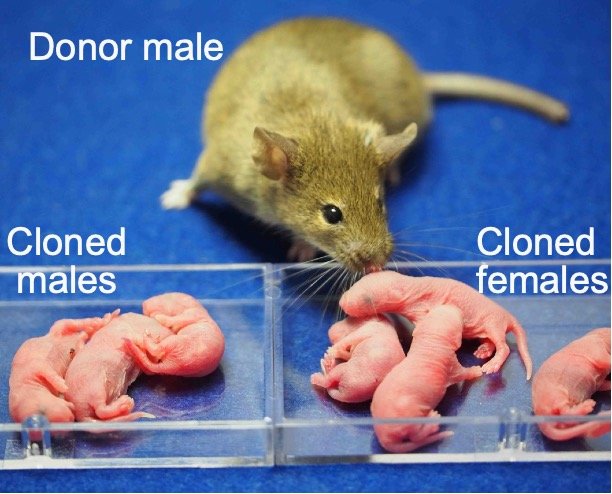
This week I spoke to scientists who have found a way to turn male mouse embryos female. They’ve developed a CRISPR-based approach to essentially cut out the Y chromosome. It allowed them to create female clones of male mice. That’s right: female animals that are genetically identical to males, except for the missing Y chromosome.

Cloning could be used to save species—or make human “organ sacks” Read More »

What’s behind this summer’s heat, and why 2027 could be worse

This summer has been a scorcher for much of the Northern Hemisphere. June and July marked the hottest two-month stretch in Europe since record-keeping began. The contiguous US endured its hottest month on record in July. South Korea saw its highest-ever recorded temperature.   The heat isn’t over yet, but some scientists are already looking ahead

What’s behind this summer’s heat, and why 2027 could be worse Read More »

Scientists just created female clones of male mice

Scientists have deliberately turned male mouse embryos into females for the first time. A team based in Japan used a CRISPR-based approach to remove the Y chromosome from male cells and create female clones of male mice.  “No one has done this before,” says Monika Ward, a reproductive biologist at the University of Hawaii, who

Scientists just created female clones of male mice Read More »

These startups are chasing the next big thing in LLMs

MIT Technology Review’s What’s Next series looks across industries, trends, and technologies to give you a first look at the future. You can read the rest of them here. Way back in the summer of 2017, AI researchers at Google put out a paper called “Attention Is All You Need,” in which they described a new

These startups are chasing the next big thing in LLMs Read More »

NASA’s new dark energy space telescope can also detect killer asteroids

At the end of August, NASA is set to launch the Nancy Grace Roman Space Telescope from Kennedy Space Center in Florida. Its quest is to help us better understand how the universe works, from the glue-like dark matter that keeps galaxies together to the elusive dark energy that drives the expansion of the cosmos.

NASA’s new dark energy space telescope can also detect killer asteroids Read More »

Here’s why AI agents lie and cheat to reach their goals

MIT Technology Review Explains: Let our writers untangle the complex, messy world of technology to help you understand what’s coming next. You can read more from the series here. When two OpenAI models hacked into the website Hugging Face in July, they weren’t trying to make money or commit sabotage—they were just looking for answers

Here’s why AI agents lie and cheat to reach their goals Read More »