Software engineering

Auto Added by WPeMatico

Meet Turbovec: A Rust Vector Index with Python Bindings, and Built on Google’s TurboQuant Algorithm

Vector search underpins most retrieval-augmented generation (RAG) pipelines. At scale, it gets expensive. Storing 10 million document embeddings in float32 consumes 31 GB of RAM. For dev teams running local or on-premise inference, that number creates real constraints. A new open-source library called turbovec addresses this directly. It is a vector index written in Rust […]

Meet Turbovec: A Rust Vector Index with Python Bindings, and Built on Google’s TurboQuant Algorithm Read More »

✅

How to Build Knowledge Graph Generation Pipelines From Text With kg-gen, NetworkX Analytics, and Interactive Visualizations

In this tutorial, we will generate knowledge graphs from plain text, conversations, and multiple source documents using kg-gen. We start by setting up the required dependencies and configuring an LLM through LiteLLM, then we extract entities, predicates, and relationships from simple text. As we move forward, we work with longer passages using chunking and clustering,

How to Build Knowledge Graph Generation Pipelines From Text With kg-gen, NetworkX Analytics, and Interactive Visualizations Read More »

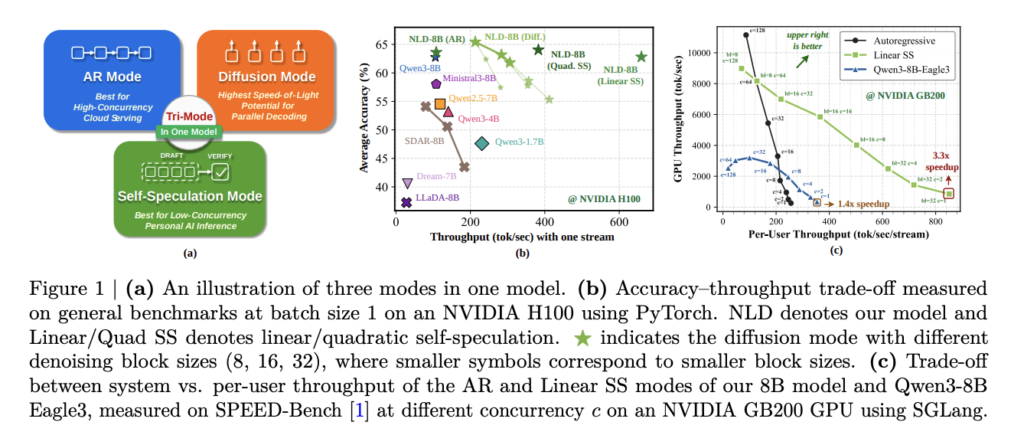
NVIDIA AI Releases Nemotron-Labs-Diffusion: A Tri-Mode Language Model with 6× Tokens Per Forward Over Qwen3-8B

NVIDIA researchers have released Nemotron-Labs-Diffusion, a language model family that unifies three decoding modes in one architecture. The model supports autoregressive (AR) decoding, diffusion-based parallel decoding, and self-speculation decoding. It is available in 3B, 8B, and 14B parameter sizes. The family includes base, instruct, and vision-language variants. Sequential Decoding Limits Throughput Standard autoregressive (AR) language

NVIDIA AI Releases Nemotron-Labs-Diffusion: A Tri-Mode Language Model with 6× Tokens Per Forward Over Qwen3-8B Read More »

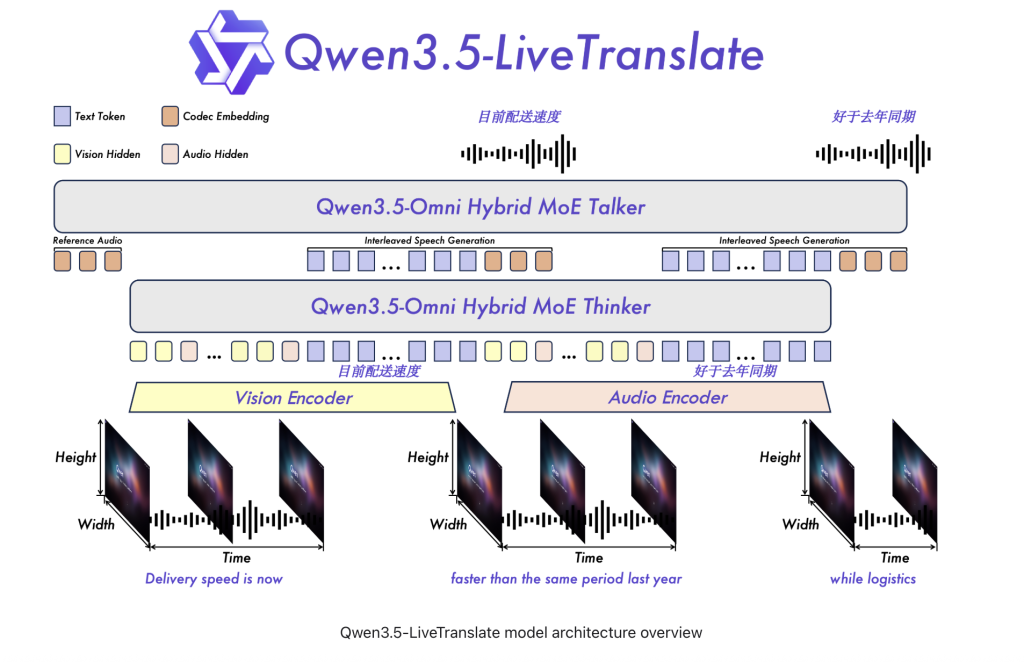
Alibaba Qwen Team Introduces Qwen3.5-LiveTranslate-Flash: Real-Time Multimodal Interpretation Across 60 Languages at 2.8-Second Latency

Simultaneous interpretation is one of the harder problems in applied AI. You’re asking a model to translate speech before the speaker has finished a sentence. Every extra second of delay breaks the illusion of real-time communication. Alibaba’s Qwen team has been chipping away at this with each release. Their latest model, Qwen3.5-LiveTranslate-Flash, brings that latency

Alibaba Qwen Team Introduces Qwen3.5-LiveTranslate-Flash: Real-Time Multimodal Interpretation Across 60 Languages at 2.8-Second Latency Read More »

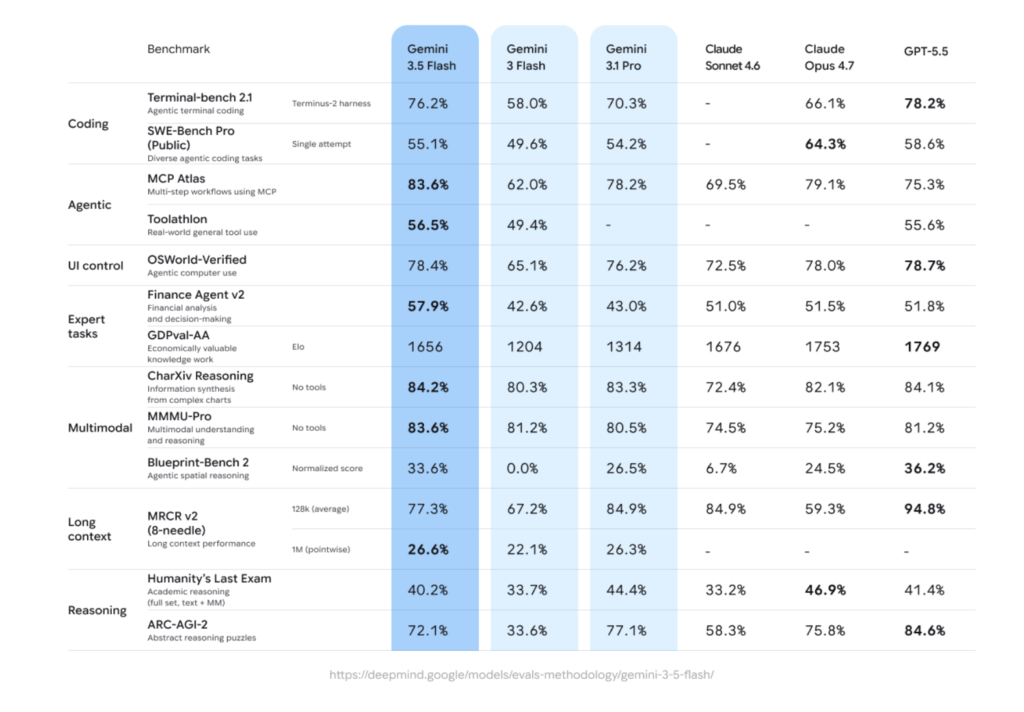
Google Introduces Gemini 3.5 Flash at I/O 2026: A Faster and Cheaper Model for AI Agents and Coding

Google just released Gemini 3.5 Flash at Google I/O May, 2026. It is the first Gemini 3.5 model. The series combines frontier intelligence with action. Google calls it a major leap for intelligent agents. The Flash tier has historically been faster and cheaper. 3.5 Flash outperforms Gemini 3.1 Pro on challenging benchmarks. The previous premium

Google Introduces Gemini 3.5 Flash at I/O 2026: A Faster and Cheaper Model for AI Agents and Coding Read More »

🗄

Upstash for Redis vs Supabase vs Neon: Which One Fits Vibe Coding Workflows in 2026?

The short answer most comparison articles skip: these three tools are not competing for the same job. Before picking one, it helps to understand what each is actually designed to do, where they genuinely overlap, and where the real tradeoffs land when you are shipping code with an AI assistant at your side. What These

Upstash for Redis vs Supabase vs Neon: Which One Fits Vibe Coding Workflows in 2026? Read More »

Google Launches Antigravity 2.0 at I/O 2026: A Standalone Agent-First Platform with CLI, SDK, Managed Execution, and Enterprise Support

Google used its I/O 2026 developer keynote to ship a meaningful architectural shift in how it packages AI-assisted development. The company announced Google Antigravity 2.0 — a standalone desktop application built entirely around agent orchestration alongside an Antigravity CLI, an Antigravity SDK, Managed Agents in the Gemini API, and enterprise support through the Gemini Enterprise

Google Launches Antigravity 2.0 at I/O 2026: A Standalone Agent-First Platform with CLI, SDK, Managed Execution, and Enterprise Support Read More »

Best Enterprise Level Agentic AI Platforms for 2026

In 2026, enterprise agentic AI has moved from pilot budgets to production commitments. Salesforce is closing Agentforce deals at 29,000 since launch with $800M ARR. Microsoft Copilot Studio has 160,000 organizations running 400,000+ custom agents. ServiceNow has restructured its entire commercial model around autonomous AI tiers. The question is no longer whether to deploy —

Best Enterprise Level Agentic AI Platforms for 2026 Read More »

A Coding Implementation to Compress and Benchmark Instruction-Tuned LLMs with FP8, GPTQ, and SmoothQuant Quantization using llmcompressor

In this tutorial, we explore how to apply post-training quantization to an instruction-tuned language model using llmcompressor. We start with an FP16 baseline and then compare multiple compression strategies, including FP8 dynamic quantization, GPTQ W4A16, and SmoothQuant with GPTQ W8A8. Along the way, we benchmark each model variant for disk size, generation latency, throughput, perplexity,

A Coding Implementation to Compress and Benchmark Instruction-Tuned LLMs with FP8, GPTQ, and SmoothQuant Quantization using llmcompressor Read More »

Vercel Labs Introduces Zero, a Systems Programming Language Designed So AI Agents Can Read, Repair, and Ship Native Programs

Most programming languages were designed for humans who read error messages, interpret warnings, and manually trace through stack output to fix bugs. AI agents do none of those things well. They work better with structured data: predictable tokens, stable codes, and machine-parseable repair hints. That gap is what Vercel Labs is trying to close by

Vercel Labs Introduces Zero, a Systems Programming Language Designed So AI Agents Can Read, Repair, and Ship Native Programs Read More »