Software engineering

Auto Added by WPeMatico

MoonMath AI Open-Sources a HIP Attention Kernel for AMD MI300X That Beats AITER v3 on Every Shape and Rounding Mode

MoonMath AI team has released a bf16 forward attention kernel for AMD’s MI300X GPU. It is written in HIP, not hand-written assembly. The code is open-source under the MIT license. The MoonMath.ai team reports it beats AITER v3, AMD’s own optimized kernel, on every tested shape. Bare-metal access came from HotAisle, an AMD cloud provider. […]

MoonMath AI Open-Sources a HIP Attention Kernel for AMD MI300X That Beats AITER v3 on Every Shape and Rounding Mode Read More »

The 7 Types of Agent Memory: A Technical Guide for AI Engineers

Large language models are stateless by default. Each API call starts fresh. The model forgets your last message once the response returns. That is fine for a single question. It breaks the moment you build an agent. Agents plan, call tools, and run across many steps. They need to remember. Memory is the infrastructure that

The 7 Types of Agent Memory: A Technical Guide for AI Engineers Read More »

Nous Research Updates Hermes Agent With a Blank Slate Mode That Pins Toolsets via platform_toolsets.cli and disabled_toolsets

Nous Research has added a Blank Slate setup mode to its open-source Hermes Agent. It inverts the usual onboarding. Instead of a fully loaded default, you start with almost nothing. Hermes Agent is the self-improving agent framework from Nous Research. It runs on your own machine. The team announced the new mode on X. Blank

Nous Research Updates Hermes Agent With a Blank Slate Mode That Pins Toolsets via platform_toolsets.cli and disabled_toolsets Read More »

Yandex Open-Sources YaFF: A Zero-Copy Wire Format for Protobuf With Near-Struct Read Speed

TLDR YaFF is Yandex’s open-source zero-copy wire format for Protobuf — Apache 2.0, currently C++, v0.1.0. The .proto file stays the source of truth; only the physical memory layout changes. On Yandex’s benchmarks, the Flat Layout reads hot data ~3.8× faster than FlatBuffers, within 1.2× of a raw C++ struct. Four layouts — Fixed, Flat,

Yandex Open-Sources YaFF: A Zero-Copy Wire Format for Protobuf With Near-Struct Read Speed Read More »

NVIDIA AI Introduce SpatialClaw: A Training-Free Agent That Treats Code as the Action Interface for Spatial Reasoning

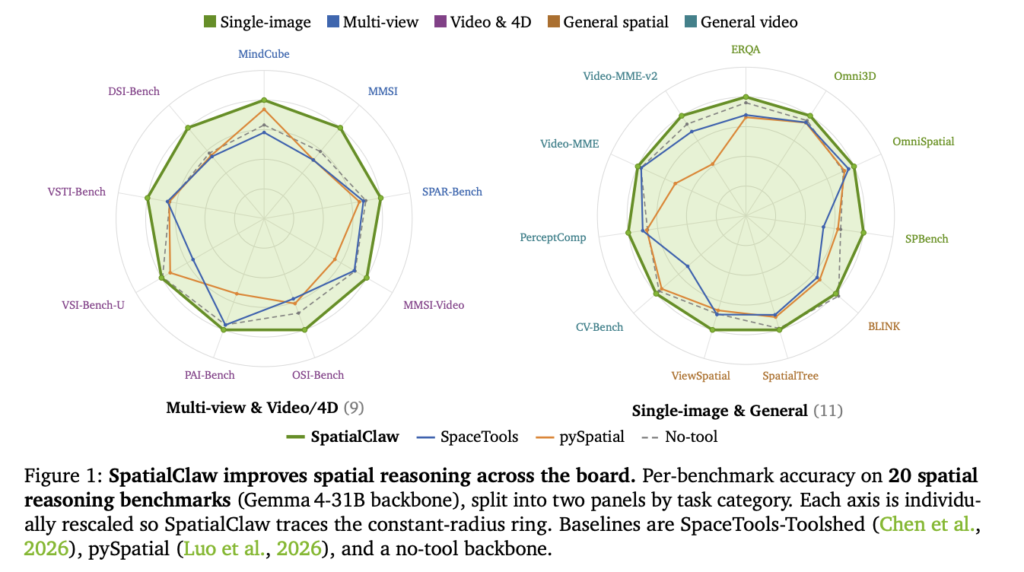
NVIDIA Research has released SpatialClaw, a training-free framework for spatial reasoning. It targets a persistent weakness in vision-language models (VLMs). These models still struggle to judge where objects are, how they relate, and how they move in 3D. SpatialClaw does not retrain the model. Instead, it changes the action interface the agent uses to call

NVIDIA AI Introduce SpatialClaw: A Training-Free Agent That Treats Code as the Action Interface for Spatial Reasoning Read More »

Liquid AI Introduces LFM2.5-Embedding-350M and LFM2.5-ColBERT-350M: Dense Bi-Encoder and Late-Interaction Models for Fast Multilingual Search Across 11 Languages

This week, Liquid AI released two new retrieval models. They are LFM2.5-ColBERT-350M and LFM2.5-Embedding-350M. Both hold 350M parameters. Both are the first bidirectional members of the LFM family. They build on LFM2.5-350M-Base, released in March. The pair targets fast multilingual and cross-lingual search across 11 languages. Their footprint is small enough to run almost anywhere.

Liquid AI Introduces LFM2.5-Embedding-350M and LFM2.5-ColBERT-350M: Dense Bi-Encoder and Late-Interaction Models for Fast Multilingual Search Across 11 Languages Read More »

The KV Cache Compression Race: TurboQuant vs OSCAR vs EpiCache

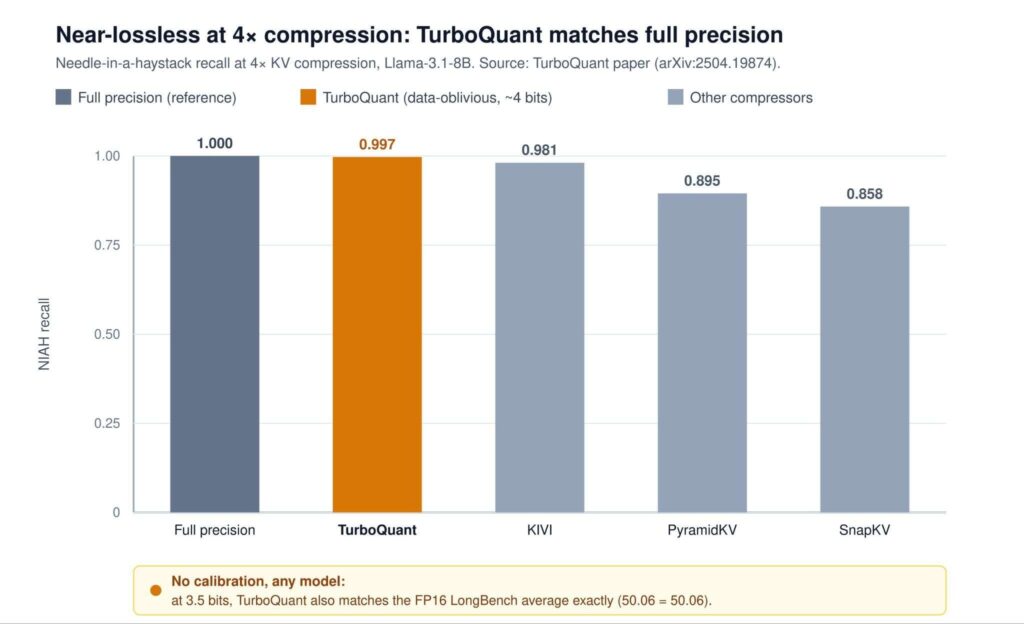
Long-context large language models (LLMs) face a memory bottleneck that has nothing to do with model weights. During decoding, transformers cache the key and value (KV) vectors for every token at every layer so they don’t have to recompute attention. This cache grows linearly with sequence length and batch size, and at long context with

The KV Cache Compression Race: TurboQuant vs OSCAR vs EpiCache Read More »

Vercel Releases Eve: An Open-Source AI Agent Framework Where Each Agent is a Directory of Files Mapped to Capabilities

Vercel has released eve, an open-source framework for building, running, and scaling agents. The project is published as the npm package eve, licensed under Apache-2.0. Building an agent should mean defining what it does. It should not mean assembling all the plumbing that an agent needs to run in production. eve is the framework Vercel

Vercel Releases Eve: An Open-Source AI Agent Framework Where Each Agent is a Directory of Files Mapped to Capabilities Read More »

MiniMax Sparse Attention (MSA): a Two-Branch Block-Sparse Attention Trained on a 109B-Parameter MoE With a 3T-Token Budget

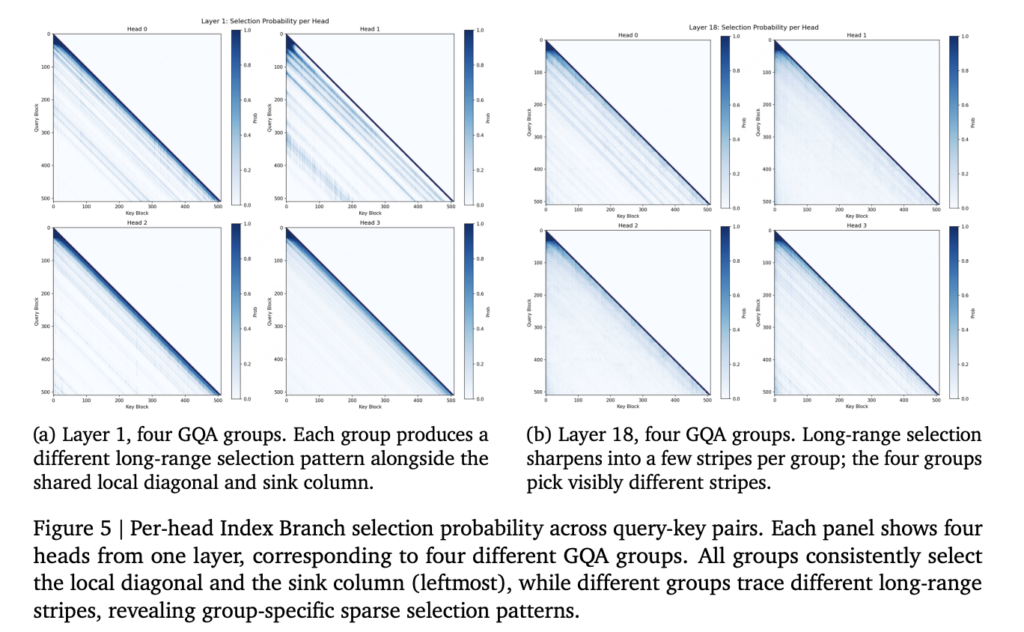
MiniMax released MSA (MiniMax Sparse Attention), a sparse attention method built directly on Grouped Query Attention (GQA). It targets one bottleneck: the quadratic cost of softmax attention at long context. The MiniMax research team tested it inside a 109B-parameter Mixture-of-Experts model trained with native multimodal data. They also open-sourced an inference kernel and shipped a

MiniMax Sparse Attention (MSA): a Two-Branch Block-Sparse Attention Trained on a 109B-Parameter MoE With a 3T-Token Budget Read More »

OpenAI’s Deployment Simulation Extends Pre-Deployment Risk Assessment to Agentic Coding Through Simulated Tool Calls

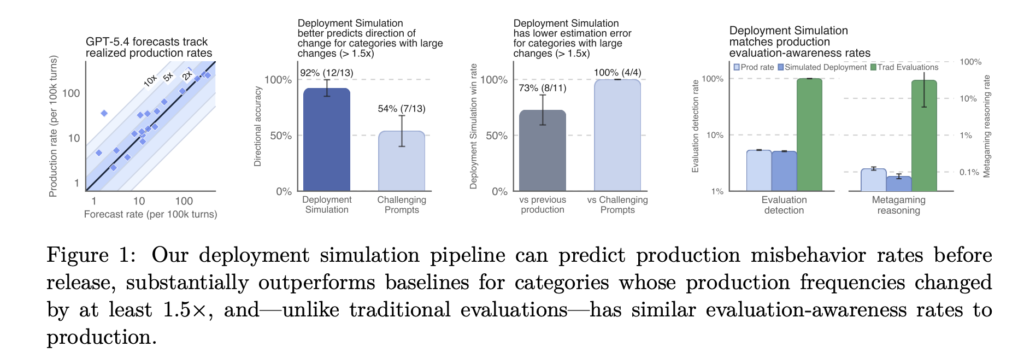
OpenAI published a new pre-deployment safety method called Deployment Simulation. The idea is direct. Before a model ships, simulate its deployment first. Replay past conversations through the new candidate model. Then study how it behaves in realistic contexts. OpenAI already uses insights from the method during model development. It has informed mitigations and deployment decisions,

OpenAI’s Deployment Simulation Extends Pre-Deployment Risk Assessment to Agentic Coding Through Simulated Tool Calls Read More »