Machine Learning

Auto Added by WPeMatico

IMDA

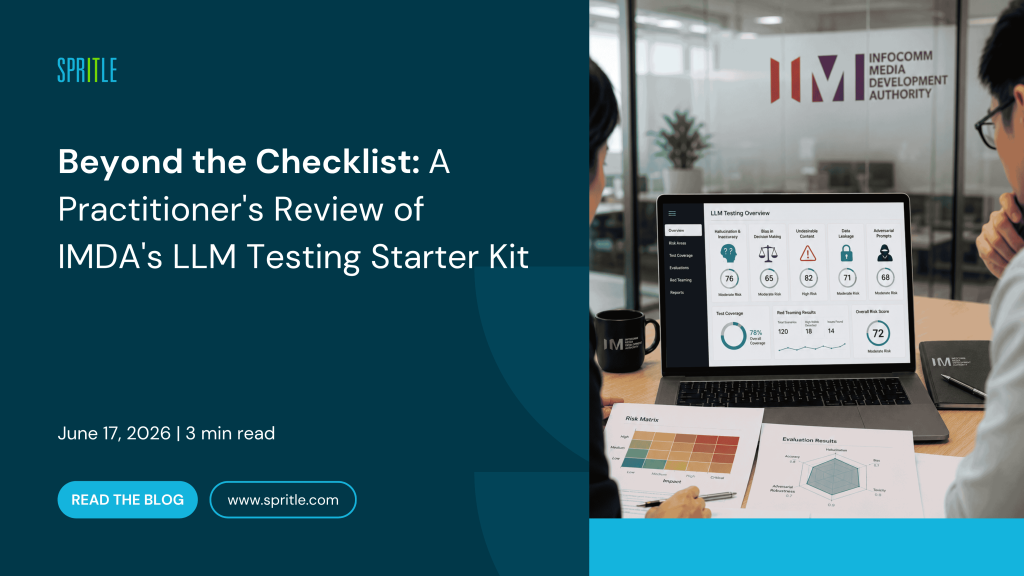
Beyond the Checklist: A Practitioner’s Review of IMDA’s LLM Testing Starter Kit

Introduction As large language models move from proof-of-concept into production systems that touch real users, real money, and real decisions, the industry has been crying out for structured, actionable guidance on how to test them responsibly. IMDA’s Starter Kit for Testing LLM-Based Applications is a meaningful answer to that call. It arrives at exactly the […]

Beyond the Checklist: A Practitioner’s Review of IMDA’s LLM Testing Starter Kit Read More »
The KV Cache Compression Race: TurboQuant vs OSCAR vs EpiCache

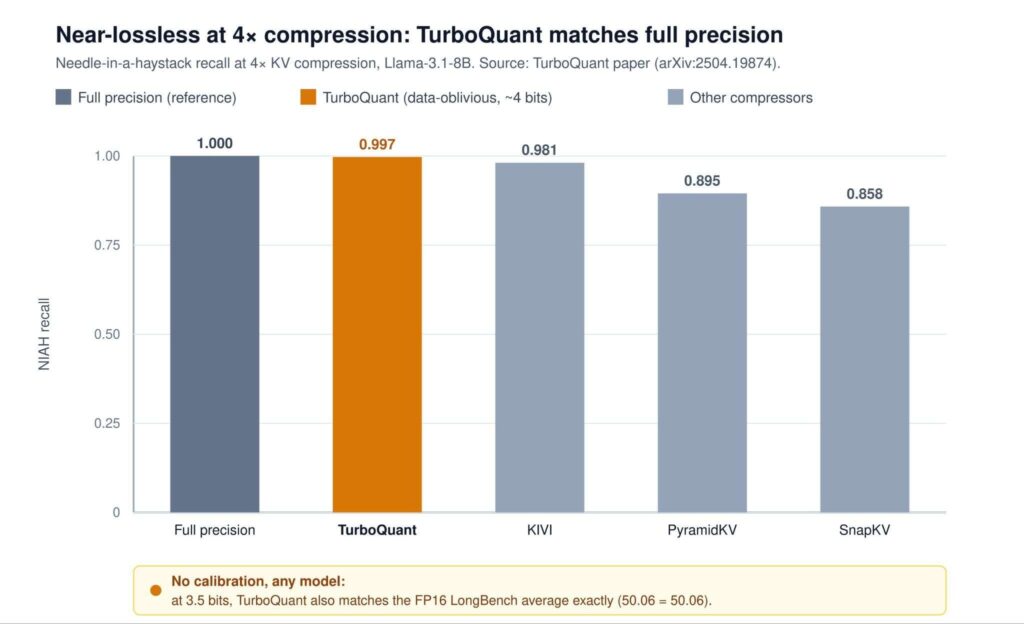
Long-context large language models (LLMs) face a memory bottleneck that has nothing to do with model weights. During decoding, transformers cache the key and value (KV) vectors for every token at every layer so they don’t have to recompute attention. This cache grows linearly with sequence length and batch size, and at long context with

The KV Cache Compression Race: TurboQuant vs OSCAR vs EpiCache Read More »

OpenAI Releases LifeSciBench, a 750-Task Benchmark Grading AI Models on Real Life-Science Research With Expert-Written Rubric

Most biology benchmarks ask narrow, fact-based questions with clean answers. Scientists weigh imperfect evidence and make decisions. OpenAI released LifeSciBench and it targets that gap directly. Even the strongest model passes roughly one task in three. The benchmark is far from saturated. What is LifeSciBench LifeSciBench contains 750 expert-authored tasks. They span seven workflows and

OpenAI Releases LifeSciBench, a 750-Task Benchmark Grading AI Models on Real Life-Science Research With Expert-Written Rubric Read More »

In game theory, generalists sometimes win out over specialists

Whether you’re playing poker against a single opponent or find yourself in a bidding war over a home purchase with another prospective buyer, you are operating under conditions of imperfect information. You know what cards you’re holding in the poker game, and you also know how much above the home’s asking price you can afford,

In game theory, generalists sometimes win out over specialists Read More »

MiniMax Sparse Attention (MSA): a Two-Branch Block-Sparse Attention Trained on a 109B-Parameter MoE With a 3T-Token Budget

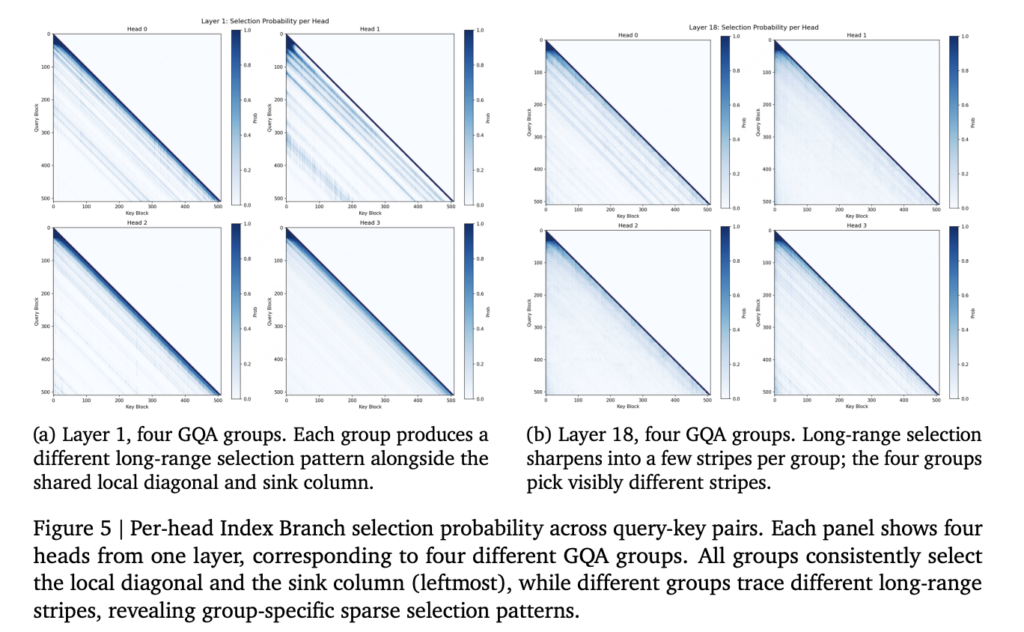
MiniMax released MSA (MiniMax Sparse Attention), a sparse attention method built directly on Grouped Query Attention (GQA). It targets one bottleneck: the quadratic cost of softmax attention at long context. The MiniMax research team tested it inside a 109B-parameter Mixture-of-Experts model trained with native multimodal data. They also open-sourced an inference kernel and shipped a

MiniMax Sparse Attention (MSA): a Two-Branch Block-Sparse Attention Trained on a 109B-Parameter MoE With a 3T-Token Budget Read More »

Could AI tell you where you left your keys?

An auto factory worker can remember the storage bin where she left a partly assembled component the night before, and quickly return to that spot to pick it up. But robots that may work side-by-side with her would struggle to develop and access this same type of “spatiotemporal” memory.Now, MIT researchers have developed a long-term

Could AI tell you where you left your keys? Read More »

How to Build Memory-Efficient Transformers with xFormers Using Packed Sequences, GQA, ALiBi, SwiGLU, and Causal Attention

In this tutorial, we implement xFormers: a practical toolkit for building fast, memory-efficient Transformer models on GPUs. We begin by validating memory-efficient attention against a standard attention implementation, then compare their speed and memory consumption across different sequence lengths. We then examine causal masking, packed variable-length sequences, grouped-query attention, and custom ALiBi positional biases. Finally,

How to Build Memory-Efficient Transformers with xFormers Using Packed Sequences, GQA, ALiBi, SwiGLU, and Causal Attention Read More »

Google Cloud Introduces Open Knowledge Format (OKF): A Vendor-Neutral Markdown Spec for Giving AI Agents Curated Context

Foundation models keep getting stronger, yet they still stall on the same thing: context. A model can write code or analyze a dataset, but only with the right internal knowledge. That knowledge includes table schemas, metric definitions, runbooks, join paths and it lives scattered across catalogs, wikis, and a few senior engineers’ heads. Google Cloud

Google Cloud Introduces Open Knowledge Format (OKF): A Vendor-Neutral Markdown Spec for Giving AI Agents Curated Context Read More »

Autoregressive Models: Predicting the Future Using the Past

Autoregressive models are one of the most important ideas in time series forecasting and sequence modeling. The name may sound technical at first, but the concept is surprisingly intuitive. An autoregressive model predicts the next value by looking at previous values. That is the core idea. For example, tomorrow’s temperature may depend on the temperatures

Autoregressive Models: Predicting the Future Using the Past Read More »

Z.ai Launches GLM-5.2 With a Usable 1M-Token Context, Two Thinking-Effort Levels, and No Benchmarks at Launch

GLM-5.2 is the latest large language model from Z.ai, becoming the third major release in the GLM-5 line. It follows GLM-5 (February 11), GLM-5-Turbo (March 15), and GLM-5.1 (April 7). That makes four flagship-tier coding releases in roughly four months. Usable 1M-Token Context Window GLM-5.2’s standout spec is a 1,000,000-token context window. Z.ai labels the

Z.ai Launches GLM-5.2 With a Usable 1M-Token Context, Two Thinking-Effort Levels, and No Benchmarks at Launch Read More »