For Devs

Auto Added by WPeMatico

CopilotKit Open Sources Channels SDK: An MIT Licensed Library That Runs Any AG-UI Agent Inside Slack And Microsoft Teams

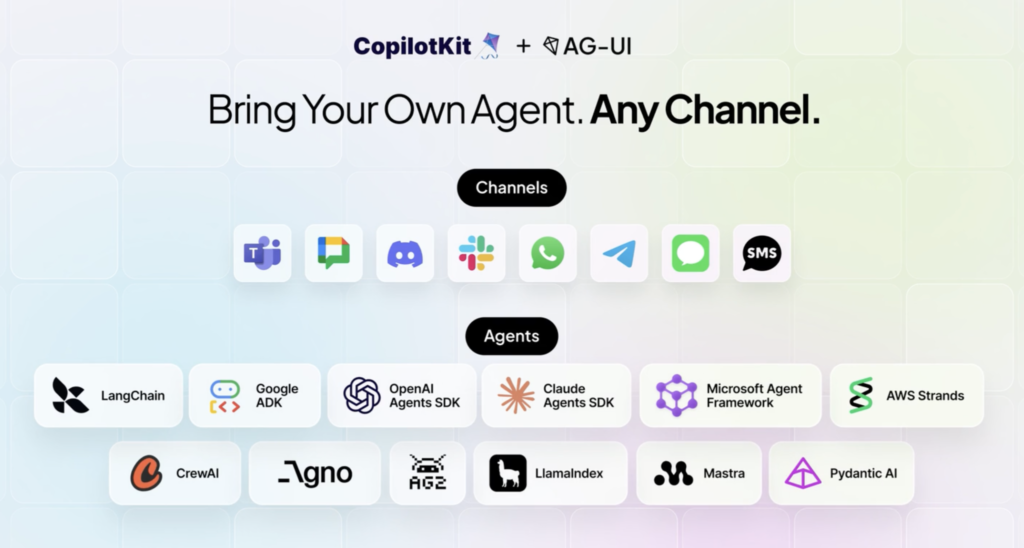
CopilotKit has just released the Channels SDK. It is an open source library that puts an existing agent inside a messaging platform. The core assumption is focused and verifiable. You already have an agent. It already has a model, tools and business logic. Channels gives it a place to work with people, without a rewrite

CopilotKit Open Sources Channels SDK: An MIT Licensed Library That Runs Any AG-UI Agent Inside Slack And Microsoft Teams Read More »

Meet Alibaba’s Page Agent: A JavaScript In-Page GUI Agent That Controls Web Interfaces With Natural Language Through the DOM

Most browser automation runs from the outside. Playwright, Puppeteer, Selenium, and browser-use all drive a browser from an external process. They read the page through screenshots or the Chrome DevTools Protocol. Alibaba’s Page Agent takes the opposite path. The agent lives inside the webpage as plain JavaScript. It reads the live DOM as text and

Meet Alibaba’s Page Agent: A JavaScript In-Page GUI Agent That Controls Web Interfaces With Natural Language Through the DOM Read More »

Perplexity Launches Brain, a Self-Improving Memory System That Builds a Context Graph of an Agent’s Work and Learns Overnight

Most AI memory remembers the user. It stores your preferences, your tastes, and your role. Perplexity is taking a different path. Today, Perplexity launched Brain, a self-improving memory system for its agent product, Computer. Brain does not focus on remembering you. It remembers what the agent did. That reframes what memory in AI is for.

Perplexity Launches Brain, a Self-Improving Memory System That Builds a Context Graph of an Agent’s Work and Learns Overnight Read More »

Google Cloud Introduces Open Knowledge Format (OKF): A Vendor-Neutral Markdown Spec for Giving AI Agents Curated Context

Foundation models keep getting stronger, yet they still stall on the same thing: context. A model can write code or analyze a dataset, but only with the right internal knowledge. That knowledge includes table schemas, metric definitions, runbooks, join paths and it lives scattered across catalogs, wikis, and a few senior engineers’ heads. Google Cloud

Google Cloud Introduces Open Knowledge Format (OKF): A Vendor-Neutral Markdown Spec for Giving AI Agents Curated Context Read More »

Moonshot AI Releases Kimi K2.7-Code: a Coding Model Reporting +21.8% on Kimi Code Bench v2 Over K2.6

This week, Moonshot AI released Kimi K2.7-Code. It is a coding-focused, agentic model. The model weights ship on Hugging Face under a Modified MIT license. You can also reach it through the Kimi API and Kimi Code. K2.7-Code targets long-horizon software engineering, not general chat. It plans, edits, runs tools, and debugs across many steps.

Moonshot AI Releases Kimi K2.7-Code: a Coding Model Reporting +21.8% on Kimi Code Bench v2 Over K2.6 Read More »

Google’s New Colab CLI Lets Developers and AI Agents Run Python on Remote Colab GPUs and TPUs From the Terminal

This week, Google AI team released the Colab CLI. The tool connects your local terminal to remote Colab runtimes. It lets developers and AI agents run code on cloud GPUs and TPUs. You stay in your terminal the entire time. The CLI is open source under the Apache 2.0 license. What is Google Colab CLI

Google’s New Colab CLI Lets Developers and AI Agents Run Python on Remote Colab GPUs and TPUs From the Terminal Read More »

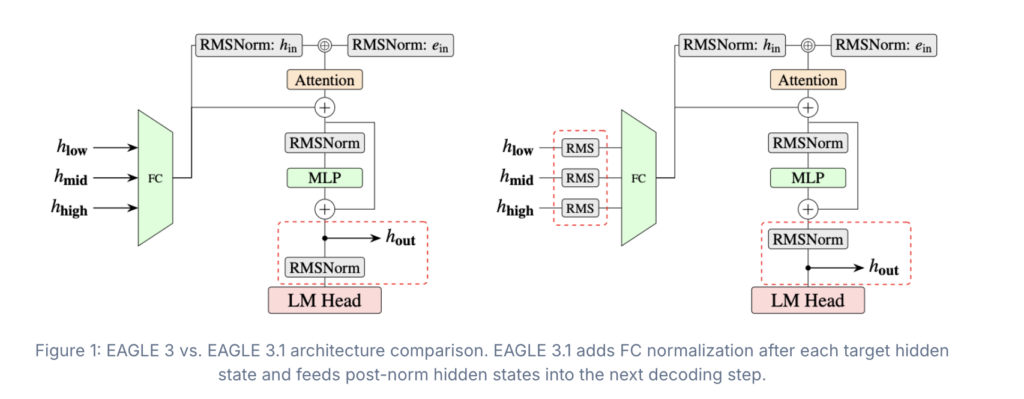
https://vllm.ai/blog/2026-05-26-eagle-3-1

Meet EAGLE 3.1: The Speculative Decoding Algorithm That Fixes Attention Drift in LLM Inference

Speculative decoding is a technique for speeding up large language model inference. A small, fast draft model proposes several tokens. The large target model verifies them in parallel. If accepted, inference is faster. If rejected, the system falls back gracefully. EAGLE Team, vLLM Team, and TorchSpec Team has launched the EAGLE series including EAGLE 1,

Meet EAGLE 3.1: The Speculative Decoding Algorithm That Fixes Attention Drift in LLM Inference Read More »

WorkOS Releases auth.md: An Open Agent Registration Protocol Built on OAuth Standards

For years, authentication on the web followed one design assumption: a human sits behind a browser. Click a button. Fill out a form. Verify an email. Copy an API key and paste it somewhere else. That model does not work when the user is delegating work to an agent. Agents are already writing code, opening

WorkOS Releases auth.md: An Open Agent Registration Protocol Built on OAuth Standards Read More »

Tencent Open-Sources TencentDB Agent Memory: A 4-Tier Local Memory Pipeline for AI Agents

Tencent has released TencentDB Agent Memory, an open-source memory system for AI agents. The project ships under the MIT license. It targets a problem familiar to anyone shipping long-horizon agents: context bloat and recall failure. It is symbolic short-term memory along with layered long-term memory. It integrates with OpenClaw as a plugin and with the

Tencent Open-Sources TencentDB Agent Memory: A 4-Tier Local Memory Pipeline for AI Agents Read More »

Perplexity Open-Sources Bumblebee: A Read-Only Supply-Chain Scanner for Developer Endpoints

Attackers increasingly target the packages, editor extensions, and AI tool configs on developer machines and not just production systems. Perplexity has open-sourced an internal tool it uses to address this problem. Perplexity released Bumblebee on GitHub. The tool is a read-only inventory collector for macOS and Linux developer endpoints. It is written entirely in Go

Perplexity Open-Sources Bumblebee: A Read-Only Supply-Chain Scanner for Developer Endpoints Read More »