Editors Pick

Auto Added by WPeMatico

OpenAI Introduces Daybreak: A Cybersecurity Initiative That Puts Codex Security at the Center of Vulnerability Detection and Patch Validation

OpenAI on just launched Daybreak, a cybersecurity initiative that combines the company’s frontier AI models with Codex Security, its coding-focused agentic system, and a broad network of security partners. The program is aimed at developers, enterprise security teams, researchers, and government-linked defenders who need to find, validate, and patch software vulnerabilities earlier in the development […]
OpenAI Introduces Daybreak: A Cybersecurity Initiative That Puts Codex Security at the Center of Vulnerability Detection and Patch Validation Read More »

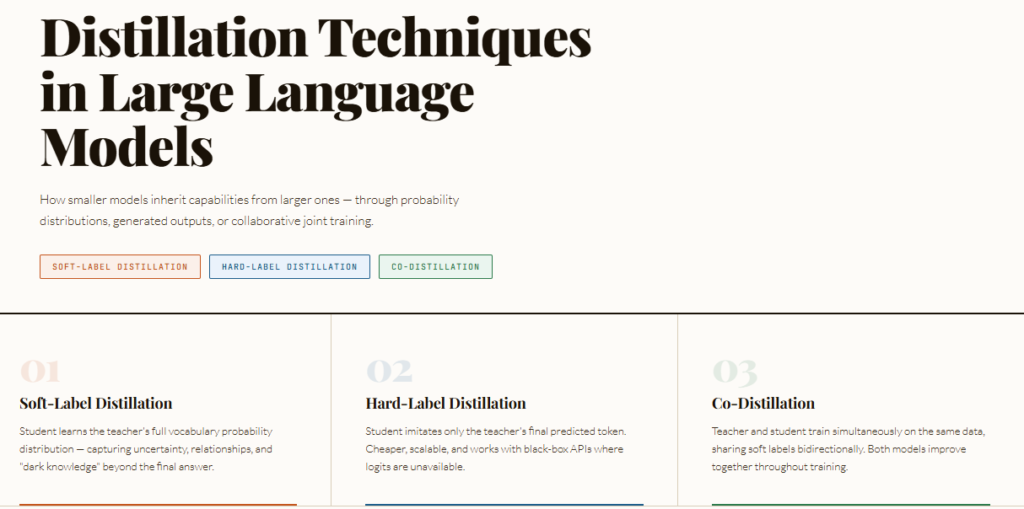
Understanding LLM Distillation Techniques 

Modern large language models are no longer trained only on raw internet text. Increasingly, companies are using powerful “teacher” models to help train smaller or more efficient “student” models. This process, broadly known as LLM distillation or model-to-model training, has become a key technique for building high-performing models at lower computational cost. Meta used its

Understanding LLM Distillation Techniques  Read More »

How to Build Technical Analysis and Backtesting Workflow with pandas-ta-classic, Strategy Signals, and Performance Metrics

In this tutorial, we implement how to use pandas-ta-classic to build a complete technical analysis and trading strategy workflow. We start by installing the required libraries, downloading historical OHLCV stock data with yfinance, cleaning the returned data structure, and inspecting the available indicator categories inside the library. We then calculate popular indicators such as SMA,

How to Build Technical Analysis and Backtesting Workflow with pandas-ta-classic, Strategy Signals, and Performance Metrics Read More »

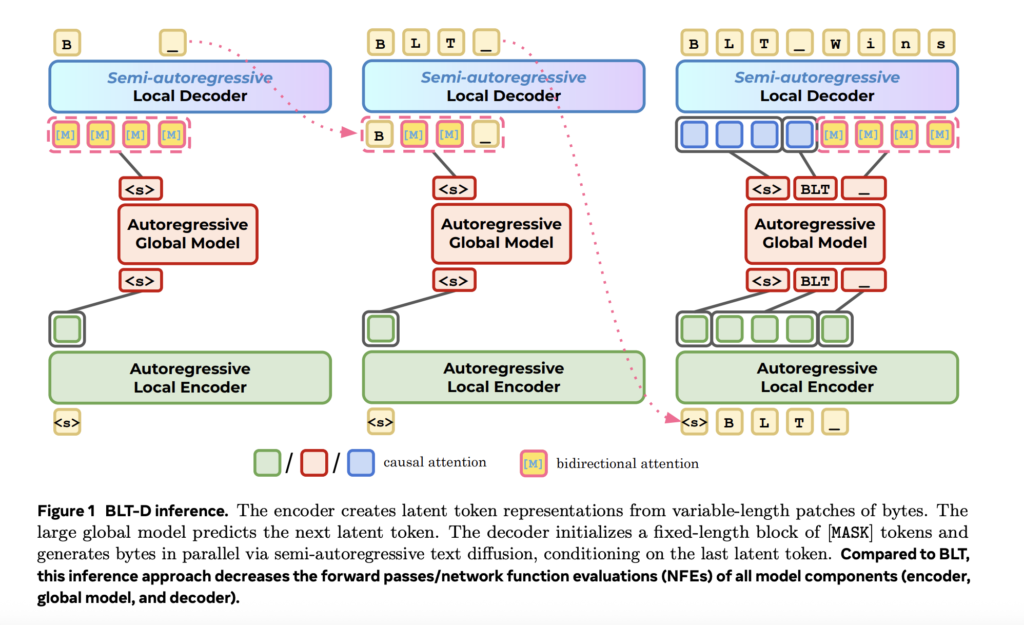
Meta and Stanford Researchers Propose Fast Byte Latent Transformer That Reduces Inference Memory Bandwidth by Over 50% Without Tokenization

A team of researchers from Meta, Stanford University, and the University of Washington have introduced three new methods that substantially accelerate generation in the Byte Latent Transformer (BLT) — a language model architecture that operates directly on raw bytes instead of tokens. Byte-Level Models Are Slow at Inference To understand what this new research solves,

Meta and Stanford Researchers Propose Fast Byte Latent Transformer That Reduces Inference Memory Bandwidth by Over 50% Without Tokenization Read More »

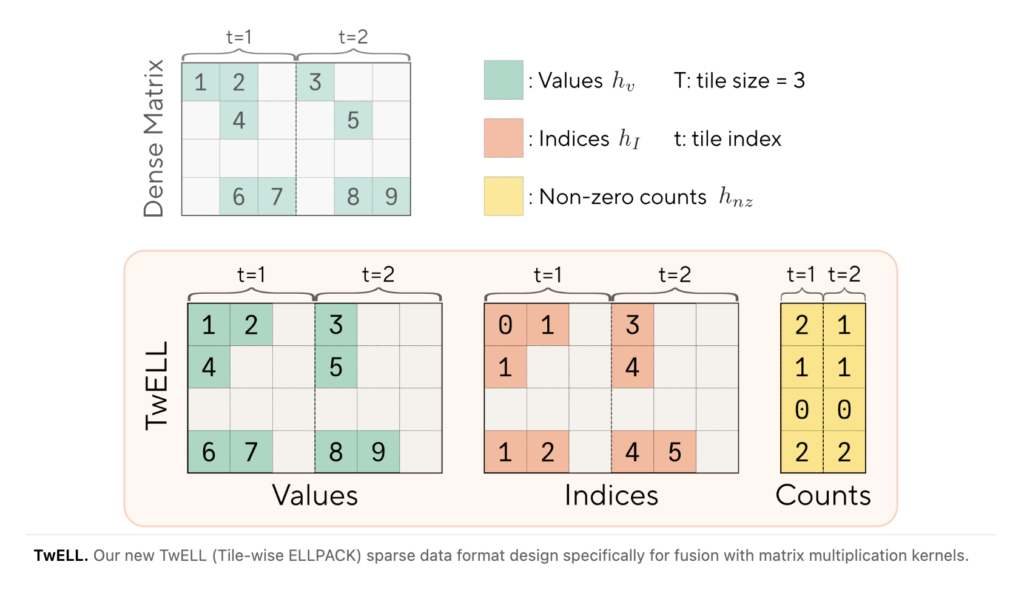
Sakana AI and NVIDIA Introduce TwELL with CUDA Kernels for 20.5% Inference and 21.9% Training Speedup in LLMs

Scaling large language models (LLMs) is expensive. Every token processed during inference and every gradient computed during training flows through feedforward layers that account for over two-thirds of model parameters and more than 80% of total FLOPs in larger models. A team researchers from Sakana AI and NVIDIA have worked on a new research that

Sakana AI and NVIDIA Introduce TwELL with CUDA Kernels for 20.5% Inference and 21.9% Training Speedup in LLMs Read More »

A Coding Implementation to Build Agent-Native Memory Infrastructure with Memori for Persistent Multi-User and Multi-Session LLM Applications

In this tutorial, we implement how Memori serves as an agent-native memory infrastructure layer for building more persistent, context-aware LLM applications. We start by setting up Memori in a Google Colab environment and connecting it to both synchronous and asynchronous OpenAI clients, so that every model call can automatically pass through the memory layer. We

A Coding Implementation to Build Agent-Native Memory Infrastructure with Memori for Persistent Multi-User and Multi-Session LLM Applications Read More »

Best Vector Databases in 2026: Pricing, Scale Limits, and Architecture Tradeoffs Across Nine Leading Systems

Vector databases have graduated from experimental tooling to mission-critical infrastructure. In 2026, vector databases serve as the core retrieval layer for RAG pipelines, semantic search systems, and agentic AI workflows — and choosing the wrong one has real cost and performance consequences. This guide breaks down the top vector databases available today, covering architecture, performance,

Best Vector Databases in 2026: Pricing, Scale Limits, and Architecture Tradeoffs Across Nine Leading Systems Read More »

OpenClaw vs Hermes Agent: Why Nous Research’s Self-Improving Agent Now Leads OpenRouter’s Global Rankings

The open-source AI agent space has a new leader. As of May 10, 2026, Hermes Agent — built by Nous Research — has overtaken OpenClaw to hold the #1 position on OpenRouter’s global daily app and agent rankings. Hermes is currently generating 224 billion daily tokens on OpenRouter versus OpenClaw’s 186 billion, making it the

OpenClaw vs Hermes Agent: Why Nous Research’s Self-Improving Agent Now Leads OpenRouter’s Global Rankings Read More »

ℹ

How to Build a Cost-Aware LLM Routing System with NadirClaw Using Local Prompt Classification and Gemini Model Switching

In this tutorial, we explore NadirClaw as an intelligent routing layer that classifies prompts into simple and complex tiers before sending them to the most suitable model. We start by installing the required packages, setting up an optional Gemini API key, and testing the local classifier through the NadirClaw CLI without making any live LLM

How to Build a Cost-Aware LLM Routing System with NadirClaw Using Local Prompt Classification and Gemini Model Switching Read More »

NVIDIA AI Just Released cuda-oxide: An Experimental Rust-to-CUDA Compiler Backend that Compiles SIMT GPU Kernels Directly to PTX

NVIDIA AI researchers recently released cuda-oxide, an experimental compiler that allows developers to write CUDA SIMT (Single Instruction, Multiple Threads) GPU kernels in standard Rust code. The project compiles Rust directly to PTX (Parallel Thread Execution) — the assembly-like intermediate representation that CUDA uses to target NVIDIA GPUs — without requiring domain-specific languages, foreign function

NVIDIA AI Just Released cuda-oxide: An Experimental Rust-to-CUDA Compiler Backend that Compiles SIMT GPU Kernels Directly to PTX Read More »