Editors Pick

Auto Added by WPeMatico

JetBrains Releases Mellum2: A 12B MoE Model for Fast, Specialized Tasks in Multi-Model AI Pipelines

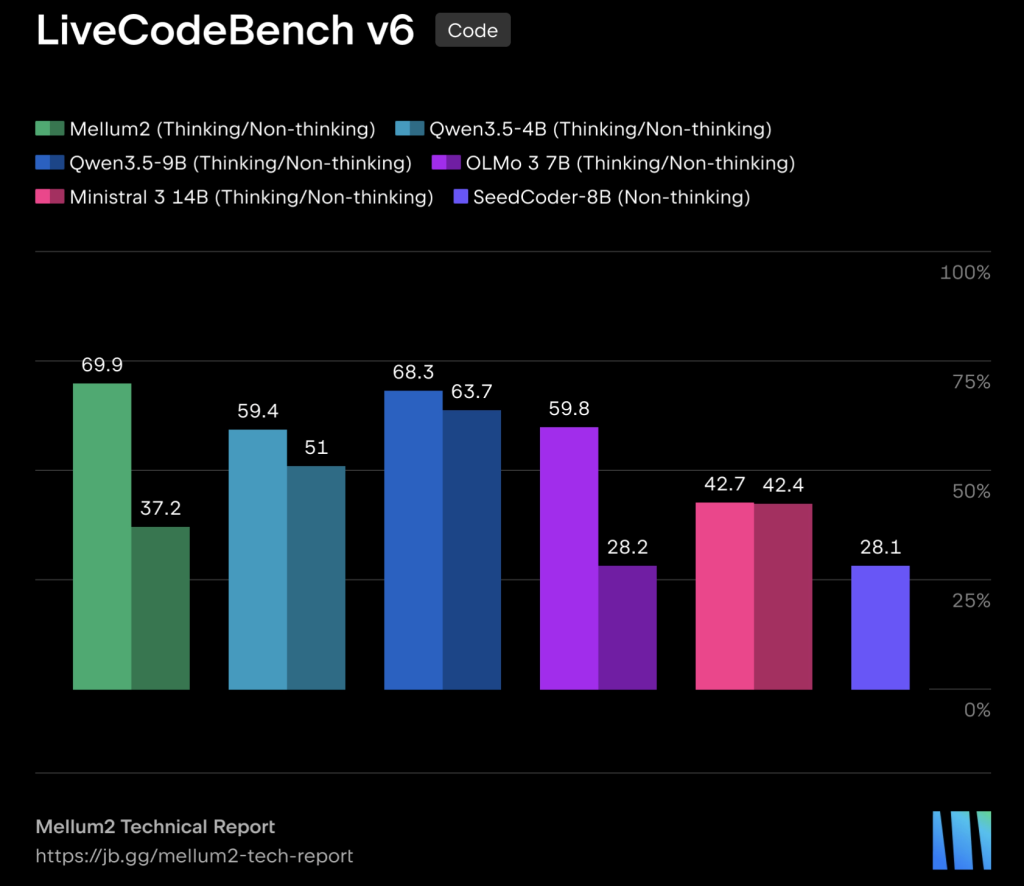
JetBrains released Mellum2, open-sourcing the weights under the Apache 2.0 license. The first version of Mellum was a completion-focused 4B dense model. Mellum2 is its successor: a general-purpose model specialized in software engineering. It covers code generation and editing, debugging, multi-step reasoning, tool use and function calling, agentic coding, and conversational programming assistance. JetBrains team […]
JetBrains Releases Mellum2: A 12B MoE Model for Fast, Specialized Tasks in Multi-Model AI Pipelines Read More »

How to Speed Up Transformer Training Using NVIDIA Apex (FusedAdam, FusedLayerNorm) and Native torch.amp

In this tutorial, we work through an implementation of NVIDIA Apex, focusing on the components that still matter in modern GPU training workflows. Instead of treating Apex as a general mixed-precision library, we separate the older parts from the still-useful ones and test them directly. We begin by checking the CUDA runtime, building Apex with

How to Speed Up Transformer Training Using NVIDIA Apex (FusedAdam, FusedLayerNorm) and Native torch.amp Read More »

MiniMax Releases MiniMax M3 with MSA Architecture Supporting 1M-Token Context, Native Multimodality, and Agentic Coding

MiniMax officially released MiniMax M3 on June 1, 2026. The model introduces MSA (MiniMax Sparse Attention), a new sparse attention architecture that gives M3 a 1M-token context window. M3 also supports image and video input and desktop computer operation natively. The API is live now. MiniMax M3 is available today via MiniMax Code, the MiniMax

MiniMax Releases MiniMax M3 with MSA Architecture Supporting 1M-Token Context, Native Multimodality, and Agentic Coding Read More »

🪽

Meet Memory OS: A 6-Layer Open-Source Memory Stack Built on Top of Hermes Agent

Hermes Agent already remembers across sessions. The open-source agent from Nous Research ships with curated memory files and full-text session search. But a new community project argues that built-in memory is too shallow for serious work. A new library named ‘Memory OS‘ has been released under an MIT license by a developer (ClaudioDrews). It stacks

Meet Memory OS: A 6-Layer Open-Source Memory Stack Built on Top of Hermes Agent Read More »

Parallax: A Parameterized Local Linear Attention That Keeps Softmax and Adds a Learned Covariance Correction Branch

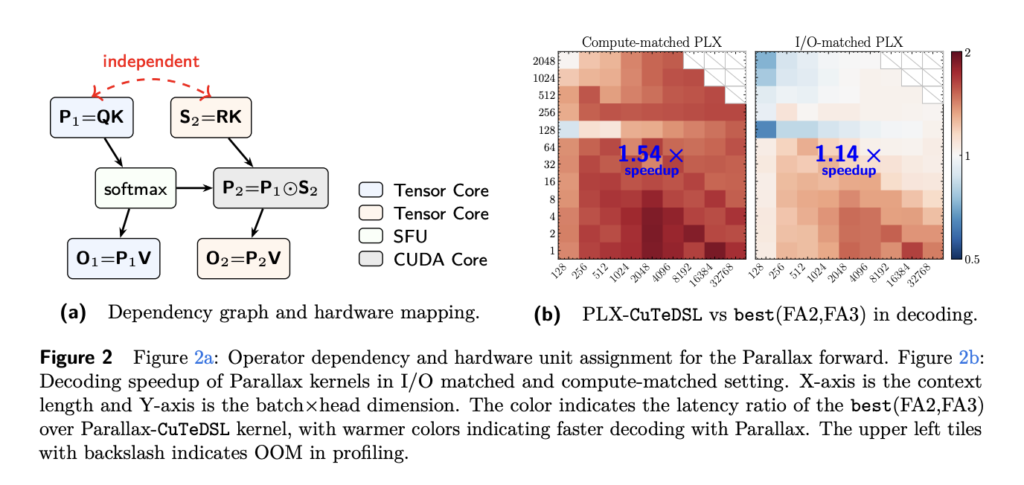
The Transformer’s attention mechanism has barely changed since 2017. Most efficiency work has tried to replace softmax attention outright. A new paper takes a different route. It keeps softmax attention and bolts on a correction branch. A team of researchers from Northwestern University, Tilde Research, and University of Washington introduce a parameterized Local Linear Attention

Parallax: A Parameterized Local Linear Attention That Keeps Softmax and Adds a Learned Covariance Correction Branch Read More »

An Implementation of the Microsoft Agent Governance Toolkit for Safe AI Agent Tool Use with Policies, Approvals, Audit Logs, and Risk Controls

In this tutorial, we build a governed AI-agent workflow using Microsoft’s Agent Governance Toolkit as the reference point. We create a Colab-ready implementation where agents do not directly execute tools; instead, every action first passes through a governance layer that checks the agent’s identity, trust score, risk tier, requested tool, action type, sensitivity level, and

An Implementation of the Microsoft Agent Governance Toolkit for Safe AI Agent Tool Use with Policies, Approvals, Audit Logs, and Risk Controls Read More »

📢

A Coding Implementation on Loguru for Designing Robust, Structured, Concurrent, and Production-Ready Python Logging Pipelines

In this tutorial, we implement a practical use case with Loguru, a powerful, flexible, and production-ready logging library for Python. We start by building a clean, idempotent logging setup that can be safely rerun without duplicating handlers or producing messy output. From there, we move step by step through structured logging, contextual logging, custom log

A Coding Implementation on Loguru for Designing Robust, Structured, Concurrent, and Production-Ready Python Logging Pipelines Read More »

Trajectory Releases a Concurrent Multi-LoRA Training Stack for Continual Learning, Reporting a 2.81× Experiment-Throughput Gain

Trajectory’s concurrent multi-LoRA stack reports a 2.81× experiment-throughput gain over single-tenant RL, with all code in the NovaSky-AI/SkyRL GitHub repository. Most language models improve in discontinuous jumps. A team collects data, trains, and ships a new version. This takes months and produces remarkable or catastrophic behavior for users. Trajectory wants to replace that cycle with

Trajectory Releases a Concurrent Multi-LoRA Training Stack for Continual Learning, Reporting a 2.81× Experiment-Throughput Gain Read More »

⭐

Build Skill-Augmented AI Agents with SkillNet for Search, Evaluation, Graph Analysis, and Task Planning

In this tutorial, we implement a SkillNet use case as a practical framework for discovering, installing, inspecting, evaluating, and organizing reusable AI skills. We start by setting up a robust SkillNet client with SDK and REST fallback support, then compare keyword search with semantic search to understand how skills can be found for different task

Build Skill-Augmented AI Agents with SkillNet for Search, Evaluation, Graph Analysis, and Task Planning Read More »

Best Text-to-Speech TTS Models in 2026: A Benchmark-Based Comparison

Text-to-speech TTS moved fast over the past year. The line between synthetic and human speech narrowed. Latency dropped below 100 milliseconds for some real-time systems. Emotional control became a standard feature rather than a research demo. This guide reviews the models that really matter in 2026. It is written for AI professionals choosing a model

Best Text-to-Speech TTS Models in 2026: A Benchmark-Based Comparison Read More »