AI Shorts

Auto Added by WPeMatico

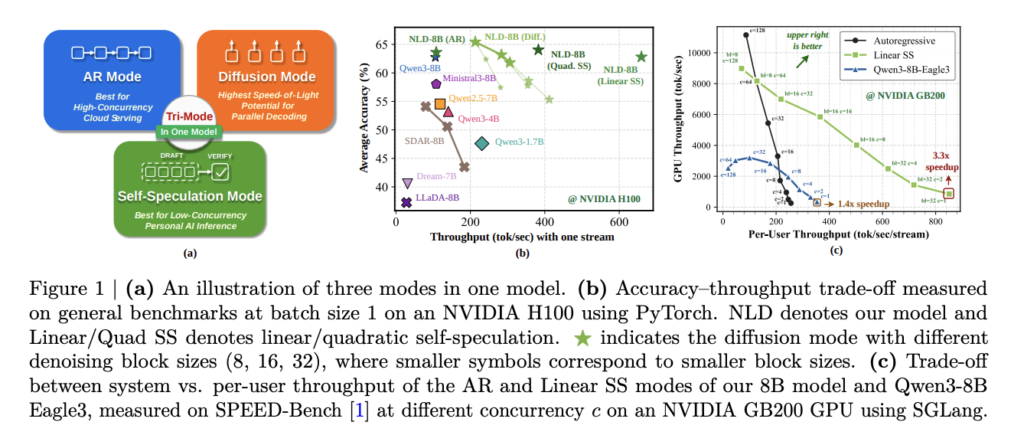
NVIDIA AI Releases Nemotron-Labs-Diffusion: A Tri-Mode Language Model with 6× Tokens Per Forward Over Qwen3-8B

NVIDIA researchers have released Nemotron-Labs-Diffusion, a language model family that unifies three decoding modes in one architecture. The model supports autoregressive (AR) decoding, diffusion-based parallel decoding, and self-speculation decoding. It is available in 3B, 8B, and 14B parameter sizes. The family includes base, instruct, and vision-language variants. Sequential Decoding Limits Throughput Standard autoregressive (AR) language […]
NVIDIA AI Releases Nemotron-Labs-Diffusion: A Tri-Mode Language Model with 6× Tokens Per Forward Over Qwen3-8B Read More »

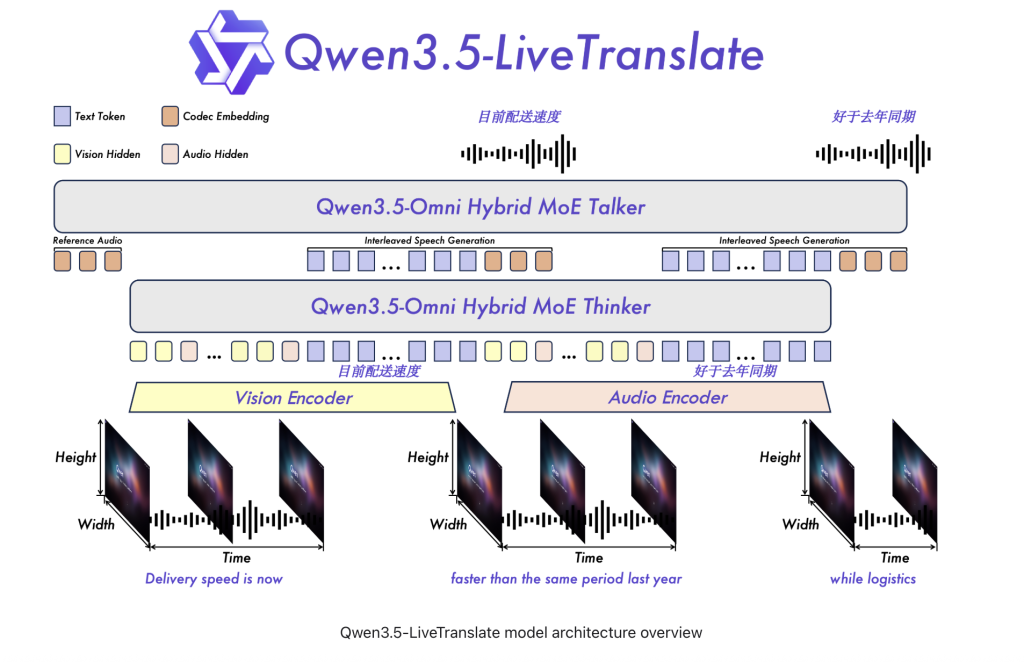
Alibaba Qwen Team Introduces Qwen3.5-LiveTranslate-Flash: Real-Time Multimodal Interpretation Across 60 Languages at 2.8-Second Latency

Simultaneous interpretation is one of the harder problems in applied AI. You’re asking a model to translate speech before the speaker has finished a sentence. Every extra second of delay breaks the illusion of real-time communication. Alibaba’s Qwen team has been chipping away at this with each release. Their latest model, Qwen3.5-LiveTranslate-Flash, brings that latency

Alibaba Qwen Team Introduces Qwen3.5-LiveTranslate-Flash: Real-Time Multimodal Interpretation Across 60 Languages at 2.8-Second Latency Read More »

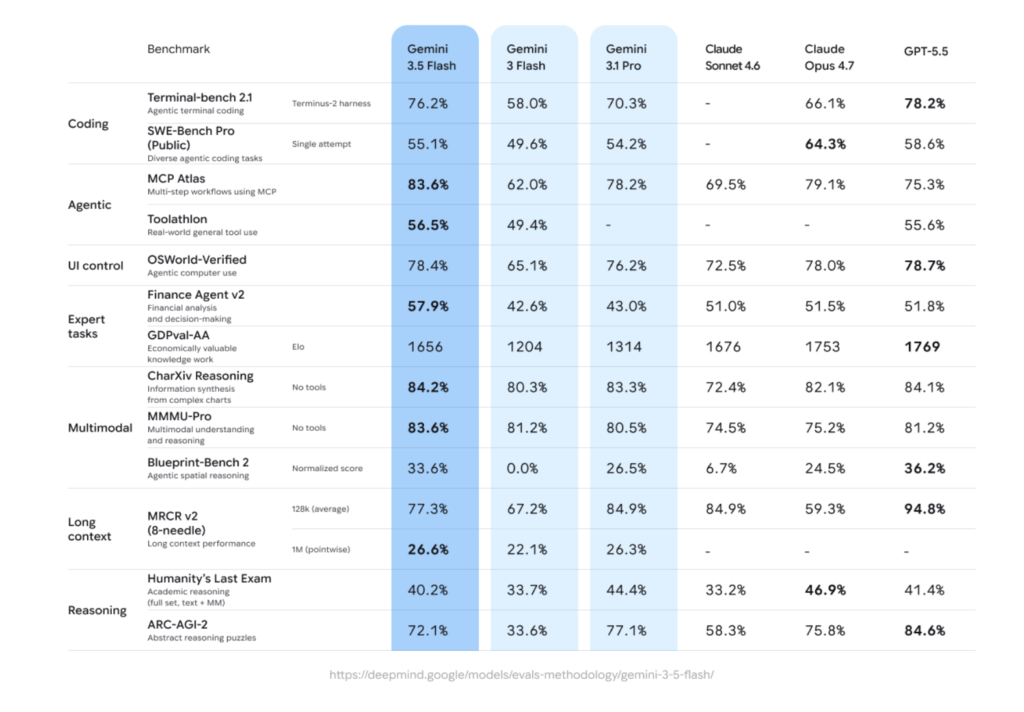
Google Introduces Gemini 3.5 Flash at I/O 2026: A Faster and Cheaper Model for AI Agents and Coding

Google just released Gemini 3.5 Flash at Google I/O May, 2026. It is the first Gemini 3.5 model. The series combines frontier intelligence with action. Google calls it a major leap for intelligent agents. The Flash tier has historically been faster and cheaper. 3.5 Flash outperforms Gemini 3.1 Pro on challenging benchmarks. The previous premium

Google Introduces Gemini 3.5 Flash at I/O 2026: A Faster and Cheaper Model for AI Agents and Coding Read More »

Google Launches Antigravity 2.0 at I/O 2026: A Standalone Agent-First Platform with CLI, SDK, Managed Execution, and Enterprise Support

Google used its I/O 2026 developer keynote to ship a meaningful architectural shift in how it packages AI-assisted development. The company announced Google Antigravity 2.0 — a standalone desktop application built entirely around agent orchestration alongside an Antigravity CLI, an Antigravity SDK, Managed Agents in the Gemini API, and enterprise support through the Gemini Enterprise

Google Launches Antigravity 2.0 at I/O 2026: A Standalone Agent-First Platform with CLI, SDK, Managed Execution, and Enterprise Support Read More »

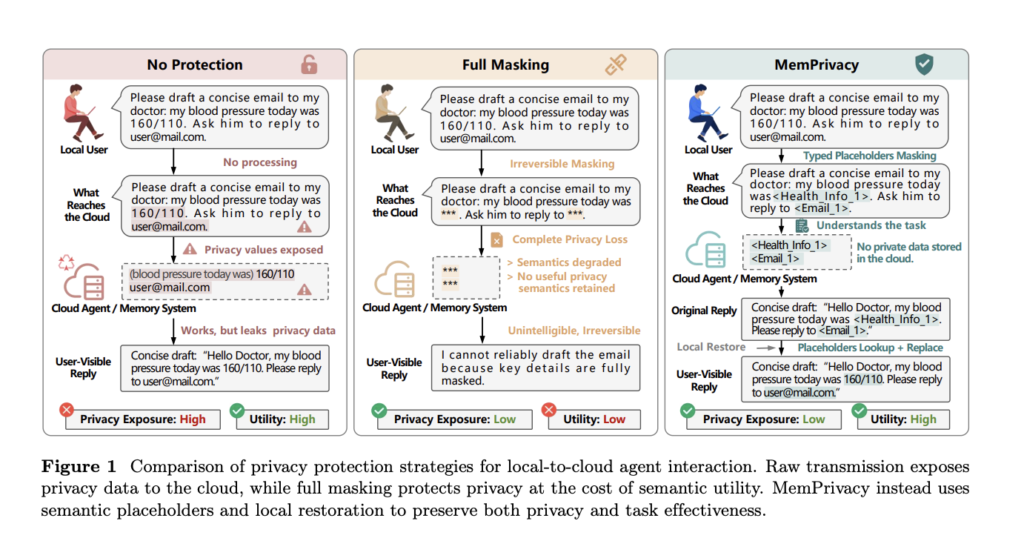
Meet MemPrivacy: An Edge-Cloud Framework that Uses Local Reversible Pseudonymization to Protect User Data Without Breaking Memory Utility

As LLM-powered agents move from research to production, one design tension is becoming harder to ignore: the more useful cloud-hosted memory becomes, the more private user data it exposes. Researchers from MemTensor (Shanghai), HONOR Device and Tongji University have introduced MemPrivacy, a framework that attempts to resolve this tension without sacrificing the utility that makes

Meet MemPrivacy: An Edge-Cloud Framework that Uses Local Reversible Pseudonymization to Protect User Data Without Breaking Memory Utility Read More »

Stochastic Gradient Descent (SGD’s) Frequency Bias and How Adam Fixes It 

Modern language models are trained on data with extremely uneven token distributions. A small number of words appear in almost every sentence, while many rare but meaningful tokens occur only occasionally. This creates a hidden optimization challenge: parameters associated with common tokens receive constant gradient updates, while parameters tied to rare tokens may go hundreds

Stochastic Gradient Descent (SGD’s) Frequency Bias and How Adam Fixes It  Read More »

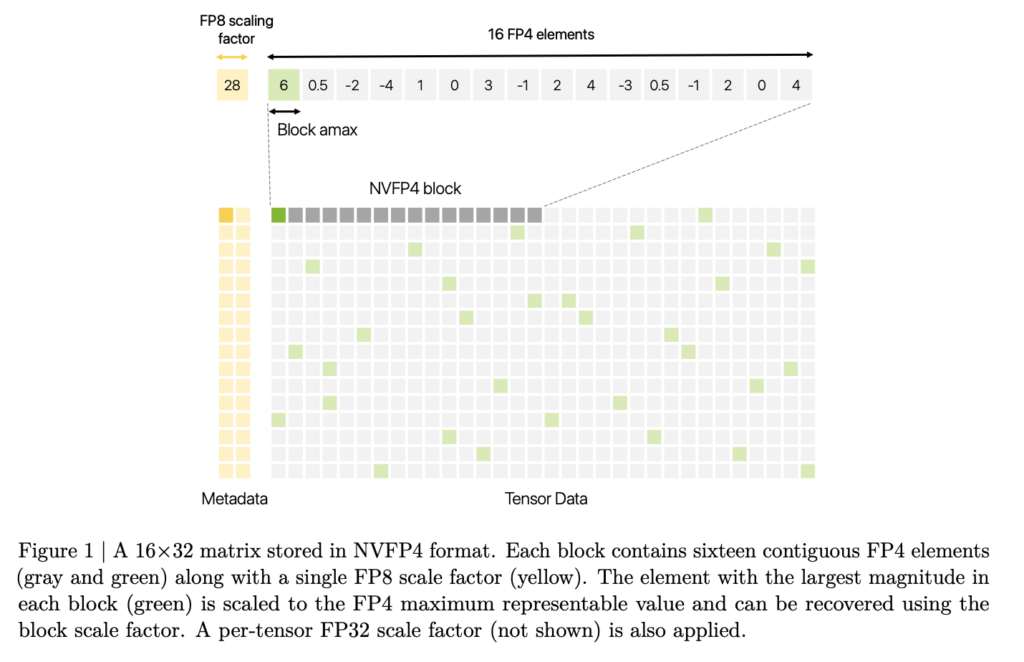
NVIDIA Introduces a 4-Bit Pretraining Methodology Using NVFP4, Validated on a 12B Hybrid Mamba-Transformer at 10T Token Horizon

Pretraining frontier-scale LLMs in FP8 is now standard practice, but moving to 4-bit floating point has remained an open research problem because narrower formats compress dynamic range and amplify quantization error at long token horizons. A new research from NVIDIA describes a pretraining methodology built around NVFP4, a 4-bit microscaling format supported natively by Blackwell

NVIDIA Introduces a 4-Bit Pretraining Methodology Using NVFP4, Validated on a 12B Hybrid Mamba-Transformer at 10T Token Horizon Read More »

Vercel Labs Introduces Zero, a Systems Programming Language Designed So AI Agents Can Read, Repair, and Ship Native Programs

Most programming languages were designed for humans who read error messages, interpret warnings, and manually trace through stack output to fix bugs. AI agents do none of those things well. They work better with structured data: predictable tokens, stable codes, and machine-parseable repair hints. That gap is what Vercel Labs is trying to close by

Vercel Labs Introduces Zero, a Systems Programming Language Designed So AI Agents Can Read, Repair, and Ship Native Programs Read More »

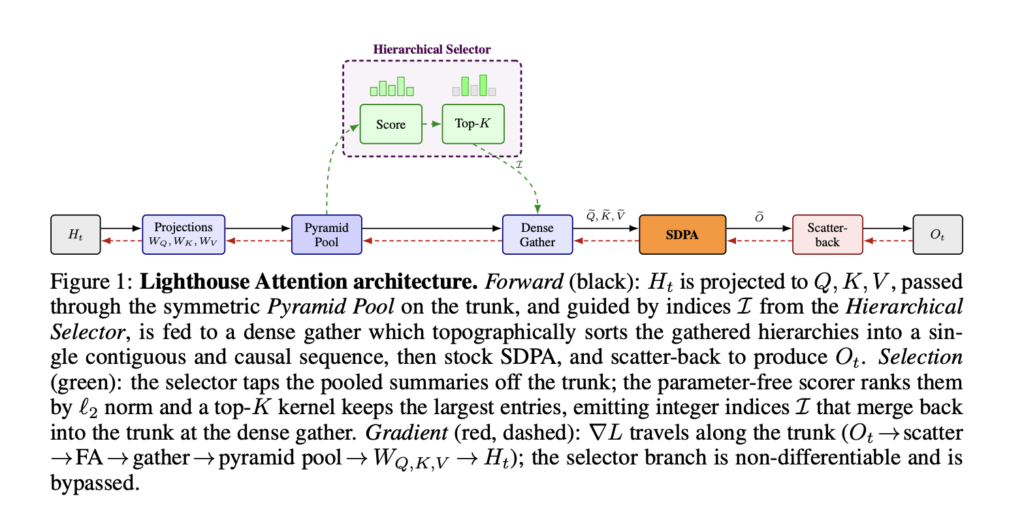
Nous Research Proposes Lighthouse Attention: A Training-Only Selection-Based Hierarchical Attention That Delivers 1.4–1.7× Pretraining Speedup at Long Context

Training large language models on long sequences has a well-known problem: attention is expensive. The scaled dot-product attention (SDPA) at the core of every transformer scales quadratically Θ(N²) in both compute and memory with sequence length N. FlashAttention addressed this through IO-aware tiling that avoids materializing the full N×N attention matrix in high-bandwidth memory, reducing

Nous Research Proposes Lighthouse Attention: A Training-Only Selection-Based Hierarchical Attention That Delivers 1.4–1.7× Pretraining Speedup at Long Context Read More »

Meet LiteLLM Agent Platform: A Kubernetes-Based, Self-Hosted Infrastructure Layer for Isolated Agent Sandboxes and Persistent Session Management in Production

Running AI agents in a local script is straightforward. Running them reliably in production across teams, across restarts, with isolated environments per context is a different problem entirely. BerriAI, the company behind the LiteLLM AI Gateway, is now open-sourcing a purpose-built answer to that problem: the LiteLLM Agent Platform. The platform is described as a

Meet LiteLLM Agent Platform: A Kubernetes-Based, Self-Hosted Infrastructure Layer for Isolated Agent Sandboxes and Persistent Session Management in Production Read More »