Tech News

Auto Added by WPeMatico

Cisco AI Introduces FAPO: Pipeline-Aware Prompt Optimization With Step-Level Failure Attribution and Claude Code Orchestration

Getting prompts right is still the hardest part of shipping reliable LLM applications. Small wording changes can swing accuracy by 20 percent. What works on a few examples often breaks at scale. When a multi-step pipeline returns a wrong answer, finding the failing step means inspecting intermediate outputs by hand. Cisco AI introduced FAPO to […]

Cisco AI Introduces FAPO: Pipeline-Aware Prompt Optimization With Step-Level Failure Attribution and Claude Code Orchestration Read More »

Nous Research Updates Hermes Agent With a Blank Slate Mode That Pins Toolsets via platform_toolsets.cli and disabled_toolsets

Nous Research has added a Blank Slate setup mode to its open-source Hermes Agent. It inverts the usual onboarding. Instead of a fully loaded default, you start with almost nothing. Hermes Agent is the self-improving agent framework from Nous Research. It runs on your own machine. The team announced the new mode on X. Blank

Nous Research Updates Hermes Agent With a Blank Slate Mode That Pins Toolsets via platform_toolsets.cli and disabled_toolsets Read More »

Yandex Open-Sources YaFF: A Zero-Copy Wire Format for Protobuf With Near-Struct Read Speed

TLDR YaFF is Yandex’s open-source zero-copy wire format for Protobuf — Apache 2.0, currently C++, v0.1.0. The .proto file stays the source of truth; only the physical memory layout changes. On Yandex’s benchmarks, the Flat Layout reads hot data ~3.8× faster than FlatBuffers, within 1.2× of a raw C++ struct. Four layouts — Fixed, Flat,

Yandex Open-Sources YaFF: A Zero-Copy Wire Format for Protobuf With Near-Struct Read Speed Read More »

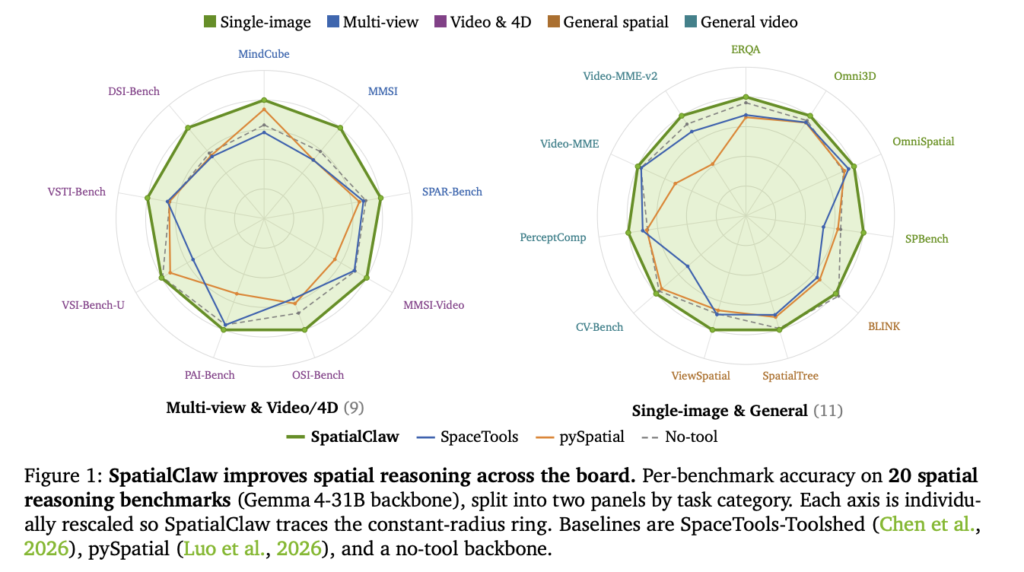
NVIDIA AI Introduce SpatialClaw: A Training-Free Agent That Treats Code as the Action Interface for Spatial Reasoning

NVIDIA Research has released SpatialClaw, a training-free framework for spatial reasoning. It targets a persistent weakness in vision-language models (VLMs). These models still struggle to judge where objects are, how they relate, and how they move in 3D. SpatialClaw does not retrain the model. Instead, it changes the action interface the agent uses to call

NVIDIA AI Introduce SpatialClaw: A Training-Free Agent That Treats Code as the Action Interface for Spatial Reasoning Read More »

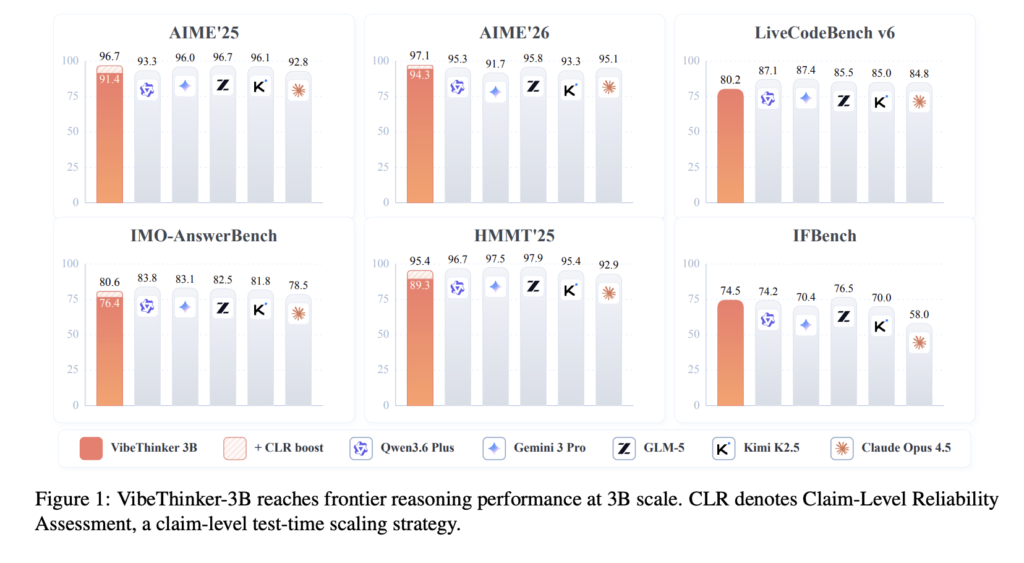
VibeThinker-3B: A 3B Dense Reasoning Model Built on Qwen2.5-Coder-3B With the Spectrum-to-Signal Post-Training Pipeline

While recent breakthroughs in AI reasoning have largely been driven by massive scale, pouring in billions of parameters to cross complex cognitive thresholds—VibeThinker-3B is charting a completely different path. Created by researchers from Sina Weibo Inc (China), this 3-billion-parameter model proves that efficiency can punch far above its weight class. Released under an open-source MIT

VibeThinker-3B: A 3B Dense Reasoning Model Built on Qwen2.5-Coder-3B With the Spectrum-to-Signal Post-Training Pipeline Read More »

Liquid AI Introduces LFM2.5-Embedding-350M and LFM2.5-ColBERT-350M: Dense Bi-Encoder and Late-Interaction Models for Fast Multilingual Search Across 11 Languages

This week, Liquid AI released two new retrieval models. They are LFM2.5-ColBERT-350M and LFM2.5-Embedding-350M. Both hold 350M parameters. Both are the first bidirectional members of the LFM family. They build on LFM2.5-350M-Base, released in March. The pair targets fast multilingual and cross-lingual search across 11 languages. Their footprint is small enough to run almost anywhere.

Liquid AI Introduces LFM2.5-Embedding-350M and LFM2.5-ColBERT-350M: Dense Bi-Encoder and Late-Interaction Models for Fast Multilingual Search Across 11 Languages Read More »

Perplexity Launches Brain, a Self-Improving Memory System That Builds a Context Graph of an Agent’s Work and Learns Overnight

Most AI memory remembers the user. It stores your preferences, your tastes, and your role. Perplexity is taking a different path. Today, Perplexity launched Brain, a self-improving memory system for its agent product, Computer. Brain does not focus on remembering you. It remembers what the agent did. That reframes what memory in AI is for.

Perplexity Launches Brain, a Self-Improving Memory System That Builds a Context Graph of an Agent’s Work and Learns Overnight Read More »

OpenAI Releases LifeSciBench, a 750-Task Benchmark Grading AI Models on Real Life-Science Research With Expert-Written Rubric

Most biology benchmarks ask narrow, fact-based questions with clean answers. Scientists weigh imperfect evidence and make decisions. OpenAI released LifeSciBench and it targets that gap directly. Even the strongest model passes roughly one task in three. The benchmark is far from saturated. What is LifeSciBench LifeSciBench contains 750 expert-authored tasks. They span seven workflows and

OpenAI Releases LifeSciBench, a 750-Task Benchmark Grading AI Models on Real Life-Science Research With Expert-Written Rubric Read More »

Vercel Releases Eve: An Open-Source AI Agent Framework Where Each Agent is a Directory of Files Mapped to Capabilities

Vercel has released eve, an open-source framework for building, running, and scaling agents. The project is published as the npm package eve, licensed under Apache-2.0. Building an agent should mean defining what it does. It should not mean assembling all the plumbing that an agent needs to run in production. eve is the framework Vercel

Vercel Releases Eve: An Open-Source AI Agent Framework Where Each Agent is a Directory of Files Mapped to Capabilities Read More »

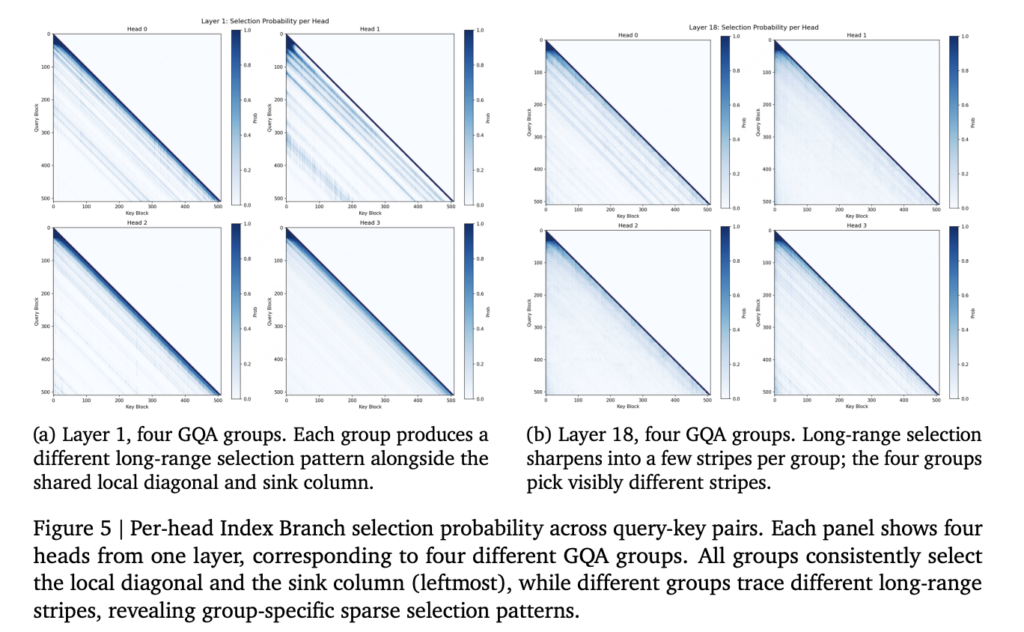
MiniMax Sparse Attention (MSA): a Two-Branch Block-Sparse Attention Trained on a 109B-Parameter MoE With a 3T-Token Budget

MiniMax released MSA (MiniMax Sparse Attention), a sparse attention method built directly on Grouped Query Attention (GQA). It targets one bottleneck: the quadratic cost of softmax attention at long context. The MiniMax research team tested it inside a 109B-parameter Mixture-of-Experts model trained with native multimodal data. They also open-sourced an inference kernel and shipped a

MiniMax Sparse Attention (MSA): a Two-Branch Block-Sparse Attention Trained on a 109B-Parameter MoE With a 3T-Token Budget Read More »