
Microsoft Agent 365 Enterprise Agent Governance
Why it matters: Agent 365 gives every AI agent an identity, a registry, and real oversight. See pricing, security architecture, rollout steps, and the gaps it leaves open.
Why it matters: Agent 365 gives every AI agent an identity, a registry, and real oversight. See pricing, security architecture, rollout steps, and the gaps it leaves open.
Explore how SAS AI-Driven Entity Resolution on SAS Viya combines no-code configuration, probabilistic matching, and industry-specific integrations to create trusted identities, improve data quality, and support critical decisions across sectors such as public services and financial crime prevention. The post From entity resolution to industry solutions: How AI‑driven entity resolution is evolving on SAS Viya
This post explores how Agentic AI and LLMs can help reduce employee attrition by delivering personalized development guidance based on workforce analytics and skill profiling. Using SAS Viya and governed AI workflows, the solution matches employees with tailored learning opportunities while supporting transparent, scalable, and data-driven workforce planning. The post Agentic AI for Workforce Analytics:
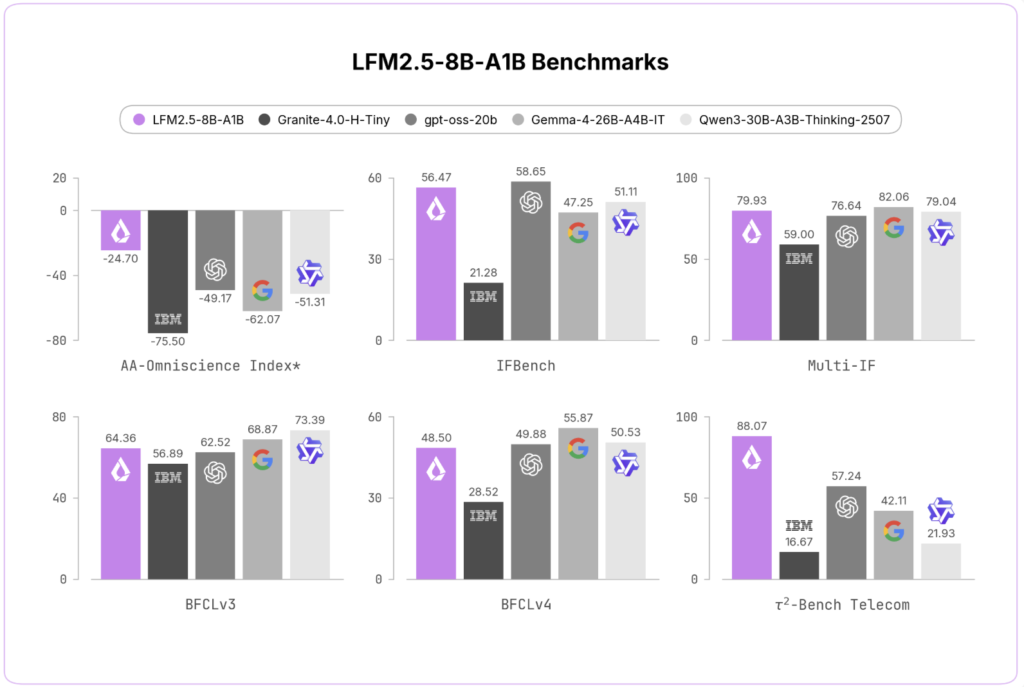
Liquid AI just shipped LFM2.5-8B-A1B. It is an on-device Mixture-of-Experts (MoE) model built for tool calling. The model holds 8.3B total parameters but activates only 1.5B per token. That sparsity is what lets it run on consumer hardware. The release follows LFM2-8B-A1B, which Liquid AI team published earlier. LFM2.5 is a new family of hybrid
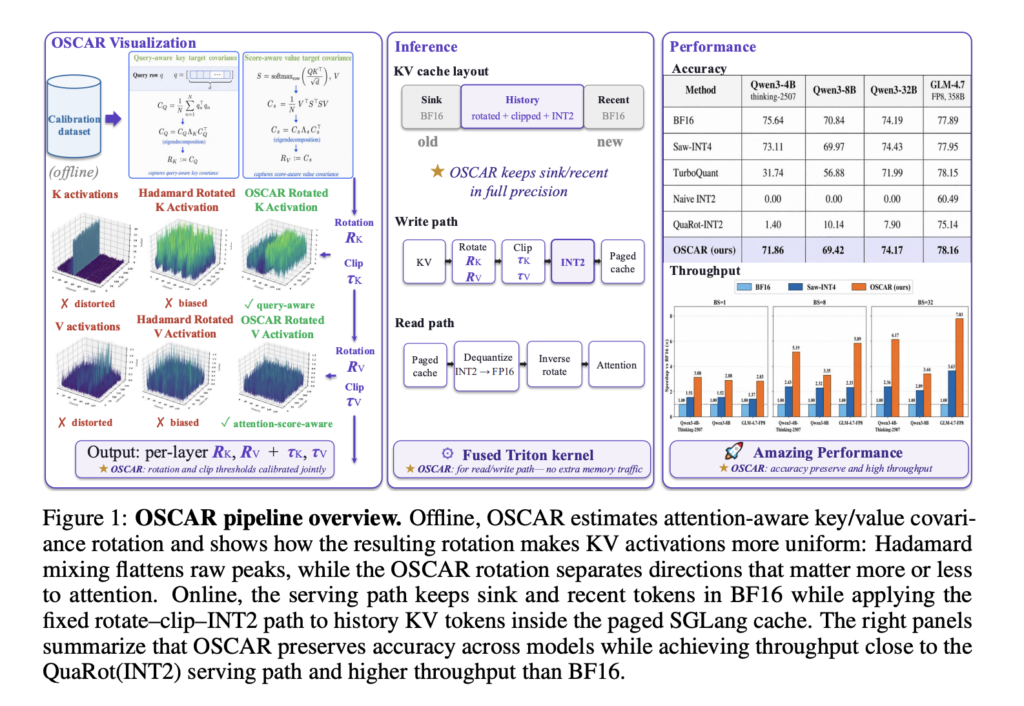
Long-context inference makes the KV cache one of the main costs of serving LLMs. During autoregressive decoding, the cache grows with context length, batch size, and model depth. At high batch sizes and long contexts with 100K tokens across dozens of concurrent requests the KV cache consumes a large fraction of GPU memory. Compressing it
This post demonstrates how Agentic AI and SAS Viya can modernize SME loan origination by combining OCR, LLMs, governed decisioning, and interactive dashboards to accelerate transparent, explainable, and scalable credit decisions. The post How Agentic AI Accelerates SME Credit Decisions with SAS Viya appeared first on SAS Blogs.
How Agentic AI Accelerates SME Credit Decisions with SAS Viya Read More »

Your AI agent is smart but forgetful. Every new session starts from zero — no memory of who you met, what you read, what you decided last Tuesday. GBrain is an open-source fix for that. Built by Garry Tan (President and CEO of Y Combinator) to power his own OpenClaw and Hermes deployments, it’s a
Alibaba’s Qwen team has unveiled Qwen3.7-Max, a flagship model built for the agent era. Unlike conventional chatbot-focused LLMs, it is designed as a foundation for autonomous AI agents that can code, debug, use tools, manage workflows, and execute long-running enterprise tasks. Alibaba claims the model can operate autonomously for up to 35 hours without performance
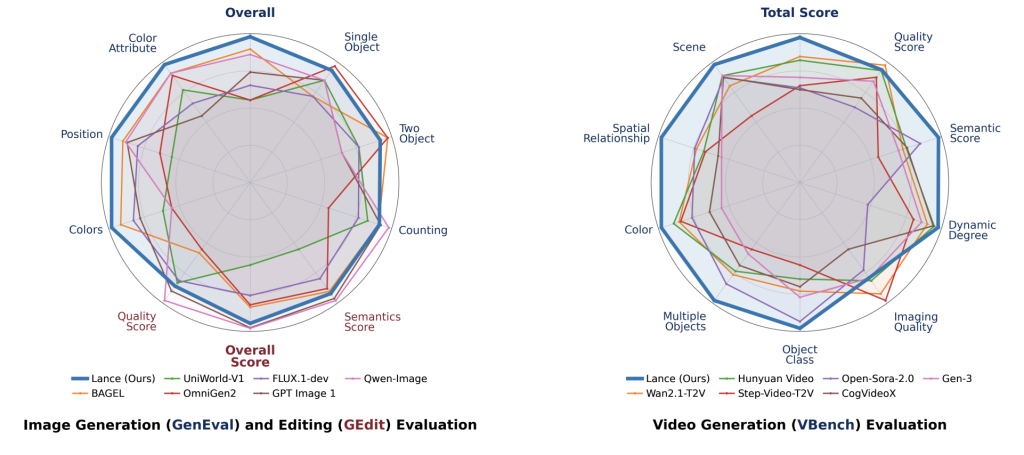
Building a single model that can both understand and generate images and videos is harder than it sounds. The two tasks pull in opposite directions. Understanding benefits from high-level semantic features tightly aligned with language. Generation needs low-level continuous representations that preserve texture, geometry, and temporal dynamics. Most systems handle this tension by separating the
Vector search underpins most retrieval-augmented generation (RAG) pipelines. At scale, it gets expensive. Storing 10 million document embeddings in float32 consumes 31 GB of RAM. For dev teams running local or on-premise inference, that number creates real constraints. A new open-source library called turbovec addresses this directly. It is a vector index written in Rust