New Releases

Auto Added by WPeMatico

Researchers from MIT, NVIDIA, and Zhejiang University Propose TriAttention: A KV Cache Compression Method That Matches Full Attention at 2.5× Higher Throughput

Long-chain reasoning is one of the most compute-intensive tasks in modern large language models. When a model like DeepSeek-R1 or Qwen3 works through a complex math problem, it can generate tens of thousands of tokens before arriving at an answer. Every one of those tokens must be stored in what is called the KV cache […]

Researchers from MIT, NVIDIA, and Zhejiang University Propose TriAttention: A KV Cache Compression Method That Matches Full Attention at 2.5× Higher Throughput Read More »

NVIDIA Releases AITune: An Open-Source Inference Toolkit That Automatically Finds the Fastest Inference Backend for Any PyTorch Model

Deploying a deep learning model into production has always involved a painful gap between the model a researcher trains and the model that actually runs efficiently at scale. TensorRT exists, Torch-TensorRT exists, TorchAO exists — but wiring them together, deciding which backend to use for which layer, and validating that the tuned model still produces

NVIDIA Releases AITune: An Open-Source Inference Toolkit That Automatically Finds the Fastest Inference Backend for Any PyTorch Model Read More »

Meta Superintelligence Lab Releases Muse Spark: A Multimodal Reasoning Model With Thought Compression and Parallel Agents

Meta Superintelligence Labs recently made a significant move by unveiling ‘Muse Spark’ — the first model in the Muse family. Muse Spark is a natively multimodal reasoning model with support for tool-use, visual chain of thought, and multi-agent orchestration. https://ai.meta.com/static-resource/muse-spark-eval-methodology What ‘Natively Multimodal’ Actually Means When Meta describes Muse Spark as ‘natively multimodal,’ it means

Meta Superintelligence Lab Releases Muse Spark: A Multimodal Reasoning Model With Thought Compression and Parallel Agents Read More »

Meet OSGym: A New OS Infrastructure Framework That Manages 1,000+ Replicas at $0.23/Day for Computer Use Agent Research

Training AI agents that can actually use a computer — opening apps, clicking buttons, browsing the web, writing code — is one of the hardest infrastructure problems in modern AI. It’s not a data problem. It’s not a model problem. It’s a plumbing problem. You need to spin up hundreds, potentially thousands, of full operating

Meet OSGym: A New OS Infrastructure Framework That Manages 1,000+ Replicas at $0.23/Day for Computer Use Agent Research Read More »

Z.AI Introduces GLM-5.1: An Open-Weight 754B Agentic Model That Achieves SOTA on SWE-Bench Pro and Sustains 8-Hour Autonomous Execution

Z.AI, the AI platform developed by the team behind the GLM model family, has released GLM-5.1 — its next-generation flagship model developed specifically for agentic engineering. Unlike models optimized for clean, single-turn benchmarks, GLM-5.1 is built for agentic tasks, with significantly stronger coding capabilities than its predecessor, and achieves state-of-the-art performance on SWE-Bench Pro while

Z.AI Introduces GLM-5.1: An Open-Weight 754B Agentic Model That Achieves SOTA on SWE-Bench Pro and Sustains 8-Hour Autonomous Execution Read More »

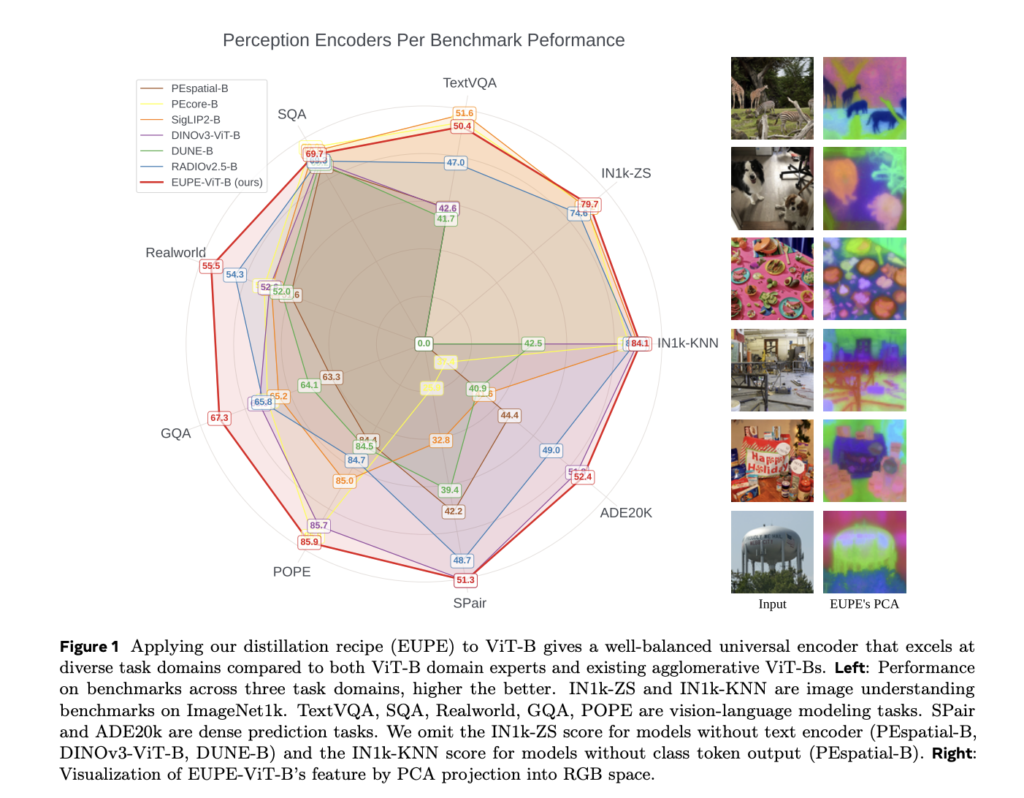
Meta AI Releases EUPE: A Compact Vision Encoder Family Under 100M Parameters That Rivals Specialist Models Across Image Understanding, Dense Prediction, and VLM Tasks

Running powerful AI on your smartphone isn’t just a hardware problem — it’s a model architecture problem. Most state-of-the-art vision encoders are enormous, and when you trim them down to fit on an edge device, they lose the capabilities that made them useful in the first place. Worse, specialized models tend to excel at one

Meta AI Releases EUPE: A Compact Vision Encoder Family Under 100M Parameters That Rivals Specialist Models Across Image Understanding, Dense Prediction, and VLM Tasks Read More »

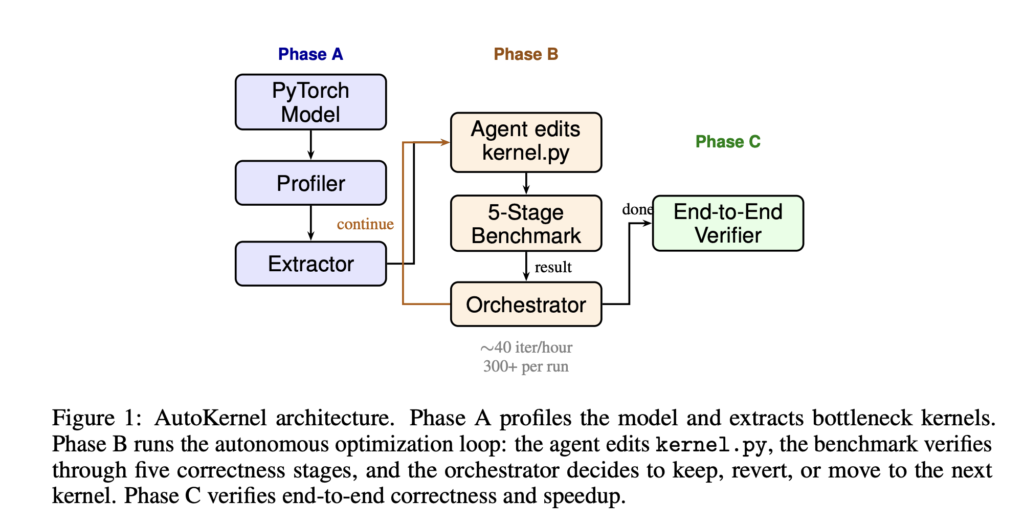
RightNow AI Releases AutoKernel: An Open-Source Framework that Applies an Autonomous Agent Loop to GPU Kernel Optimization for Arbitrary PyTorch Models

Writing fast GPU code is one of the most grueling specializations in machine learning engineering. Researchers from RightNow AI want to automate it entirely. The RightNow AI research team has released AutoKernel, an open-source framework that applies an autonomous LLM agent loop to GPU kernel optimization for arbitrary PyTorch models. The approach is straightforward: give

RightNow AI Releases AutoKernel: An Open-Source Framework that Applies an Autonomous Agent Loop to GPU Kernel Optimization for Arbitrary PyTorch Models Read More »

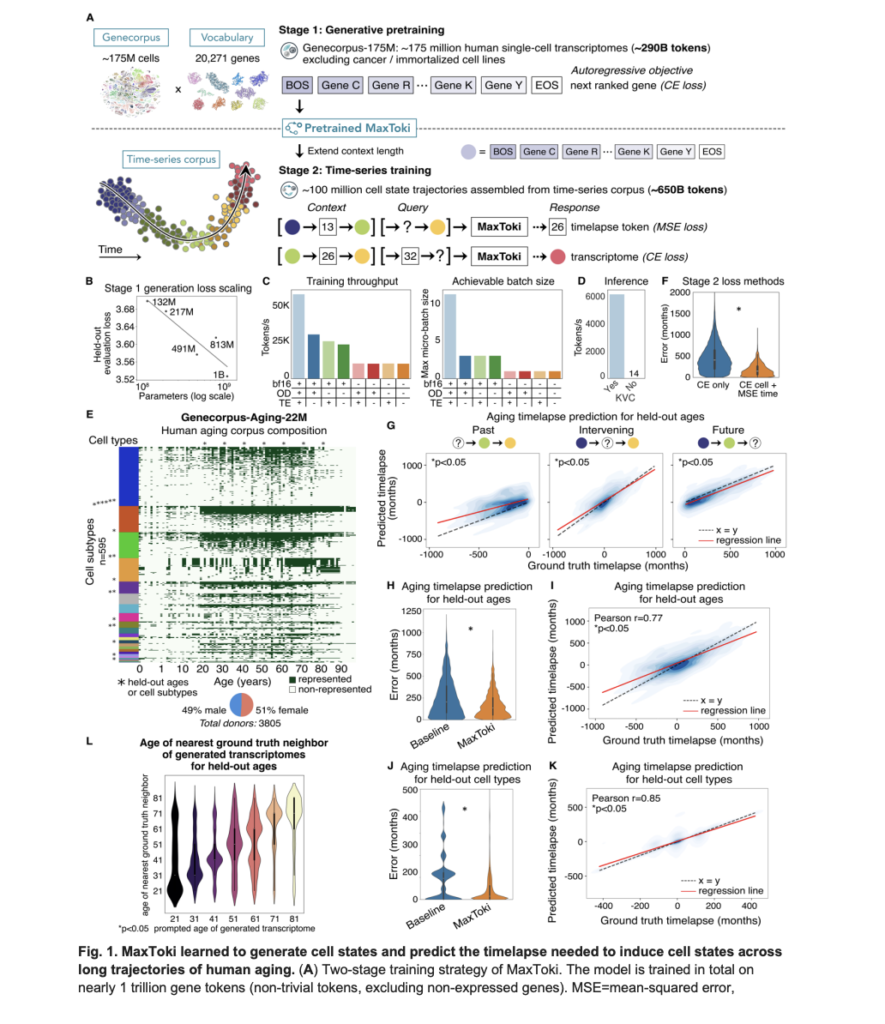
Meet MaxToki: The AI That Predicts How Your Cells Age — and What to Do About It

Most foundation models in biology have a fundamental blind spot: they see cells as frozen snapshots. Give a model a single-cell transcriptome — a readout of which genes are active in a cell at a given moment — and it can tell you a lot about what that cell is doing right now. What it

Meet MaxToki: The AI That Predicts How Your Cells Age — and What to Do About It Read More »

Meet ‘AutoAgent’: The Open-Source Library That Lets an AI Engineer and Optimize Its Own Agent Harness Overnight

There’s a particular kind of tedium that every AI engineer knows intimately: the prompt-tuning loop. You write a system prompt, run your agent against a benchmark, read the failure traces, tweak the prompt, add a tool, rerun. Repeat this a few dozen times and you might move the needle. It’s grunt work dressed up in

Meet ‘AutoAgent’: The Open-Source Library That Lets an AI Engineer and Optimize Its Own Agent Harness Overnight Read More »

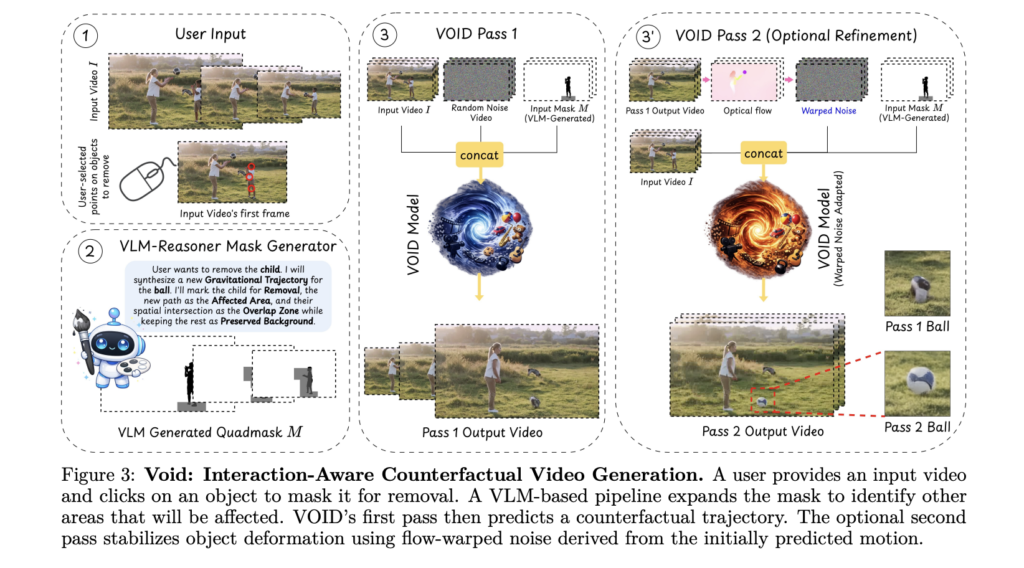
Netflix AI Team Just Open-Sourced VOID: an AI Model That Erases Objects From Videos — Physics and All

Video editing has always had a dirty secret: removing an object from footage is easy; making the scene look like it was never there is brutally hard. Take out a person holding a guitar, and you’re left with a floating instrument that defies gravity. Hollywood VFX teams spend weeks fixing exactly this kind of problem.

Netflix AI Team Just Open-Sourced VOID: an AI Model That Erases Objects From Videos — Physics and All Read More »