Language Model

Auto Added by WPeMatico

Liquid AI Releases LFM2.5-1.2B-Thinking: a 1.2B Parameter Reasoning Model That Fits Under 1 GB On-Device

Liquid AI has released LFM2.5-1.2B-Thinking, a 1.2 billion parameter reasoning model that runs fully on device and fits in about 900 MB on a modern phone. What needed a data center 2 years ago can now run offline on consumer hardware, with a focus on structured reasoning traces, tool use, and math, rather than general […]

Liquid AI Releases LFM2.5-1.2B-Thinking: a 1.2B Parameter Reasoning Model That Fits Under 1 GB On-Device Read More »

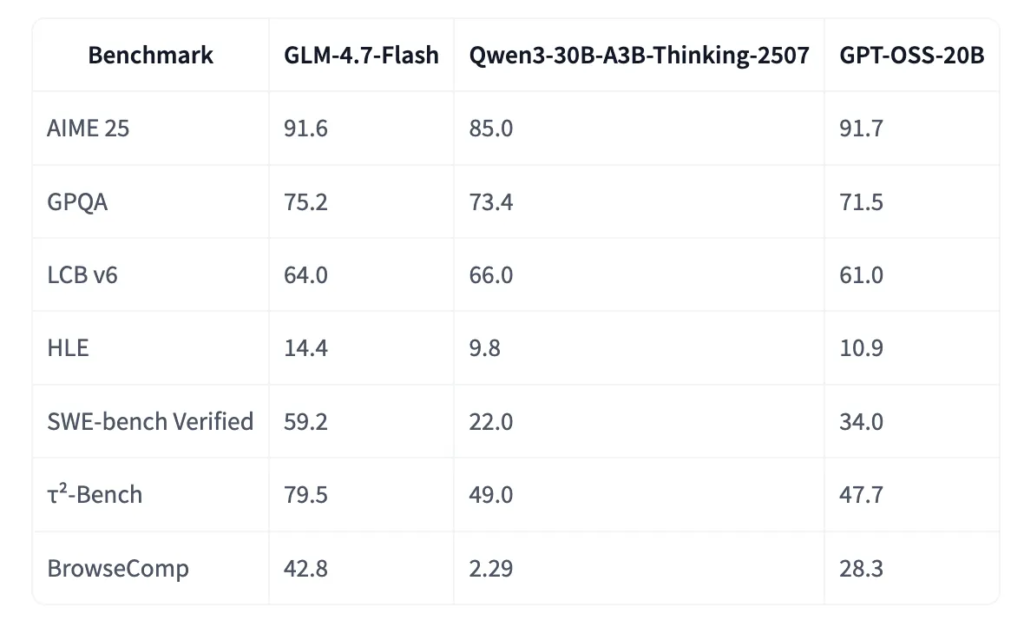
Zhipu AI Releases GLM-4.7-Flash: A 30B-A3B MoE Model for Efficient Local Coding and Agents

GLM-4.7-Flash is a new member of the GLM 4.7 family and targets developers who want strong coding and reasoning performance in a model that is practical to run locally. Zhipu AI (Z.ai) describes GLM-4.7-Flash as a 30B-A3B MoE model and presents it as the strongest model in the 30B class, designed for lightweight deployment where

Zhipu AI Releases GLM-4.7-Flash: A 30B-A3B MoE Model for Efficient Local Coding and Agents Read More »

How to Design a Fully Streaming Voice Agent with End-to-End Latency Budgets, Incremental ASR, LLM Streaming, and Real-Time TTS

In this tutorial, we build an end-to-end streaming voice agent that mirrors how modern low-latency conversational systems operate in real time. We simulate the complete pipeline, from chunked audio input and streaming speech recognition to incremental language model reasoning and streamed text-to-speech output, while explicitly tracking latency at every stage. By working with strict latency

How to Design a Fully Streaming Voice Agent with End-to-End Latency Budgets, Incremental ASR, LLM Streaming, and Real-Time TTS Read More »

Microsoft Research Releases OptiMind: A 20B Parameter Model that Turns Natural Language into Solver Ready Optimization Models

Microsoft Research has released OptiMind, an AI based system that converts natural language descriptions of complex decision problems into mathematical formulations that optimization solvers can execute. It targets a long standing bottleneck in operations research, where translating business intent into mixed integer linear programs usually needs expert modelers and days of work. What OptiMind Is

Microsoft Research Releases OptiMind: A 20B Parameter Model that Turns Natural Language into Solver Ready Optimization Models Read More »

Nous Research Releases NousCoder-14B: A Competitive Olympiad Programming Model Post-Trained on Qwen3-14B via Reinforcement Learning

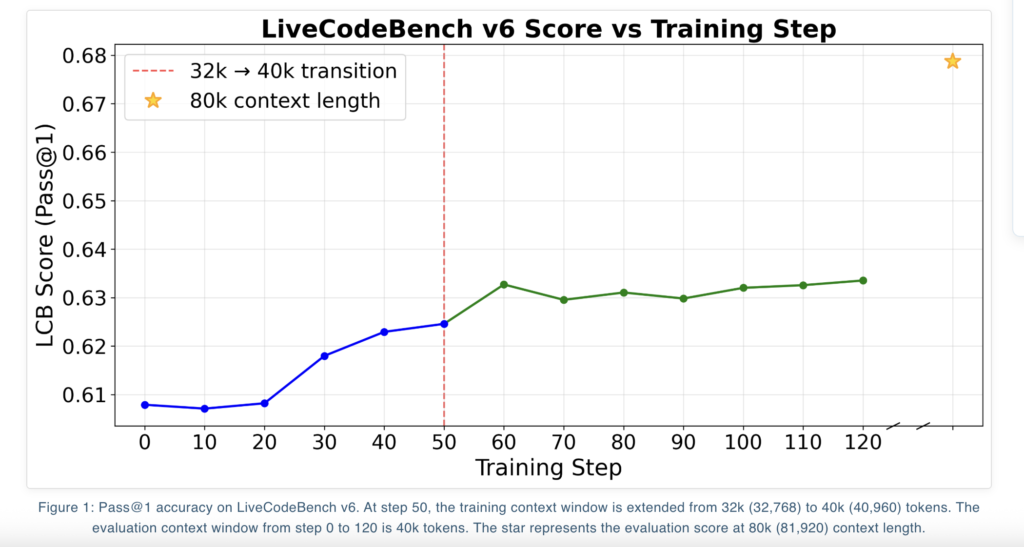
Nous Research has introduced NousCoder-14B, a competitive olympiad programming model that is post trained on Qwen3-14B using reinforcement learning (RL) with verifiable rewards. On the LiveCodeBench v6 benchmark, which covers problems from 08/01/2024 to 05/01/2025, the model reaches a Pass@1 accuracy of 67.87 percent. This is 7.08 percentage points higher than the Qwen3-14B baseline of

Nous Research Releases NousCoder-14B: A Competitive Olympiad Programming Model Post-Trained on Qwen3-14B via Reinforcement Learning Read More »

NVIDIA Releases PersonaPlex-7B-v1: A Real-Time Speech-to-Speech Model Designed for Natural and Full-Duplex Conversations

NVIDIA Researchers released PersonaPlex-7B-v1, a full duplex speech to speech conversational model that targets natural voice interactions with precise persona control. From ASR→LLM→TTS to a single full duplex model Conventional voice assistants usually run a cascade. Automatic Speech Recognition (ASR) converts speech to text, a language model generates a text answer, and Text to Speech

NVIDIA Releases PersonaPlex-7B-v1: A Real-Time Speech-to-Speech Model Designed for Natural and Full-Duplex Conversations Read More »

Google AI Releases TranslateGemma: A New Family of Open Translation Models Built on Gemma 3 with Support for 55 Languages

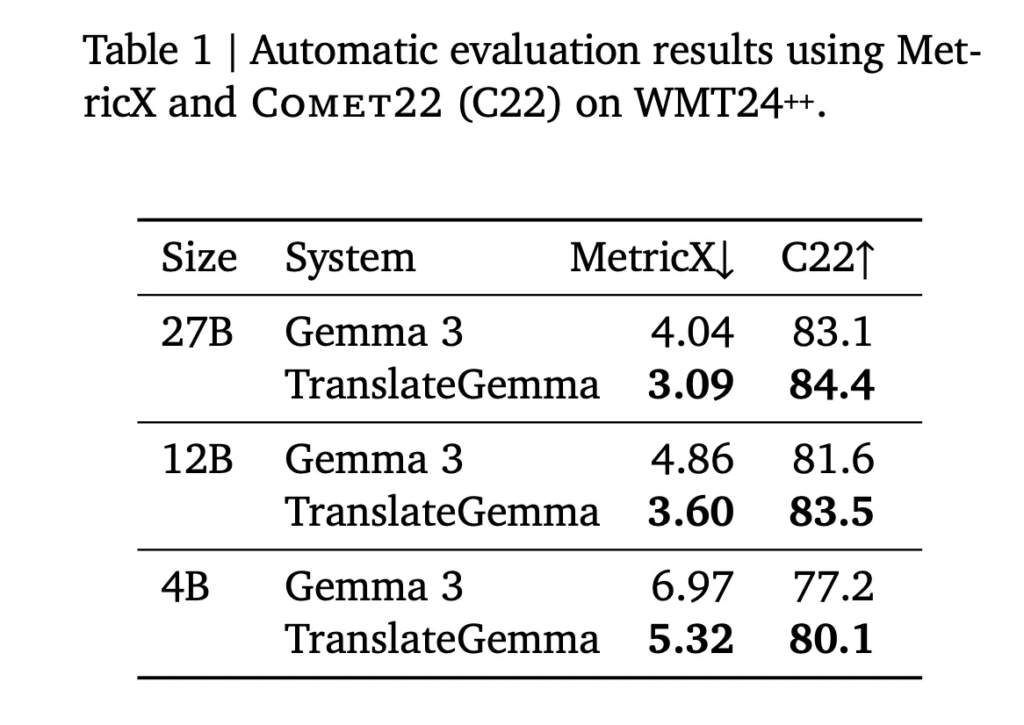
Google AI has released TranslateGemma, a suite of open machine translation models built on Gemma 3 and targeted at 55 languages. The family comes in 4B, 12B and 27B parameter sizes. It is designed to run across devices from mobile and edge hardware to laptops and a single H100 GPU or TPU instance in the

Google AI Releases TranslateGemma: A New Family of Open Translation Models Built on Gemma 3 with Support for 55 Languages Read More »

NVIDIA AI Open-Sourced KVzap: A SOTA KV Cache Pruning Method that Delivers near-Lossless 2x-4x Compression

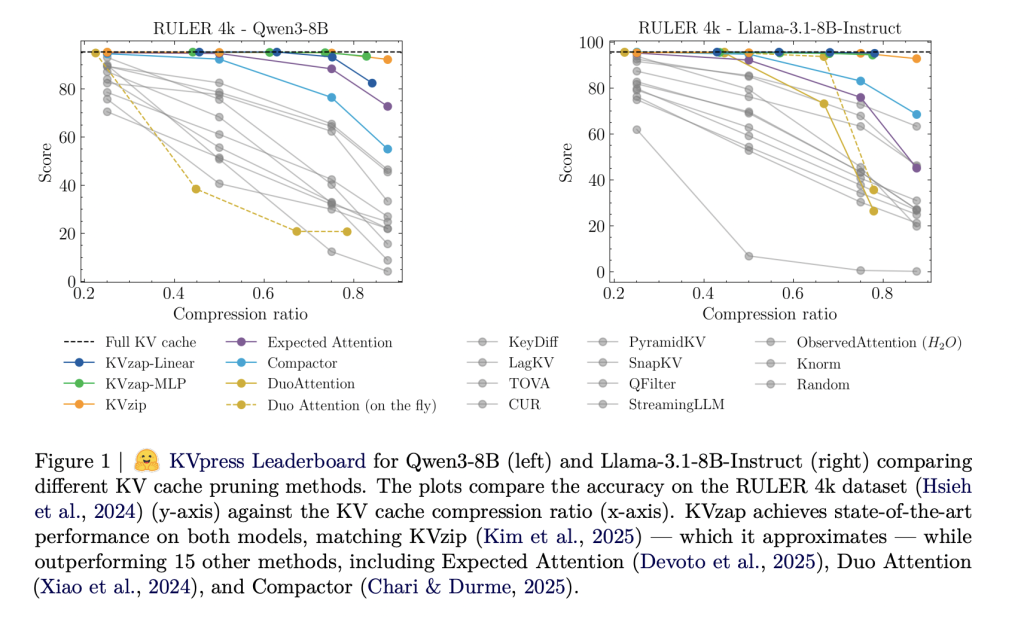
As context lengths move into tens and hundreds of thousands of tokens, the key value cache in transformer decoders becomes a primary deployment bottleneck. The cache stores keys and values for every layer and head with shape (2, L, H, T, D). For a vanilla transformer such as Llama1-65B, the cache reaches about 335 GB

NVIDIA AI Open-Sourced KVzap: A SOTA KV Cache Pruning Method that Delivers near-Lossless 2x-4x Compression Read More »

Google AI Releases MedGemma-1.5: The Latest Update to their Open Medical AI Models for Developers

Google Research has expanded its Health AI Developer Foundations program (HAI-DEF) with the release of MedGemma-1.5. The model is released as open starting points for developers who want to build medical imaging, text and speech systems and then adapt them to local workflows and regulations. https://research.google/blog/next-generation-medical-image-interpretation-with-medgemma-15-and-medical-speech-to-text-with-medasr/ MedGemma 1.5, small multimodal model for real clinical data

Google AI Releases MedGemma-1.5: The Latest Update to their Open Medical AI Models for Developers Read More »

Understanding the Layers of AI Observability in the Age of LLMs

Artificial intelligence (AI) observability refers to the ability to understand, monitor, and evaluate AI systems by tracking their unique metrics—such as token usage, response quality, latency, and model drift. Unlike traditional software, large language models (LLMs) and other generative AI applications are probabilistic in nature. They do not follow fixed, transparent execution paths, which makes

Understanding the Layers of AI Observability in the Age of LLMs Read More »