Language Model

Auto Added by WPeMatico

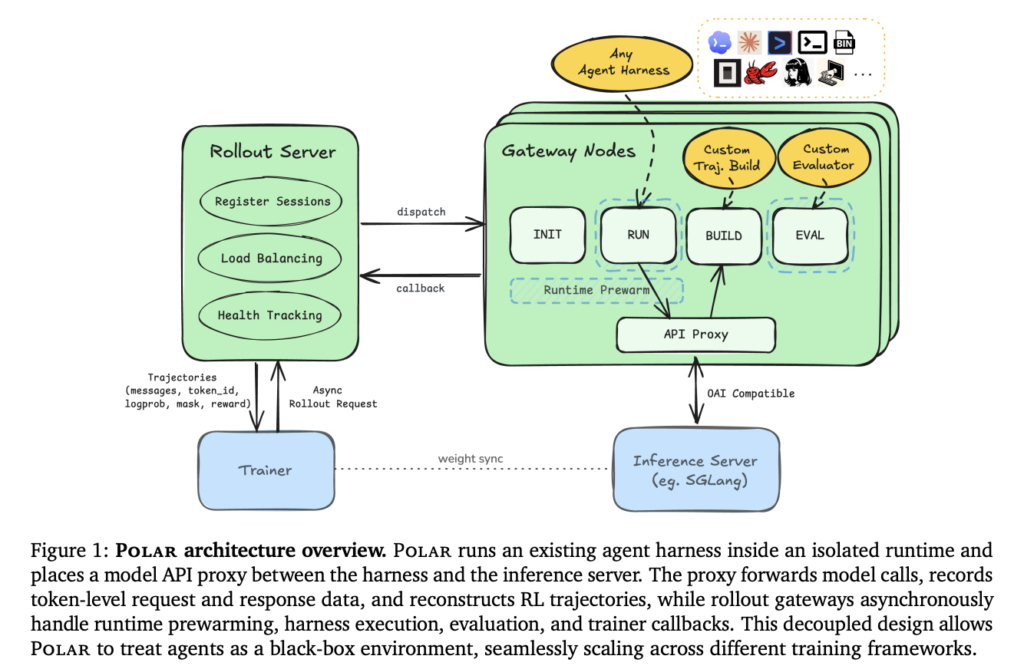
NVIDIA Releases Polar, a Token-Faithful Rollout Framework for GRPO Training Across Codex, Claude Code, and Qwen Code

Reinforcement learning for language agents is growing more complex. Agents now manage multi-turn tool use, long-running contexts, and multi-agent orchestration. The main engineering challenge is connecting existing agent software to training pipelines without breaking how those tools work. NVIDIA’s research team introduced Polar, a rollout framework that lets researchers run reinforcement learning over any agent […]
NVIDIA Releases Polar, a Token-Faithful Rollout Framework for GRPO Training Across Codex, Claude Code, and Qwen Code Read More »

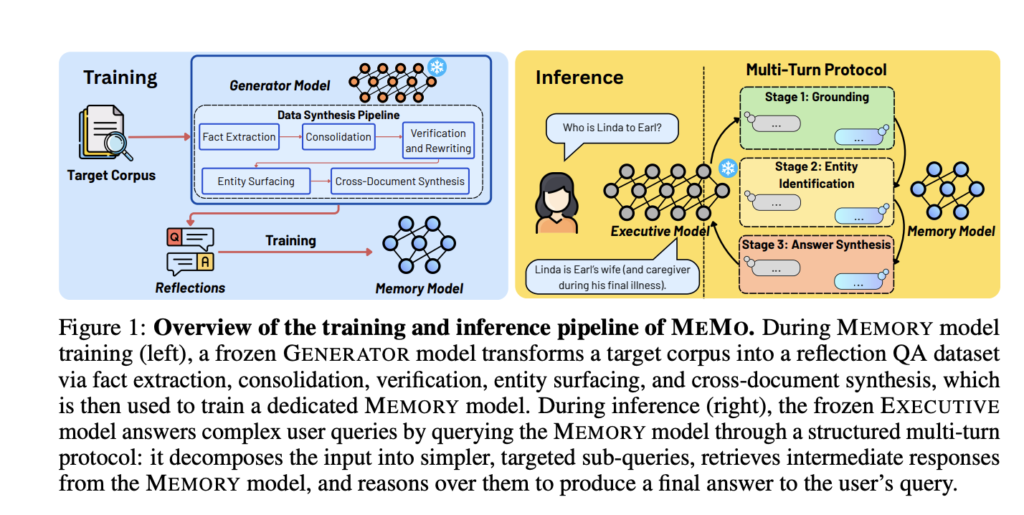
MEMO: A Modular Framework for Training a Dedicated Memory Model on New Knowledge Without Modifying LLM Parameters

Large language models become static after pretraining. Their knowledge does not update as the world changes. Retraining a full LLM is too expensive at modern scales. Fine-tuning risks degrading previously learned knowledge. Retrieval-augmented generation (RAG) struggles when answers require reasoning across many documents. A team of researchers from the National University of Singapore, MIT CSAIL,

MEMO: A Modular Framework for Training a Dedicated Memory Model on New Knowledge Without Modifying LLM Parameters Read More »

Stability AI Releases Stable Audio 3: A Family of Fast Latent Diffusion Models for Audio Generation and Editing

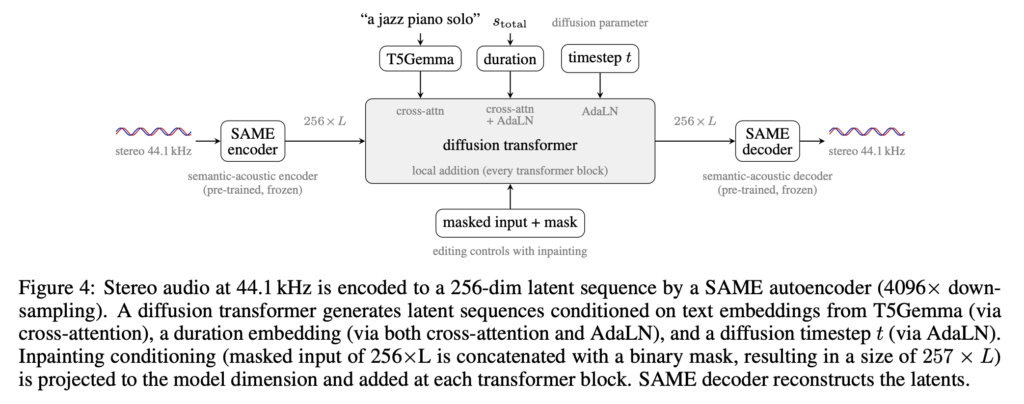
Stability AI has released open weights for Stable Audio 3 along with a technical research paper. Stable Audio 3 is a family of latent diffusion models that generate stereo audio at 44.1 kHz. The models support variable-length outputs, inpainting-based editing, and fast inference. What Is Stable Audio 3? Stable Audio 3 is a family of

Stability AI Releases Stable Audio 3: A Family of Fast Latent Diffusion Models for Audio Generation and Editing Read More »

✅

Build a Complete Langfuse Observability and Evaluation Pipeline for Tracing, Prompt Management, Scoring, and Experiments

In this tutorial, we implement the Langfuse (an open-source LLM engineering platform) pipeline for tracing, prompt management, scoring, datasets, and experiments. We build a complete workflow that works with either a real OpenAI key or a deterministic mock LLM, so we can understand every major Langfuse feature without depending on paid model access. We start

Build a Complete Langfuse Observability and Evaluation Pipeline for Tracing, Prompt Management, Scoring, and Experiments Read More »

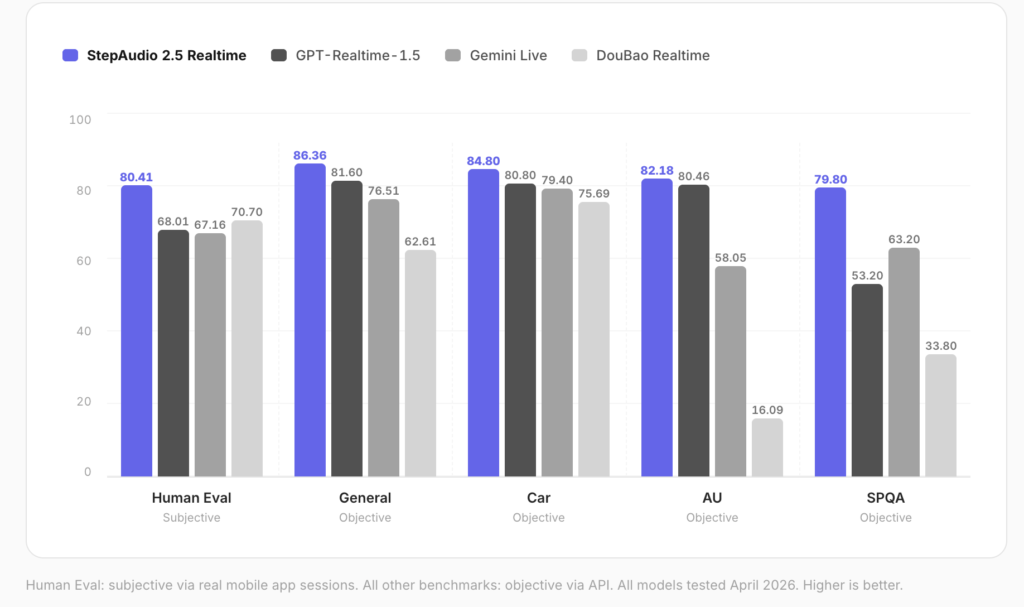
StepFun Releases StepAudio 2.5 Realtime: An End-to-End Voice Model with Roleplay-Specific RLHF and Paralinguistic Comprehension

StepFun, the Shanghai-based AI lab, released StepAudio 2.5 Realtime. It is an end-to-end real-time speech large language model with fully customizable persona capabilities. StepAudio 2.5 Realtime is a voice model that operates in real time. Unlike pipeline-based systems that separate speech recognition, reasoning, and synthesis into sequential steps, this is an end-to-end model. Audio goes

StepFun Releases StepAudio 2.5 Realtime: An End-to-End Voice Model with Roleplay-Specific RLHF and Paralinguistic Comprehension Read More »

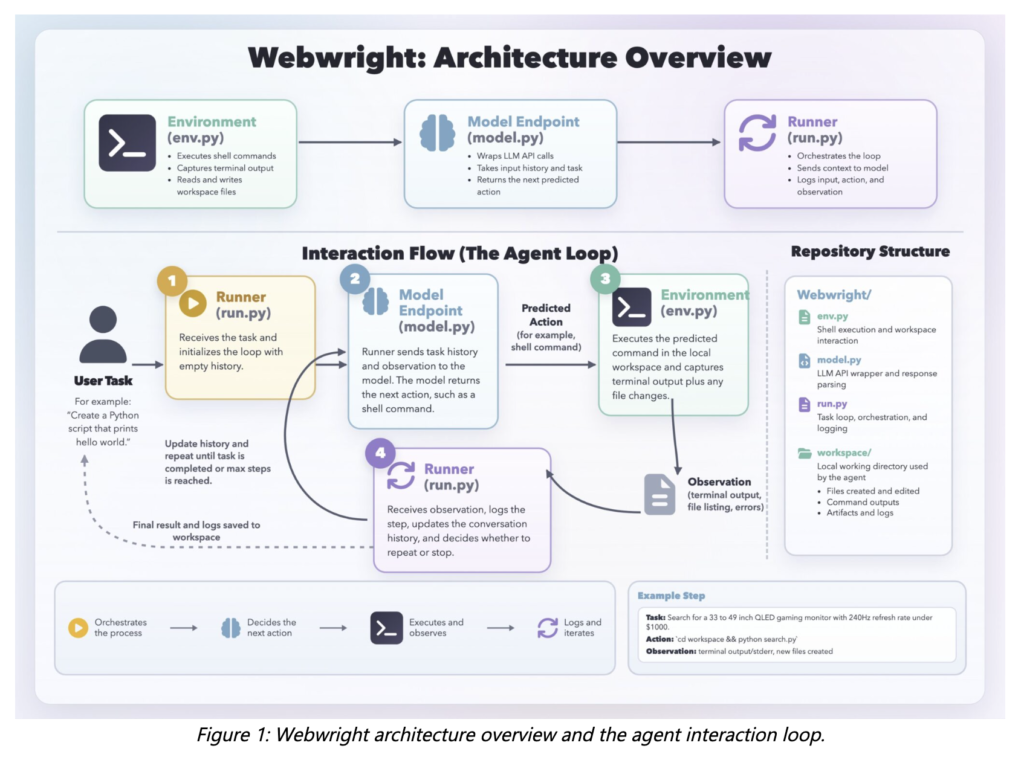
Microsoft Research Releases Webwright: A Terminal-Native Web Agent Framework That Scores 60.1% on Odysseys, Up from Base GPT-5.4’s 33.5%

Most web agents today drive a browser one action at a time. The model receives the current page state — as a screenshot or DOM text — and predicts the next click, keypress, or scroll. This action-at-a-time design made sense when language models had limited reasoning ability. As models have become more capable at writing

Microsoft Research Releases Webwright: A Terminal-Native Web Agent Framework That Scores 60.1% on Odysseys, Up from Base GPT-5.4’s 33.5% Read More »

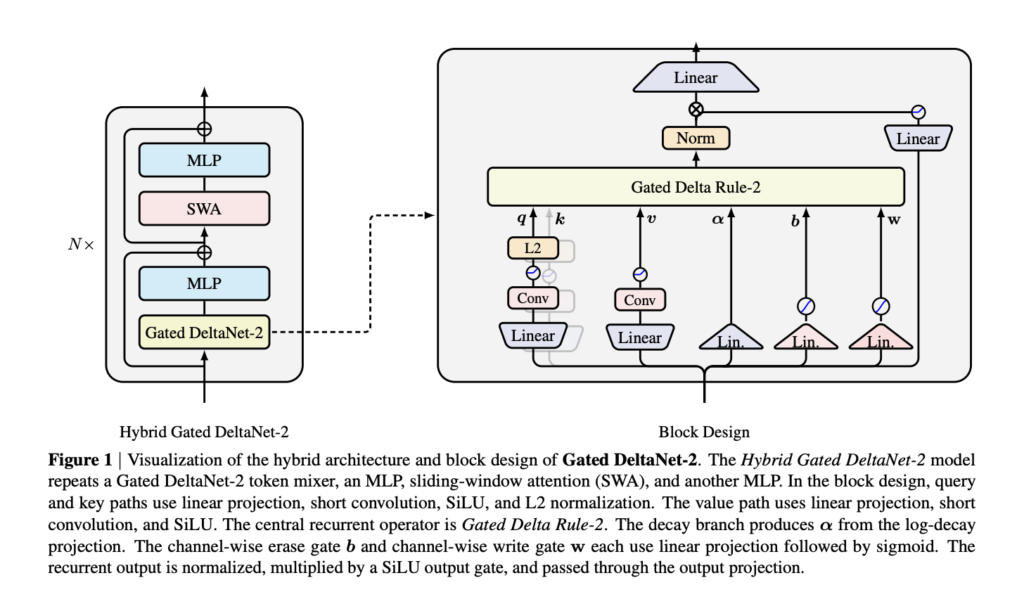
NVIDIA AI Releases Gated DeltaNet-2: A Linear Attention Layer That Decouples Erase and Write in the Delta Rule

Linear attention replaces the unbounded KV cache of softmax attention with a fixed-size recurrent state. This cuts sequence mixing to linear time and decoding to constant memory. The hard part is not what to forget. It is how to edit a compressed memory without scrambling existing associations. NVIDIA has released Gated DeltaNet-2, a linear attention

NVIDIA AI Releases Gated DeltaNet-2: A Linear Attention Layer That Decouples Erase and Write in the Delta Rule Read More »

Nous Research Releases Contrastive Neuron Attribution (CNA): Sparse MLP Circuit Steering Without SAE Training or Weight Modification

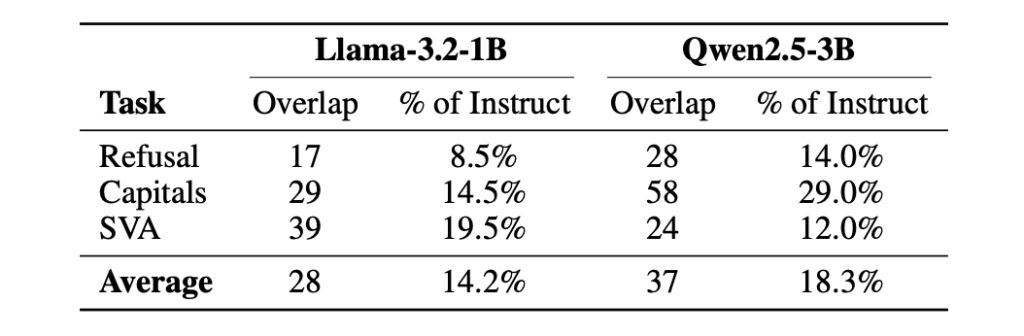
Instruction-tuned language models refuse harmful requests. But which part of the model is actually responsible — and how does that mechanism get installed during training? A new research from Nous Research team takes a neuron-level look at this question. The Nous research team developed contrastive neuron attribution (CNA), a method that identifies the specific MLP

Nous Research Releases Contrastive Neuron Attribution (CNA): Sparse MLP Circuit Steering Without SAE Training or Weight Modification Read More »

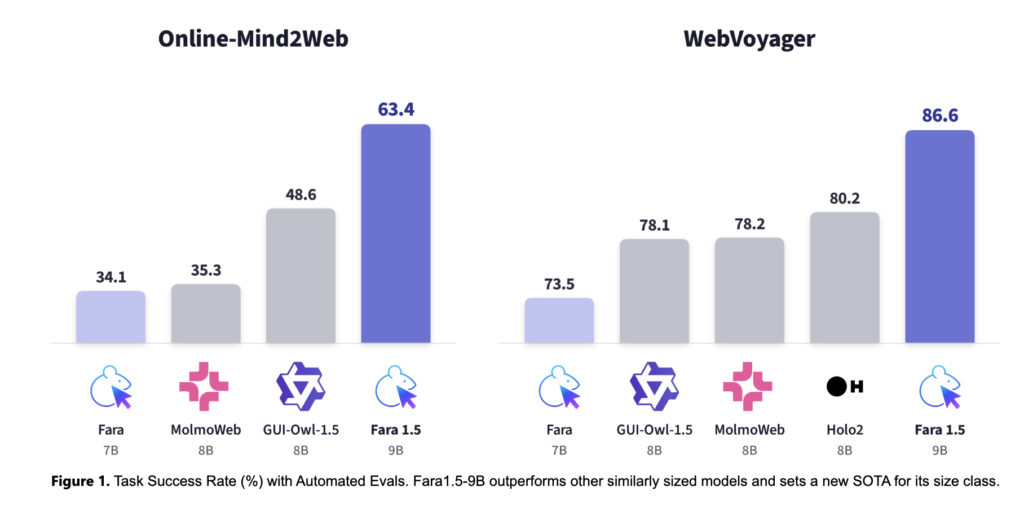
Microsoft Releases Fara1.5: A Family of Browser Computer-Use Agents (4B/9B/27B) That Outperform OpenAI Operator and Gemini 2.5 Computer Use on Online-Mind2Web

Microsoft Research’s AI Frontiers lab released Fara1.5. It is a family of computer-use agent (CUA) models for the browser. The release ships three sizes: Fara1.5-4B, Fara1.5-9B, and Fara1.5-27B. The models are integrated with MagenticLite, Microsoft’s sandboxed browser interface for these agents. Computer-use agents are pixel-to-action models that drive a real browser. They read screenshots and

Microsoft Releases Fara1.5: A Family of Browser Computer-Use Agents (4B/9B/27B) That Outperform OpenAI Operator and Gemini 2.5 Computer Use on Online-Mind2Web Read More »

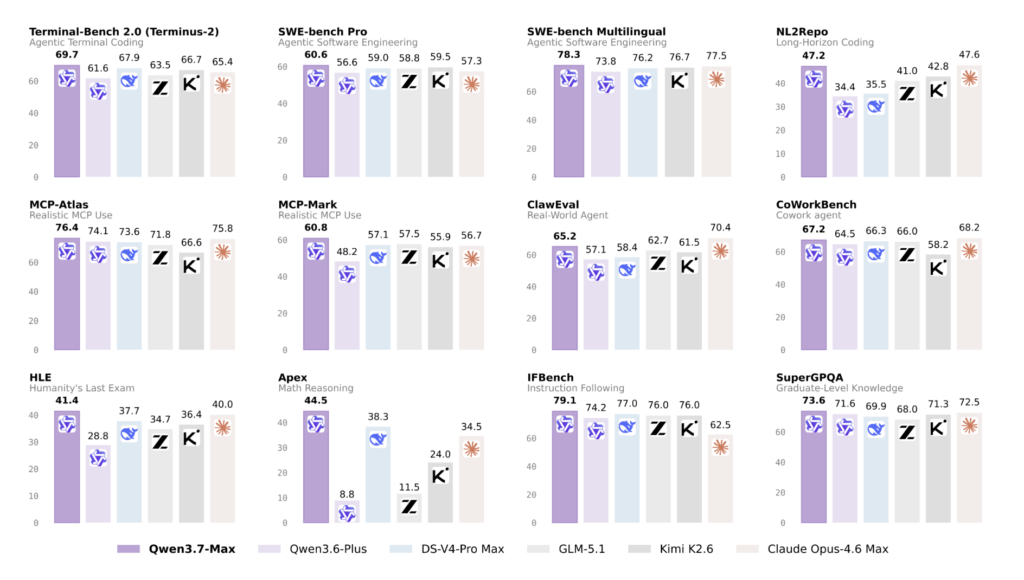
Qwen Introduces Qwen3.7-Max: A Reasoning Agent Model With a 1M-Token Context Window

Most AI models today are not designed for sustained, multi-step autonomous execution. Tasks like running hundreds of iterative code modifications, or chaining tool calls across hours without human intervention, require a different kind of model architecture and training focus. Alibaba’s Qwen team formally announced Qwen3.7-Max at the 2026 Alibaba Cloud Summit on May 20. Although,

Qwen Introduces Qwen3.7-Max: A Reasoning Agent Model With a 1M-Token Context Window Read More »