Deep Dives

Auto Added by WPeMatico

Beyond the pilot: Dyna.Ai raises eight-figure Series A to put agentic AI in financial services to work

The financial services industry has a pilot problem. Institutions pour resources into AI proofs-of-concept, generate impressive dashboards, and then quietly watch momentum stall before anything reaches production. Singapore-headquartered Dyna.Ai was built precisely to break that pattern–and investors are now backing that thesis with serious capital. The AI-as-a-Service company has closed an eight-figure Series A round […]

Beyond the pilot: Dyna.Ai raises eight-figure Series A to put agentic AI in financial services to work Read More »

How financial institutions are embedding AI decision-making

For leaders in the financial sector, the experimental phase of generative AI has concluded and the focus for 2026 is operational integration. While early adoption centred on content generation and efficiency in isolated workflows, the current requirement is to industrialise these capabilities. The objective is to create systems where AI agents do not merely assist

How financial institutions are embedding AI decision-making Read More »

Infosys AI implementation framework offers business leaders guidance

As a large provider of technology services operating in multiple industries, Infosys is one of the names that quickly come to mind when decision-makers consider possible providers of consultation on and practical implementation of any AI project – discrete or organisation-wide. Infosys delivers these services through its Topaz Fabric, leveraging its partnerships with specific AI

Infosys AI implementation framework offers business leaders guidance Read More »

Exclusive: Why are Chinese AI models dominating open-source as Western labs step back?

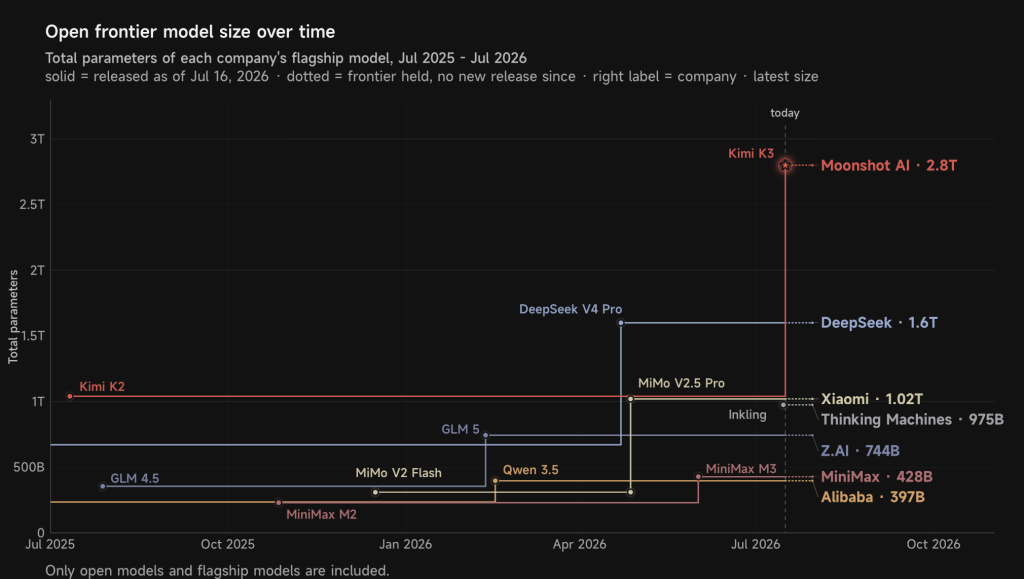
Because Western AI labs won’t—or can’t—anymore. As OpenAI, Anthropic, and Google face mounting pressure to restrict their most powerful models, Chinese developers have filled the open-source void with AI explicitly built for what operators need: powerful models that run on commodity hardware. A new security study reveals just how thoroughly Chinese AI has captured this space. Research published by SentinelOne

Exclusive: Why are Chinese AI models dominating open-source as Western labs step back? Read More »

How separating logic and search boosts AI agent scalability

Separating logic from inference improves AI agent scalability by decoupling core workflows from execution strategies. The transition from generative AI prototypes to production-grade agents introduces a specific engineering hurdle: reliability. LLMs are stochastic by nature. A prompt that works once may fail on the second attempt. To mitigate this, development teams often wrap core business

How separating logic and search boosts AI agent scalability Read More »

Combing the Rackspace blogfiles for operational AI pointers

In a recent blog output, Rackspace refers to the bottlenecks familiar to many readers: messy data, unclear ownership, governance gaps, and the cost of running models once they become part of production. The company frames them through the lens of service delivery, security operations, and cloud modernisation, which tells you where it is putting its

Combing the Rackspace blogfiles for operational AI pointers Read More »

China’s hyperscalers bet billions on agentic AI as commerce becomes the new battleground

The artificial intelligence industry’s pivot toward agentic AI—systems capable of autonomously executing multi-step tasks—has dominated technology discussions in recent months. But while Western firms focus on foundational models and cross-platform interoperability, China’s technology giants are racing to dominate through commerce integration, a strategic divergence that could reshape how enterprises deploy autonomous systems globally. Alibaba, Tencent

China’s hyperscalers bet billions on agentic AI as commerce becomes the new battleground Read More »

Banner for AI & Big Data Expo by TechEx events.

Meeting the new ETSI standard for AI security

The ETSI EN 304 223 standard introduces baseline security requirements for AI that enterprises must integrate into governance frameworks. As organisations embed machine learning into their core operations, this European Standard (EN) establishes concrete provisions for securing AI models and systems. It stands as the first globally applicable European Standard for AI cybersecurity, having secured

Meeting the new ETSI standard for AI security Read More »

AI medical diagnostics race intensifies as OpenAI, Google, and Anthropic launch competing healthcare tools

OpenAI, Google, and Anthropic announced specialised medical AI capabilities within days of each other this month, a clustering that suggests competitive pressure rather than coincidental timing. Yet none of the releases are cleared as medical devices, approved for clinical use, or available for direct patient diagnosis—despite marketing language emphasising healthcare transformation. OpenAI introduced ChatGPT Health on January

AI medical diagnostics race intensifies as OpenAI, Google, and Anthropic launch competing healthcare tools Read More »

Banner for AI & Big Data Expo by TechEx events.

Why Apple chose Google over OpenAI: What enterprise AI buyers can learn from the Gemini deal

Apple’s multi-year agreement to integrate Google’s Gemini models into its revamped Siri marks more than just another Big Tech partnership. The deal, announced Monday, offers a rare window into how one of the world’s most selective technology companies evaluates foundation models—and the criteria should matter to any enterprise weighing similar decisions. The stakes were considerable. Apple had

Why Apple chose Google over OpenAI: What enterprise AI buyers can learn from the Gemini deal Read More »