Staff

Auto Added by WPeMatico

Nous Research Ships Hermes Agent Profile Builder: Identity, Model, Skills, and MCP Servers in One Dashboard Flow

Nous Research has shipped a Profile Builder for Hermes Agent. It lives inside the project’s local web dashboard. Standing up a distinct agent used to mean several CLI steps. The builder now walks you through one guided flow. In that flow you define an agent’s identity. You pick a model and provider. You choose built-in […]
Nous Research Ships Hermes Agent Profile Builder: Identity, Model, Skills, and MCP Servers in One Dashboard Flow Read More »

Meet ‘North Mini Code’: Cohere’s 30B Open-Weight Mixture-of-Experts Model With 3B Active Parameters for Agentic Coding

This week, Cohere AI team shipped its first developer-facing coding model named ‘North Mini Code‘. ‘North Mini Code’ is open-weight and focused at software engineers. It is a mixture-of-experts (MoE) model with 30B total parameters. Only 3B of those parameters activate per token. The release is positioned around “sovereign” AI. The idea is simple: run

Meet ‘North Mini Code’: Cohere’s 30B Open-Weight Mixture-of-Experts Model With 3B Active Parameters for Agentic Coding Read More »

A Coding Implementation on Microsoft SkillOpt for Instrumented Prompt Optimization, Skill Evolution Analysis, and Baseline Comparison

In this tutorial, we implement an instrumented workflow for Microsoft SkillOpt. We set up the SkillOpt repository, connect it to OpenAI-compatible model access, configure the optimizer and target models, and run the SearchQA optimization pipeline with a controlled sample limit to keep costs manageable. We first evaluate the original seed skill as a baseline, then

A Coding Implementation on Microsoft SkillOpt for Instrumented Prompt Optimization, Skill Evolution Analysis, and Baseline Comparison Read More »

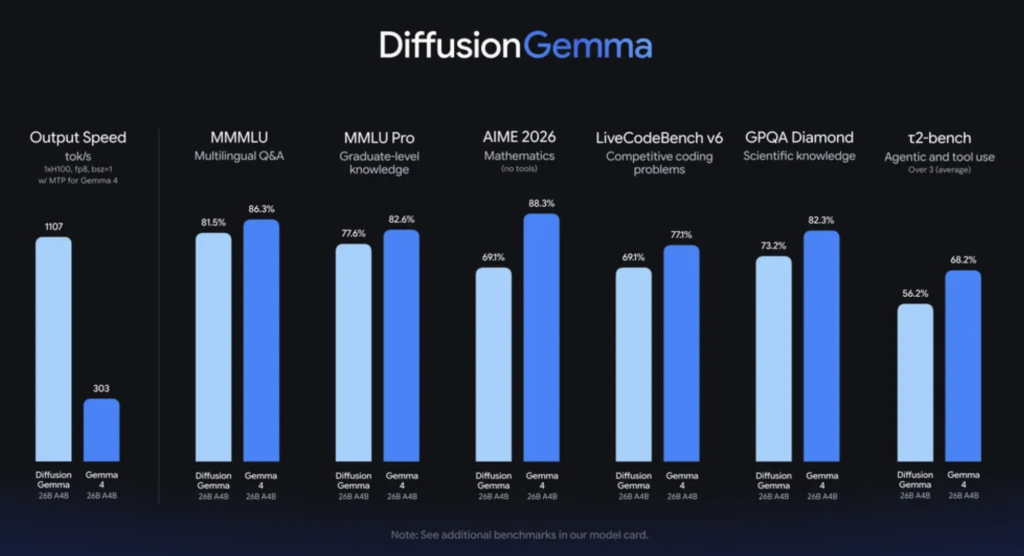
Google AI Releases DiffusionGemma, a 26B MoE Open Model Using Text Diffusion for Up to 4x Faster Generation

Google AI team including the Google DeepMind researchers have just released DiffusionGemma, an experimental open model for text generation. It uses text diffusion instead of standard autoregressive decoding. The model ships under a permissive Apache 2.0 license. Google positions it for devs and researchers exploring speed-critical, interactive local workflows. Examples include in-line editing, rapid iteration,

Google AI Releases DiffusionGemma, a 26B MoE Open Model Using Text Diffusion for Up to 4x Faster Generation Read More »

Top AI Coding Agents and Development Platforms in 2026: Atoms, Devin, Windsurf, Cursor, Warp, and More Compared

Software development has changed. Engineers no longer type most code by hand. They describe intent, and AI agents do the work. Modern tools plan tasks, edit across files, run tests, and open pull requests. Many now ship to production with limited supervision. No single tool fits every need. This guide covers the AI coding agents

Top AI Coding Agents and Development Platforms in 2026: Atoms, Devin, Windsurf, Cursor, Warp, and More Compared Read More »

Anthropic Releases Claude Fable 5 and Claude Mythos 5: Same Underlying Model, Different Safeguards, New Mythos-Class Tier

Anthropic released two models on June 9, 2026: Claude Fable 5 and Claude Mythos 5. Both belong to a tier called “Mythos-class.” This tier sits above the Opus class in capability. Fable 5 is the version claimed to be made safe for general use. Mythos 5 is the same model with some safeguards lifted, kept

Anthropic Releases Claude Fable 5 and Claude Mythos 5: Same Underlying Model, Different Safeguards, New Mythos-Class Tier Read More »

✅

Building a Code Dataset Pipeline from NVIDIA Nemotron-Pretraining-Code-v3 Metadata with Streaming, Pandas, and tiktoken

In this tutorial, we work with NVIDIA’s Nemotron-Pretraining-Code-v3 dataset as a large-scale metadata index for code pretraining research. Instead of downloading the full multi-gigabyte dataset, we stream it, inspect its schema, and build a manageable sample for analysis. We then explore the dataset by studying languages, file extensions, repository frequency, and directory depth, which helps

Building a Code Dataset Pipeline from NVIDIA Nemotron-Pretraining-Code-v3 Metadata with Streaming, Pandas, and tiktoken Read More »

Google Releases Gemini 3.5 Live Translate, a Streaming Speech-to-Speech Audio Model Covering 70+ Languages Across Meet, Translate, and the Live API

Google just announced Gemini 3.5 Live Translate. It is their latest audio model for live speech-to-speech translation. Speech-to-speech means spoken audio goes in, and translated spoken audio comes out. The model detects over 70 languages automatically and generates translated speech. It preserves the speaker’s intonation, pacing, and pitch in the output. Turn-by-turn systems wait for

Google Releases Gemini 3.5 Live Translate, a Streaming Speech-to-Speech Audio Model Covering 70+ Languages Across Meet, Translate, and the Live API Read More »

NVIDIA cuTile Python Tutorial: Building Tiled GPU Kernels for Vector Addition, Matrix Addition, and Matrix Multiplication in Colab

In this tutorial, we implement an advanced hands-on workflow for NVIDIA cuTile Python, a tile-based GPU programming interface for writing efficient CUDA-style kernels directly in Python. We start by preparing a Colab-friendly environment, checking the available GPU, driver, CUDA, and cuTile installations before running any kernel code. We then build tiled examples for vector addition,

NVIDIA cuTile Python Tutorial: Building Tiled GPU Kernels for Vector Addition, Matrix Addition, and Matrix Multiplication in Colab Read More »

A New Study from Harvard and Perplexity Finds AI Agents Perform 26 Minutes of Autonomous Work per Session vs 33 Seconds for Search

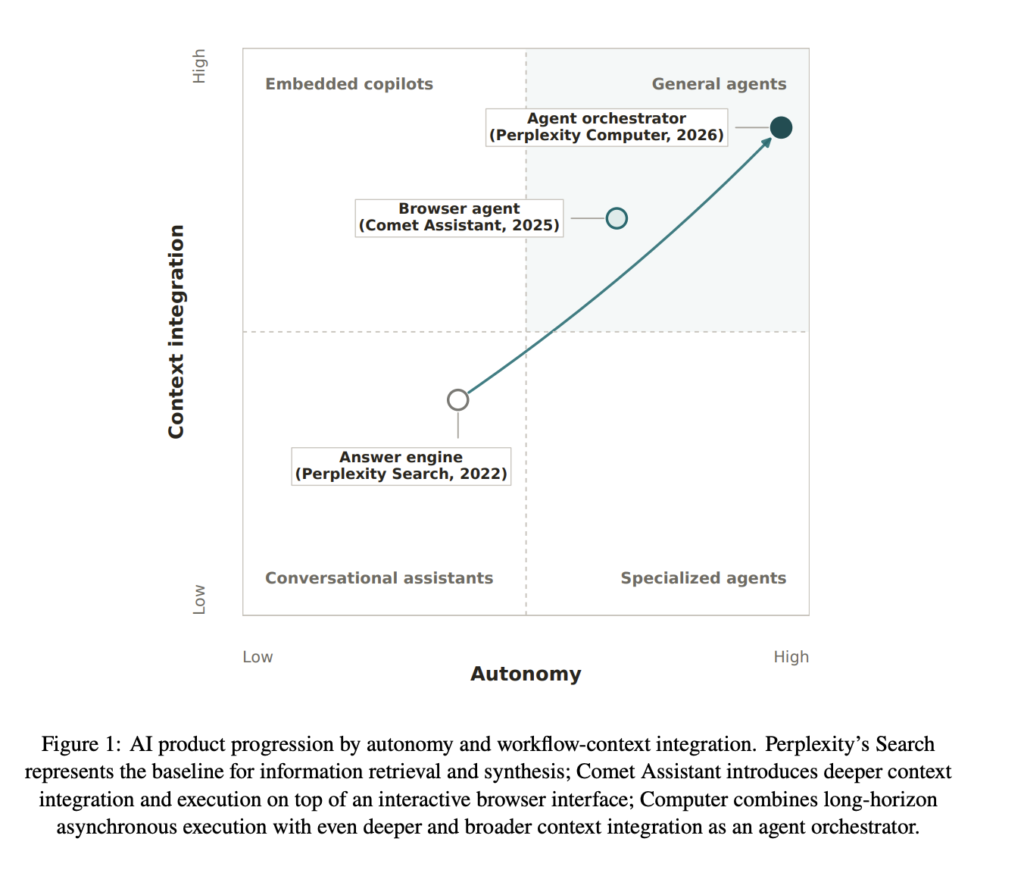
A new working research from Perplexity and Harvard offers field evidence on what AI agents do to knowledge work. It draws on production data from two Perplexity products: Search and Computer. The setup is a natural comparison. Search is a conversational answer engine. Computer is an agent that plans and executes tasks end to end.

A New Study from Harvard and Perplexity Finds AI Agents Perform 26 Minutes of Autonomous Work per Session vs 33 Seconds for Search Read More »