Machine Learning

Auto Added by WPeMatico

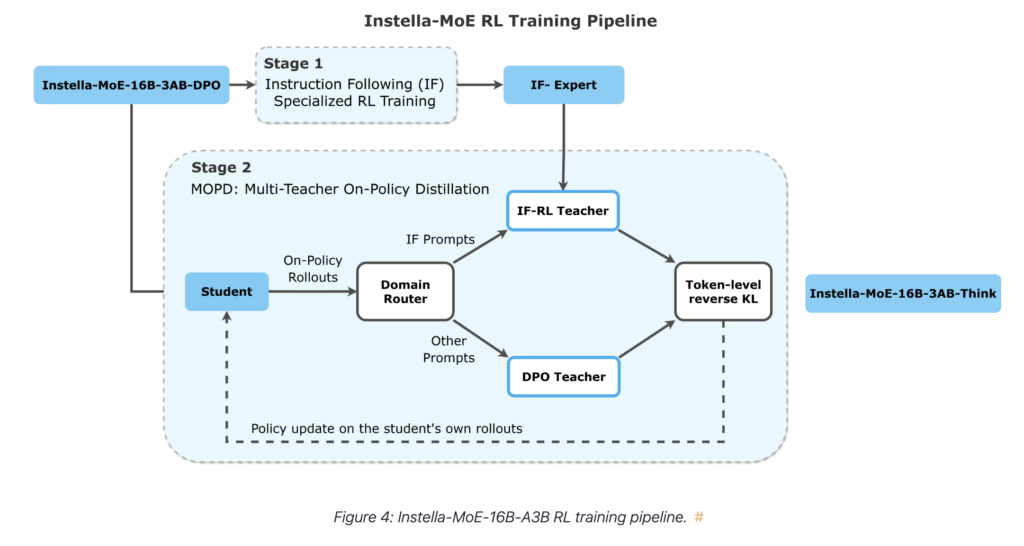
AMD Releases Instella-MoE-16B-A3B: A Fully Open Mixture-of-Experts LLM With 2.8B Active Parameters Trained On Instinct GPUs

AMD released Instella-MoE-16B-A3B, a fully open Mixture-of-Experts language model trained from scratch on Instinct MI300X and MI325X GPUs. The model holds 16B total parameters but activates only 2.8B per token. AMD is publishing weights from every training stage, along with data mixtures, training configs, and inference code. Two systems-level choices carry the release: Gated Multi-head […]
AMD Releases Instella-MoE-16B-A3B: A Fully Open Mixture-of-Experts LLM With 2.8B Active Parameters Trained On Instinct GPUs Read More »

Accelerating Transformer Training with NVIDIA Transformer Engine, Fused Kernels, BF16, FP8, and GPU Benchmarking

In this tutorial, we explore how NVIDIA Transformer Engine accelerates transformer workloads by combining fused GPU kernels, BF16 computation, and hardware-aware FP8 execution. We begin by installing Transformer Engine and detecting the active GPU architecture so that we can determine whether the runtime supports TE kernels, FP8 tensor cores, or only the pure-PyTorch fallback path.

Accelerating Transformer Training with NVIDIA Transformer Engine, Fused Kernels, BF16, FP8, and GPU Benchmarking Read More »

📝

Supabase Releases Evals: an Open Source Benchmark That Scores Claude Code, Codex and OpenCode on Real Supabase Tasks

Supabase has open sourced Supabase Evals, its benchmark and framework for testing how well AI agents build using Supabase. It runs coding agents including Claude Code, Codex, and OpenCode against real tasks, such as building a schema, debugging a failed Edge Function, or fixing a broken RLS policy, then scores the result. It powers the

Supabase Releases Evals: an Open Source Benchmark That Scores Claude Code, Codex and OpenCode on Real Supabase Tasks Read More »

MiniMax Releases MiniMax H3: An Omni-Modal Video Model That Generates 15-Second 2K Clips With Native Stereo Audio

MiniMax releases MiniMax H3, a general-purpose multimodal generation model. MiniMax H3 is not a text-to-video model with add-ons. MiniMax describes it as a general-purpose multimodal generation model that reads text, images, video, and audio as one unified context and returns video with native stereo sound. The mains specs include: 2K output, 4–15 seconds, integer durations

MiniMax Releases MiniMax H3: An Omni-Modal Video Model That Generates 15-Second 2K Clips With Native Stereo Audio Read More »

DeepSeek Upgrades DeepSeek-V4-Flash-0731 with Major Agentic and Coding Gains

DeepSeek published DeepSeek-V4-Flash-0731 on Hugging Face and moved the official V4-Flash API into public beta on July 31, 2026. The model card is explicit that this is the official release superseding the preview, and that the architecture and size are unchanged. The gains come from re-post-training, not a new design. The checkpoint ships with the

DeepSeek Upgrades DeepSeek-V4-Flash-0731 with Major Agentic and Coding Gains Read More »

✅

Building a Policy-Governed Multi-Agent Financial Research Workflow with Omnigent

In this tutorial, we build and execute a multi-agent workflow with Omnigent using a reliable, isolated Python environment created with uv. We configure a financial research lead agent that retrieves a live USD-to-EUR exchange rate from an external API, prepares a concise client-ready summary, and delegates its draft to a dedicated text-auditing sub-agent for clarity

Building a Policy-Governed Multi-Agent Financial Research Workflow with Omnigent Read More »

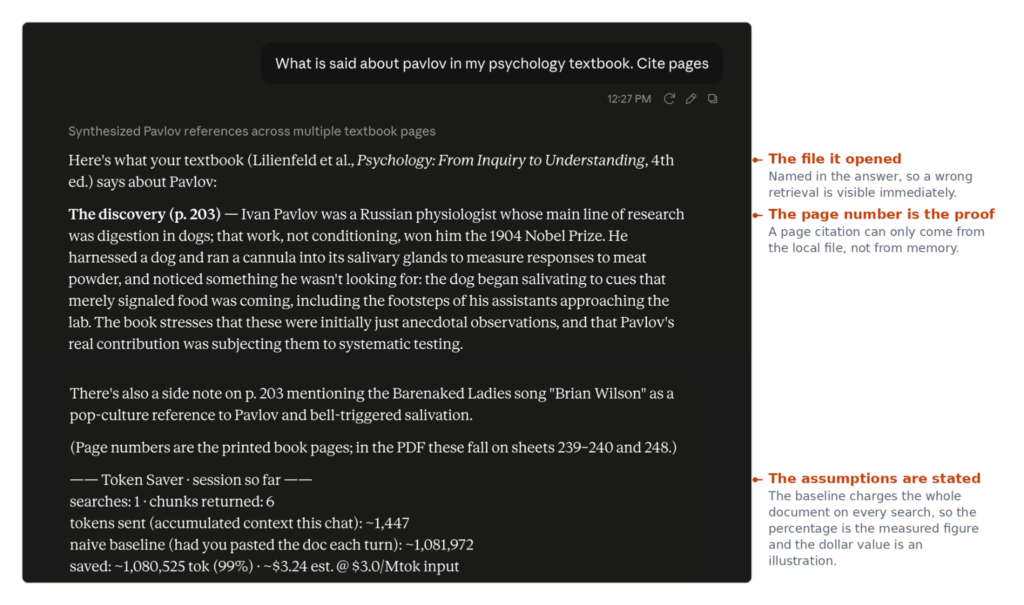
Meet Token Saver: An Open-Source MCP Extension Using Local Hybrid RAG to Cut Claude PDF Token Costs 90-99%

AI developers, researchers, and professionals frequently hit a frustrating wall when analyzing large documents with LLMs: the hidden, compounding cost of context windows. Pasting a 200-page PDF into a chat isn’t a one-time charge. Because the conversation history is re-sent to the model on every single turn, that massive document is paid for again with

Meet Token Saver: An Open-Source MCP Extension Using Local Hybrid RAG to Cut Claude PDF Token Costs 90-99% Read More »

Prompt Engineering vs Loop Engineering vs Graph Engineering: What Changes at Each Layer

Three terms now compete for the same line in AI engineering job descriptions. Prompt engineering is the established one. Loop engineering entered the AI vocabulary in late 2025 and dominated developer discussion through June 2026. Graph engineering followed roughly six weeks later. They get used interchangeably. Should they be? The three are not competing techniques.

Prompt Engineering vs Loop Engineering vs Graph Engineering: What Changes at Each Layer Read More »

Prompt Engineering vs Loop Engineering vs Graph Engineering: What Changes at Each Layer

Three terms now compete for the same line in AI engineering job descriptions. Prompt engineering is the established one. Loop engineering entered the AI vocabulary in late 2025 and dominated developer discussion through June 2026. Graph engineering followed roughly six weeks later. They get used interchangeably. Should they be? The three are not competing techniques.

Prompt Engineering vs Loop Engineering vs Graph Engineering: What Changes at Each Layer Read More »

Liquid AI Releases LFM2.5-Encoder-230M and LFM2.5-Encoder-350M: Bidirectional Encoders That Stay Fast at 8K Context on CPU

Liquid AI has released two open-weight bidirectional encoders, LFM2.5-Encoder-230M and LFM2.5-Encoder-350M. Both are masked language models built on the LFM2 hybrid backbone. Both carry an 8,192-token context. Encoders sit underneath classifiers, intent routers, safety filters, and PII detectors. Those jobs run continuously, usually without a GPU, and increasingly on longer inputs. BERT established the class.

Liquid AI Releases LFM2.5-Encoder-230M and LFM2.5-Encoder-350M: Bidirectional Encoders That Stay Fast at 8K Context on CPU Read More »