Staff

Auto Added by WPeMatico

Understanding the Layers of AI Observability in the Age of LLMs

Artificial intelligence (AI) observability refers to the ability to understand, monitor, and evaluate AI systems by tracking their unique metrics—such as token usage, response quality, latency, and model drift. Unlike traditional software, large language models (LLMs) and other generative AI applications are probabilistic in nature. They do not follow fixed, transparent execution paths, which makes […]

Understanding the Layers of AI Observability in the Age of LLMs Read More »
How to Build a Multi-Turn Crescendo Red-Teaming Pipeline to Evaluate and Stress-Test LLM Safety Using Garak

In this tutorial, we build an advanced, multi-turn crescendo-style red-teaming harness using Garak to evaluate how large language models behave under gradual conversational pressure. We implement a custom iterative probe and a lightweight detector to simulate realistic escalation patterns in which benign prompts slowly pivot toward sensitive requests, and we assess whether the model maintains

How to Build a Multi-Turn Crescendo Red-Teaming Pipeline to Evaluate and Stress-Test LLM Safety Using Garak Read More »

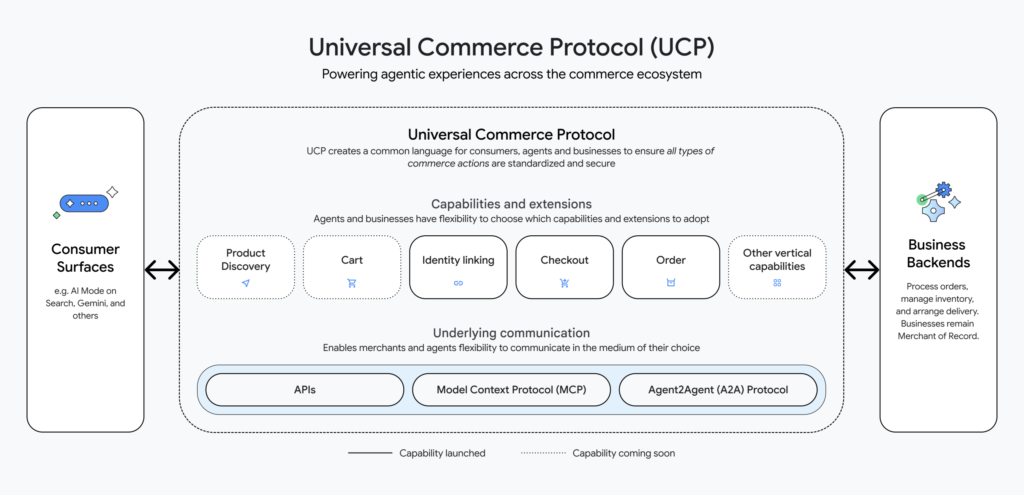
Google AI Releases Universal Commerce Protocol (UCP): An Open-Source Standard Designed to Power the Next Generation of Agentic Commerce

Can AI shopping agents move beyond sending product links and actually complete trusted purchases end to end inside a chat? Universal Commerce Protocol, or UCP, is Google’s new open standard for agentic commerce. It gives AI agents and merchant systems a shared language so that a shopping query can move from product discovery to an

Google AI Releases Universal Commerce Protocol (UCP): An Open-Source Standard Designed to Power the Next Generation of Agentic Commerce Read More »

How This Agentic Memory Research Unifies Long Term and Short Term Memory for LLM Agents

How do you design an LLM agent that decides for itself what to store in long term memory, what to keep in short term context and what to discard, without hand tuned heuristics or extra controllers? Can a single policy learn to manage both memory types through the same action space as text generation? Researchers

How This Agentic Memory Research Unifies Long Term and Short Term Memory for LLM Agents Read More »

Meet SETA: Open Source Training Reinforcement Learning Environments for Terminal Agents with 400 Tasks and CAMEL Toolkit

What does an end to end stack for terminal agents look like when you combine structured toolkits, synthetic RL environments, and benchmark aligned evaluation? A team of researchers from CAMEL AI, Eigent AI and other collaborators have released SETA, a toolkit and environment stack that focuses on reinforcement learning for terminal agents. The project targets

Meet SETA: Open Source Training Reinforcement Learning Environments for Terminal Agents with 400 Tasks and CAMEL Toolkit Read More »

How to Build Portable, In-Database Feature Engineering Pipelines with Ibis Using Lazy Python APIs and DuckDB Execution

In this tutorial, we demonstrate how we use Ibis to build a portable, in-database feature engineering pipeline that looks and feels like Pandas but executes entirely inside the database. We show how we connect to DuckDB, register data safely inside the backend, and define complex transformations using window functions and aggregations without ever pulling raw

How to Build Portable, In-Database Feature Engineering Pipelines with Ibis Using Lazy Python APIs and DuckDB Execution Read More »

Decoding the Arctic to predict winter weather

Every autumn, as the Northern Hemisphere moves toward winter, Judah Cohen starts to piece together a complex atmospheric puzzle. Cohen, a research scientist in MIT’s Department of Civil and Environmental Engineering (CEE), has spent decades studying how conditions in the Arctic set the course for winter weather throughout Europe, Asia, and North America. His research

Decoding the Arctic to predict winter weather Read More »

Stanford Researchers Build SleepFM Clinical: A Multimodal Sleep Foundation AI Model for 130+ Disease Prediction

A team of Stanford Medicine researchers have introduced SleepFM Clinical, a multimodal sleep foundation model that learns from clinical polysomnography and predicts long term disease risk from a single night of sleep. The research work is published in Nature Medicine and the team has released the clinical code as the open source sleepfm-clinical repository on

Stanford Researchers Build SleepFM Clinical: A Multimodal Sleep Foundation AI Model for 130+ Disease Prediction Read More »

TII Abu-Dhabi Released Falcon H1R-7B: A New Reasoning Model Outperforming Others in Math and Coding with only 7B Params with 256k Context Window

Technology Innovation Institute (TII), Abu Dhabi, has released Falcon-H1R-7B, a 7B parameter reasoning specialized model that matches or exceeds many 14B to 47B reasoning models in math, code and general benchmarks, while staying compact and efficient. It builds on Falcon H1 7B Base and is available on Hugging Face under the Falcon-H1R collection. Falcon-H1R-7B is

TII Abu-Dhabi Released Falcon H1R-7B: A New Reasoning Model Outperforming Others in Math and Coding with only 7B Params with 256k Context Window Read More »

NVIDIA AI Released Nemotron Speech ASR: A New Open Source Transcription Model Designed from the Ground Up for Low-Latency Use Cases like Voice Agents

NVIDIA has just released its new streaming English transcription model (Nemotron Speech ASR) built specifically for low latency voice agents and live captioning. The checkpoint nvidia/nemotron-speech-streaming-en-0.6b on Hugging Face combines a cache aware FastConformer encoder with an RNNT decoder, and is tuned for both streaming and batch workloads on modern NVIDIA GPUs. Model design, architecture

NVIDIA AI Released Nemotron Speech ASR: A New Open Source Transcription Model Designed from the Ground Up for Low-Latency Use Cases like Voice Agents Read More »