Security

Auto Added by WPeMatico

Perplexity Open-Sources Bumblebee: A Read-Only Supply-Chain Scanner for Developer Endpoints

Attackers increasingly target the packages, editor extensions, and AI tool configs on developer machines and not just production systems. Perplexity has open-sourced an internal tool it uses to address this problem. Perplexity released Bumblebee on GitHub. The tool is a read-only inventory collector for macOS and Linux developer endpoints. It is written entirely in Go […]

Perplexity Open-Sources Bumblebee: A Read-Only Supply-Chain Scanner for Developer Endpoints Read More »

Bug bounty businesses bombarded with AI slop

Companies that pay hackers to find flaws in their software are being inundated with low-quality reports generated by AI, forcing some to suspend the programs altogether. Businesses that run “bug bounty” schemes have long relied on independent security researchers to spot vulnerabilities. But the rise of AI tools is now overwhelming them with spurious submissions.

Bug bounty businesses bombarded with AI slop Read More »

Bug bounty businesses bombarded with AI slop

Companies that pay hackers to find flaws in their software are being inundated with low-quality reports generated by AI, forcing some to suspend the programs altogether. Businesses that run “bug bounty” schemes have long relied on independent security researchers to spot vulnerabilities. But the rise of AI tools is now overwhelming them with spurious submissions.

Bug bounty businesses bombarded with AI slop Read More »

How to Build a Dynamic Zero-Trust Network Simulation with Graph-Based Micro-Segmentation, Adaptive Policy Engine, and Insider Threat Detection

In this tutorial, we build a realistic Zero-Trust network simulation by modeling a micro-segmented environment as a directed graph and forcing every request to earn access through continuous verification. We implement a dynamic policy engine that blends ABAC-style permissions with device posture, MFA, path reachability, zone sensitivity, and live risk signals such as anomaly and

How to Build a Dynamic Zero-Trust Network Simulation with Graph-Based Micro-Segmentation, Adaptive Policy Engine, and Insider Threat Detection Read More »

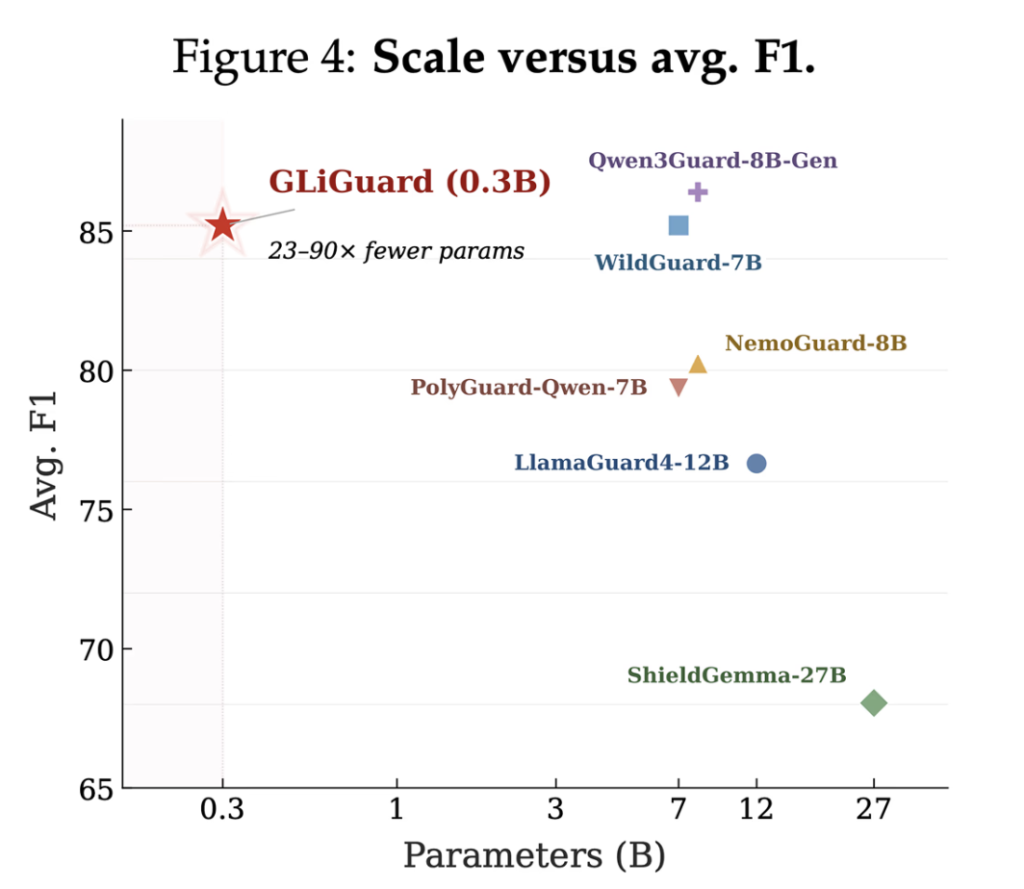
Fastino Labs Open-Sources GLiGuard: A 300M Parameter Safety Moderation Model That Matches or Exceeds Accuracy of Models 23–90x Its Size

As LLM-powered applications move into production — and as AI agents take on more consequential tasks like browsing the web, writing and executing code, and interacting with external services — safety moderation has quietly become one of the most operationally expensive parts of the stack. Most developers who’ve deployed a production LLM system know the

Fastino Labs Open-Sources GLiGuard: A 300M Parameter Safety Moderation Model That Matches or Exceeds Accuracy of Models 23–90x Its Size Read More »

Our response to the TanStack npm supply chain attack

OpenAI details its response to the TanStack “Mini Shai-Hulud” supply chain attack, outlines protections taken to secure systems and signing certificates, and explains why macOS users must update OpenAI apps by June 12, 2026. Learn what happened, what was affected, and how OpenAI is strengthening defenses against evolving software supply chain threats.

Our response to the TanStack npm supply chain attack Read More »

OpenAI Introduces Daybreak: A Cybersecurity Initiative That Puts Codex Security at the Center of Vulnerability Detection and Patch Validation

OpenAI on just launched Daybreak, a cybersecurity initiative that combines the company’s frontier AI models with Codex Security, its coding-focused agentic system, and a broad network of security partners. The program is aimed at developers, enterprise security teams, researchers, and government-linked defenders who need to find, validate, and patch software vulnerabilities earlier in the development

OpenAI Introduces Daybreak: A Cybersecurity Initiative That Puts Codex Security at the Center of Vulnerability Detection and Patch Validation Read More »

A Coding Implementation to Recover Hidden Malware IOCs with FLARE-FLOSS Beyond Classic Strings Analysis

In this tutorial, we explore how FLARE-FLOSS helps us recover hidden and obfuscated strings from a Windows PE file. We begin by setting up FLOSS and the MinGW-w64 cross-compiler. We synthesize a small malware-like executable that hides strings using multiple techniques, including static strings, stack-built strings, tight strings, and XOR-decoded strings. After that, we compare

A Coding Implementation to Recover Hidden Malware IOCs with FLARE-FLOSS Beyond Classic Strings Analysis Read More »