Language Model

Auto Added by WPeMatico

Google AI Releases TranslateGemma: A New Family of Open Translation Models Built on Gemma 3 with Support for 55 Languages

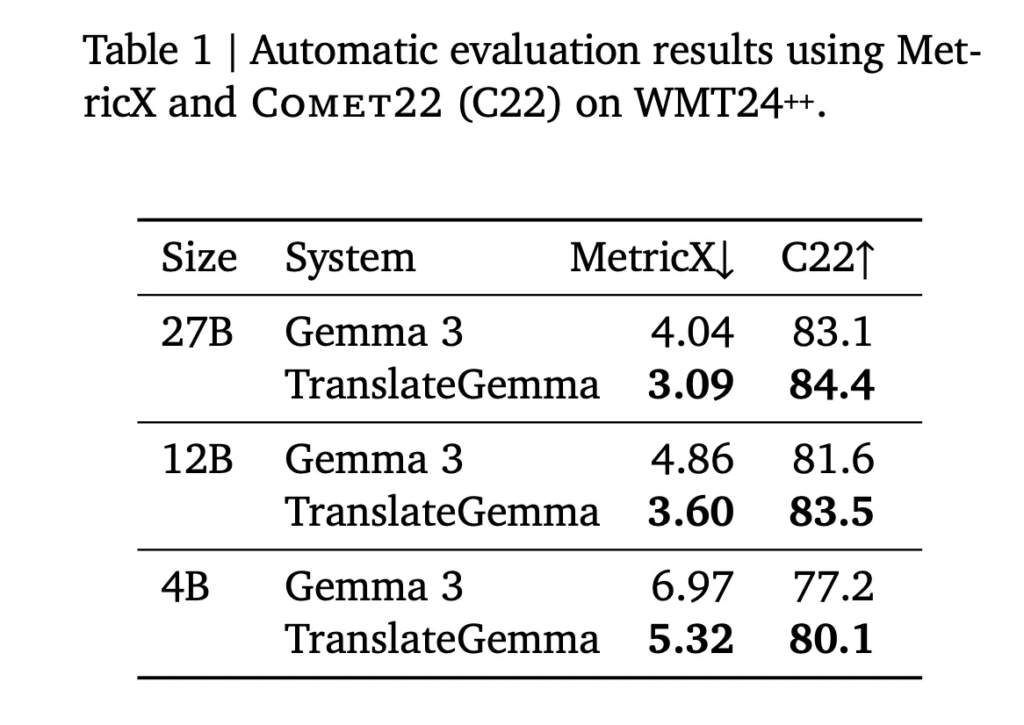
Google AI has released TranslateGemma, a suite of open machine translation models built on Gemma 3 and targeted at 55 languages. The family comes in 4B, 12B and 27B parameter sizes. It is designed to run across devices from mobile and edge hardware to laptops and a single H100 GPU or TPU instance in the […]
Google AI Releases TranslateGemma: A New Family of Open Translation Models Built on Gemma 3 with Support for 55 Languages Read More »

NVIDIA AI Open-Sourced KVzap: A SOTA KV Cache Pruning Method that Delivers near-Lossless 2x-4x Compression

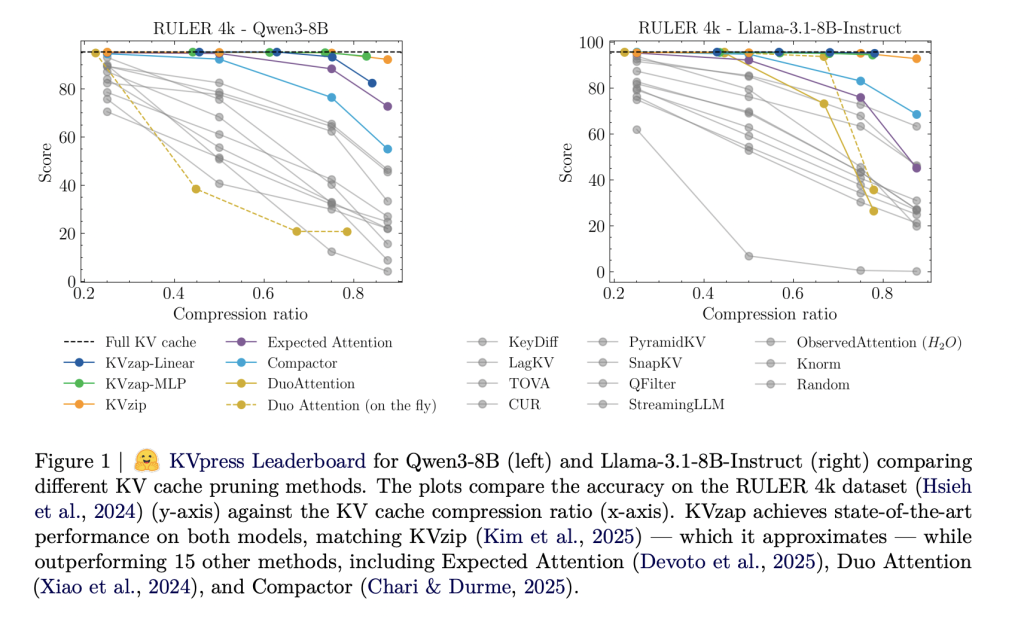
As context lengths move into tens and hundreds of thousands of tokens, the key value cache in transformer decoders becomes a primary deployment bottleneck. The cache stores keys and values for every layer and head with shape (2, L, H, T, D). For a vanilla transformer such as Llama1-65B, the cache reaches about 335 GB

NVIDIA AI Open-Sourced KVzap: A SOTA KV Cache Pruning Method that Delivers near-Lossless 2x-4x Compression Read More »

Google AI Releases MedGemma-1.5: The Latest Update to their Open Medical AI Models for Developers

Google Research has expanded its Health AI Developer Foundations program (HAI-DEF) with the release of MedGemma-1.5. The model is released as open starting points for developers who want to build medical imaging, text and speech systems and then adapt them to local workflows and regulations. https://research.google/blog/next-generation-medical-image-interpretation-with-medgemma-15-and-medical-speech-to-text-with-medasr/ MedGemma 1.5, small multimodal model for real clinical data

Google AI Releases MedGemma-1.5: The Latest Update to their Open Medical AI Models for Developers Read More »

Understanding the Layers of AI Observability in the Age of LLMs

Artificial intelligence (AI) observability refers to the ability to understand, monitor, and evaluate AI systems by tracking their unique metrics—such as token usage, response quality, latency, and model drift. Unlike traditional software, large language models (LLMs) and other generative AI applications are probabilistic in nature. They do not follow fixed, transparent execution paths, which makes

Understanding the Layers of AI Observability in the Age of LLMs Read More »

How This Agentic Memory Research Unifies Long Term and Short Term Memory for LLM Agents

How do you design an LLM agent that decides for itself what to store in long term memory, what to keep in short term context and what to discard, without hand tuned heuristics or extra controllers? Can a single policy learn to manage both memory types through the same action space as text generation? Researchers

How This Agentic Memory Research Unifies Long Term and Short Term Memory for LLM Agents Read More »

TII Abu-Dhabi Released Falcon H1R-7B: A New Reasoning Model Outperforming Others in Math and Coding with only 7B Params with 256k Context Window

Technology Innovation Institute (TII), Abu Dhabi, has released Falcon-H1R-7B, a 7B parameter reasoning specialized model that matches or exceeds many 14B to 47B reasoning models in math, code and general benchmarks, while staying compact and efficient. It builds on Falcon H1 7B Base and is available on Hugging Face under the Falcon-H1R collection. Falcon-H1R-7B is

TII Abu-Dhabi Released Falcon H1R-7B: A New Reasoning Model Outperforming Others in Math and Coding with only 7B Params with 256k Context Window Read More »

NVIDIA AI Released Nemotron Speech ASR: A New Open Source Transcription Model Designed from the Ground Up for Low-Latency Use Cases like Voice Agents

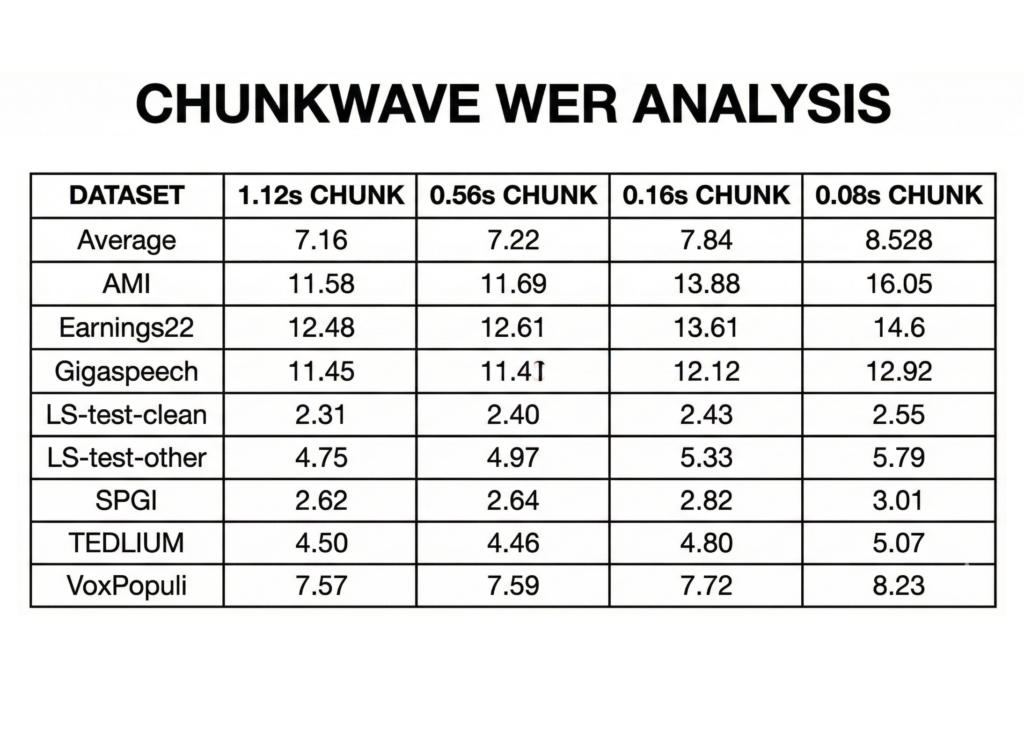
NVIDIA has just released its new streaming English transcription model (Nemotron Speech ASR) built specifically for low latency voice agents and live captioning. The checkpoint nvidia/nemotron-speech-streaming-en-0.6b on Hugging Face combines a cache aware FastConformer encoder with an RNNT decoder, and is tuned for both streaming and batch workloads on modern NVIDIA GPUs. Model design, architecture

NVIDIA AI Released Nemotron Speech ASR: A New Open Source Transcription Model Designed from the Ground Up for Low-Latency Use Cases like Voice Agents Read More »

Liquid AI Releases LFM2.5: A Compact AI Model Family For Real On Device Agents

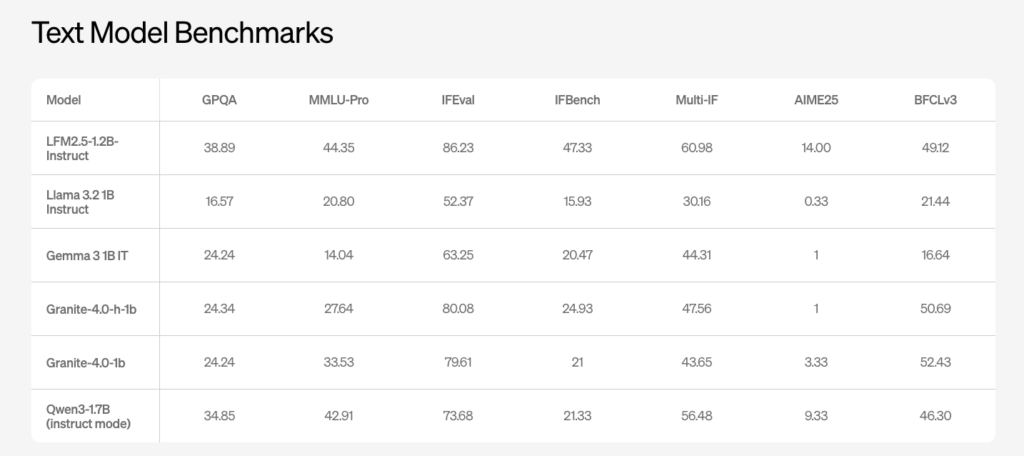
Liquid AI has introduced LFM2.5, a new generation of small foundation models built on the LFM2 architecture and focused at on device and edge deployments. The model family includes LFM2.5-1.2B-Base and LFM2.5-1.2B-Instruct and extends to Japanese, vision language, and audio language variants. It is released as open weights on Hugging Face and exposed through the

Liquid AI Releases LFM2.5: A Compact AI Model Family For Real On Device Agents Read More »

LLM-Pruning Collection: A JAX Based Repo For Structured And Unstructured LLM Compression

Zlab Princeton researchers have released LLM-Pruning Collection, a JAX based repository that consolidates major pruning algorithms for large language models into a single, reproducible framework. It targets one concrete goal, make it easy to compare block level, layer level and weight level pruning methods under a consistent training and evaluation stack on both GPUs and

LLM-Pruning Collection: A JAX Based Repo For Structured And Unstructured LLM Compression Read More »

Tencent Researchers Release Tencent HY-MT1.5: A New Translation Models Featuring 1.8B and 7B Models Designed for Seamless on-Device and Cloud Deployment

Tencent Hunyuan researchers have released HY-MT1.5, a multilingual machine translation family that targets both mobile devices and cloud systems with the same training recipe and metrics. HY-MT1.5 consists of 2 translation models, HY-MT1.5-1.8B and HY-MT1.5-7B, supports mutual translation across 33 languages with 5 ethnic and dialect variations, and is available on GitHub and Hugging Face

Tencent Researchers Release Tencent HY-MT1.5: A New Translation Models Featuring 1.8B and 7B Models Designed for Seamless on-Device and Cloud Deployment Read More »