Editors Pick

Auto Added by WPeMatico

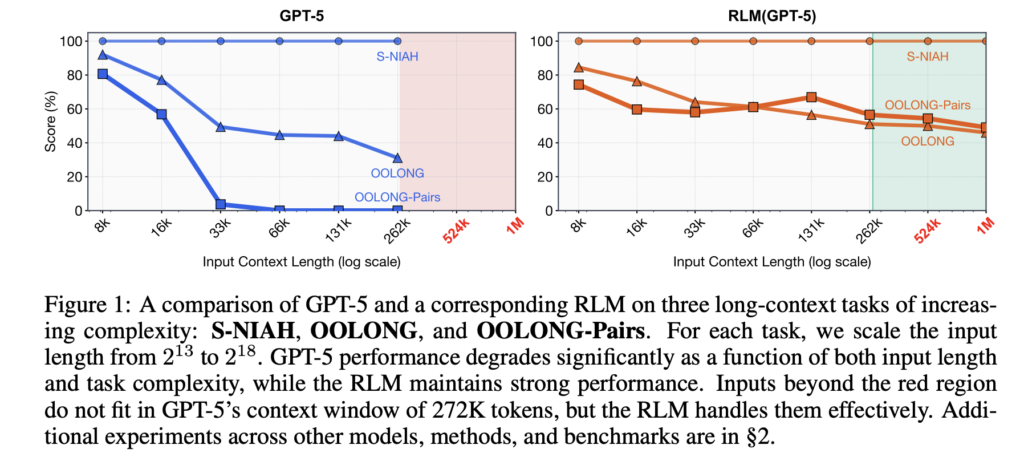
Recursive Language Models (RLMs): From MIT’s Blueprint to Prime Intellect’s RLMEnv for Long Horizon LLM Agents

Recursive Language Models aim to break the usual trade off between context length, accuracy and cost in large language models. Instead of forcing a model to read a giant prompt in one pass, RLMs treat the prompt as an external environment and let the model decide how to inspect it with code, then recursively call […]

Recursive Language Models (RLMs): From MIT’s Blueprint to Prime Intellect’s RLMEnv for Long Horizon LLM Agents Read More »

A Coding Implementation to Build a Self-Testing Agentic AI System Using Strands to Red-Team Tool-Using Agents and Enforce Safety at Runtime

In this tutorial, we build an advanced red-team evaluation harness using Strands Agents to stress-test a tool-using AI system against prompt-injection and tool-misuse attacks. We treat agent safety as a first-class engineering problem by orchestrating multiple agents that generate adversarial prompts, execute them against a guarded target agent, and judge the responses with structured evaluation

A Coding Implementation to Build a Self-Testing Agentic AI System Using Strands to Red-Team Tool-Using Agents and Enforce Safety at Runtime Read More »

How Cloudflare’s tokio-quiche Makes QUIC and HTTP/3 a First Class Citizen in Rust Backends

Cloudflare has open sourced tokio-quiche, an asynchronous QUIC and HTTP/3 Rust library that wraps its battle tested quiche implementation with the Tokio runtime. The library has been refined inside production systems such as Apple iCloud Private Relay, next generation Oxy based proxies and WARP’s MASQUE client, where it handles millions of HTTP/3 requests per second

How Cloudflare’s tokio-quiche Makes QUIC and HTTP/3 a First Class Citizen in Rust Backends Read More »

How to Design Transactional Agentic AI Systems with LangGraph Using Two-Phase Commit, Human Interrupts, and Safe Rollbacks

In this tutorial, we implement an agentic AI pattern using LangGraph that treats reasoning and action as a transactional workflow rather than a single-shot decision. We model a two-phase commit system in which an agent stages reversible changes, validates strict invariants, pauses for human approval via graph interrupts, and commits or rolls back only then.

How to Design Transactional Agentic AI Systems with LangGraph Using Two-Phase Commit, Human Interrupts, and Safe Rollbacks Read More »

Tencent Released Tencent HY-Motion 1.0: A Billion-Parameter Text-to-Motion Model Built on the Diffusion Transformer (DiT) Architecture and Flow Matching

Tencent Hunyuan’s 3D Digital Human team has released HY-Motion 1.0, an open weight text-to-3D human motion generation family that scales Diffusion Transformer based Flow Matching to 1B parameters in the motion domain. The models turn natural language prompts plus an expected duration into 3D human motion clips on a unified SMPL-H skeleton and are available

Tencent Released Tencent HY-Motion 1.0: A Billion-Parameter Text-to-Motion Model Built on the Diffusion Transformer (DiT) Architecture and Flow Matching Read More »

A Coding Implementation of an OpenAI-Assisted Privacy-Preserving Federated Fraud Detection System from Scratch Using Lightweight PyTorch Simulations

In this tutorial, we demonstrate how we simulate a privacy-preserving fraud detection system using Federated Learning without relying on heavyweight frameworks or complex infrastructure. We build a clean, CPU-friendly setup that mimics ten independent banks, each training a local fraud-detection model on its own highly imbalanced transaction data. We coordinate these local updates through a

A Coding Implementation of an OpenAI-Assisted Privacy-Preserving Federated Fraud Detection System from Scratch Using Lightweight PyTorch Simulations Read More »

Alibaba Tongyi Lab Releases MAI-UI: A Foundation GUI Agent Family that Surpasses Gemini 2.5 Pro, Seed1.8 and UI-Tars-2 on AndroidWorld

Alibaba Tongyi Lab have released MAI-UI—a family of foundation GUI agents. It natively integrates MCP tool use, agent user interaction, device–cloud collaboration, and online RL, establishing state-of-the-art results in general GUI grounding and mobile GUI navigation, surpassing Gemini-2.5-Pro, Seed1.8, and UI-Tars-2 on AndroidWorld. The system targets three specific gaps that early GUI agents often ignore,

Alibaba Tongyi Lab Releases MAI-UI: A Foundation GUI Agent Family that Surpasses Gemini 2.5 Pro, Seed1.8 and UI-Tars-2 on AndroidWorld Read More »

Meet LLMRouter: An Intelligent Routing System designed to Optimize LLM Inference by Dynamically Selecting the most Suitable Model for Each Query

LLMRouter is an open source routing library from the U Lab at the University of Illinois Urbana Champaign that treats model selection as a first class system problem. It sits between applications and a pool of LLMs and chooses a model for each query based on task complexity, quality targets, and cost, all exposed through

Meet LLMRouter: An Intelligent Routing System designed to Optimize LLM Inference by Dynamically Selecting the most Suitable Model for Each Query Read More »

How to Build a Robust Multi-Agent Pipeline Using CAMEL with Planning, Web-Augmented Reasoning, Critique, and Persistent Memory

In this tutorial, we build an advanced, end-to-end multi-agent research workflow using the CAMEL framework. We design a coordinated society of agents, Planner, Researcher, Writer, Critic, and Finalizer, that collaboratively transform a high-level topic into a polished, evidence-grounded research brief. We securely integrate the OpenAI API, orchestrate agent interactions programmatically, and add lightweight persistent memory

How to Build a Robust Multi-Agent Pipeline Using CAMEL with Planning, Web-Augmented Reasoning, Critique, and Persistent Memory Read More »

How to Build Contract-First Agentic Decision Systems with PydanticAI for Risk-Aware, Policy-Compliant Enterprise AI

In this tutorial, we demonstrate how to design a contract-first agentic decision system using PydanticAI, treating structured schemas as non-negotiable governance contracts rather than optional output formats. We show how we define a strict decision model that encodes policy compliance, risk assessment, confidence calibration, and actionable next steps directly into the agent’s output schema. By

How to Build Contract-First Agentic Decision Systems with PydanticAI for Risk-Aware, Policy-Compliant Enterprise AI Read More »