Editors Pick

Auto Added by WPeMatico

What are Context Graphs?

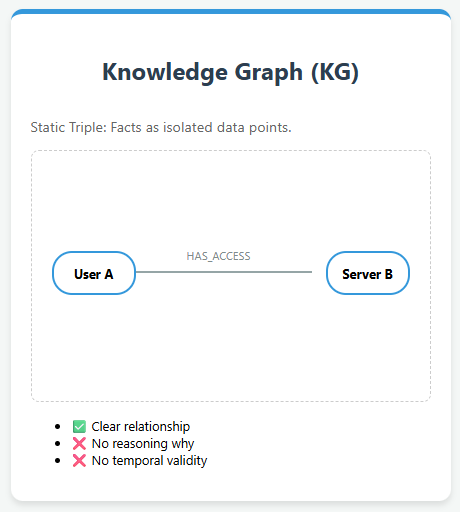
Knowledge Graphs and their limitations With the rapid growth of AI applications, Knowledge Graphs (KGs) have emerged as a foundational structure for representing knowledge in a machine-readable form. They organize information as triples—a head entity, a relation, and a tail entity—forming a graph-like structure where entities are nodes and relationships are edges. This representation allows […]

What are Context Graphs? Read More »

✅

A Coding Guide to Anemoi-Style Semi-Centralized Agentic Systems Using Peer-to-Peer Critic Loops in LangGraph

In this tutorial, we demonstrate how a semi-centralized Anemoi-style multi-agent system works by letting two peer agents negotiate directly without a manager or supervisor. We show how a Drafter and a Critic iteratively refine an output through peer-to-peer feedback, reducing coordination overhead while preserving quality. We implement this pattern end-to-end in Colab using LangGraph, focusing

A Coding Guide to Anemoi-Style Semi-Centralized Agentic Systems Using Peer-to-Peer Critic Loops in LangGraph Read More »

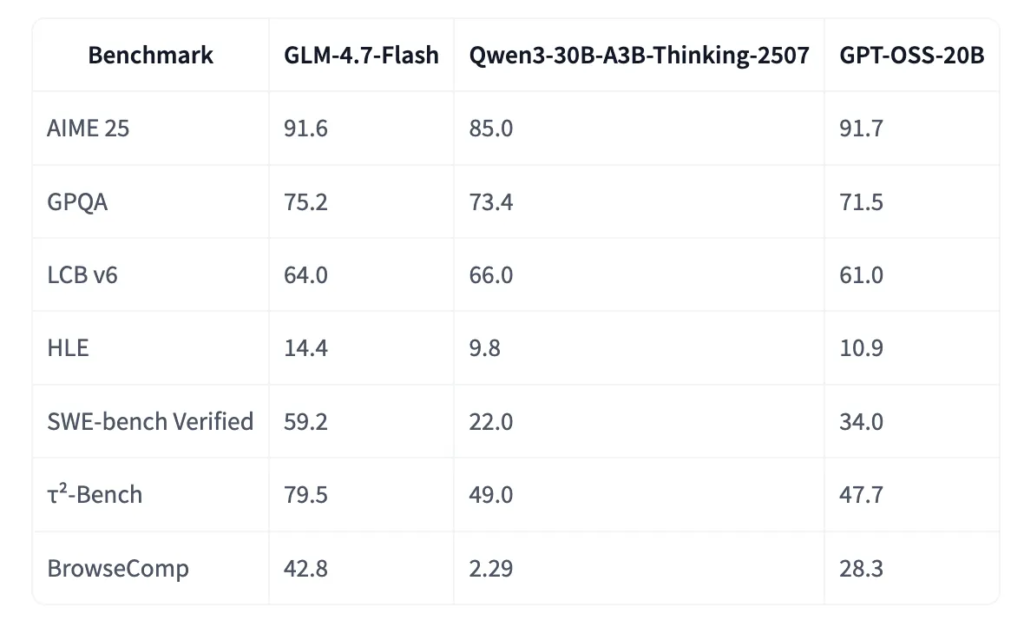
Zhipu AI Releases GLM-4.7-Flash: A 30B-A3B MoE Model for Efficient Local Coding and Agents

GLM-4.7-Flash is a new member of the GLM 4.7 family and targets developers who want strong coding and reasoning performance in a model that is practical to run locally. Zhipu AI (Z.ai) describes GLM-4.7-Flash as a 30B-A3B MoE model and presents it as the strongest model in the 30B class, designed for lightweight deployment where

Zhipu AI Releases GLM-4.7-Flash: A 30B-A3B MoE Model for Efficient Local Coding and Agents Read More »

How to Design a Fully Streaming Voice Agent with End-to-End Latency Budgets, Incremental ASR, LLM Streaming, and Real-Time TTS

In this tutorial, we build an end-to-end streaming voice agent that mirrors how modern low-latency conversational systems operate in real time. We simulate the complete pipeline, from chunked audio input and streaming speech recognition to incremental language model reasoning and streamed text-to-speech output, while explicitly tracking latency at every stage. By working with strict latency

How to Design a Fully Streaming Voice Agent with End-to-End Latency Budgets, Incremental ASR, LLM Streaming, and Real-Time TTS Read More »

Microsoft Research Releases OptiMind: A 20B Parameter Model that Turns Natural Language into Solver Ready Optimization Models

Microsoft Research has released OptiMind, an AI based system that converts natural language descriptions of complex decision problems into mathematical formulations that optimization solvers can execute. It targets a long standing bottleneck in operations research, where translating business intent into mixed integer linear programs usually needs expert modelers and days of work. What OptiMind Is

Microsoft Research Releases OptiMind: A 20B Parameter Model that Turns Natural Language into Solver Ready Optimization Models Read More »

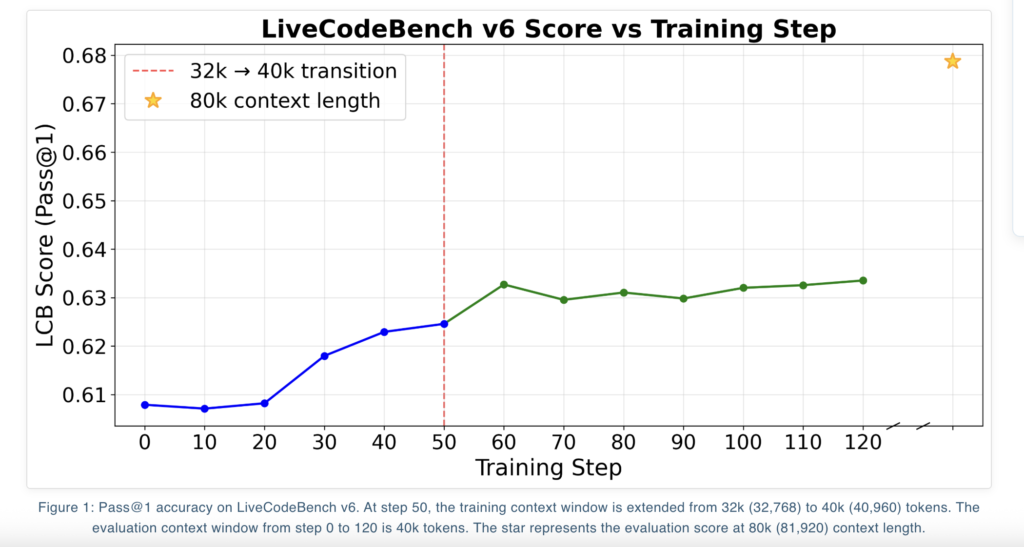
Nous Research Releases NousCoder-14B: A Competitive Olympiad Programming Model Post-Trained on Qwen3-14B via Reinforcement Learning

Nous Research has introduced NousCoder-14B, a competitive olympiad programming model that is post trained on Qwen3-14B using reinforcement learning (RL) with verifiable rewards. On the LiveCodeBench v6 benchmark, which covers problems from 08/01/2024 to 05/01/2025, the model reaches a Pass@1 accuracy of 67.87 percent. This is 7.08 percentage points higher than the Qwen3-14B baseline of

Nous Research Releases NousCoder-14B: A Competitive Olympiad Programming Model Post-Trained on Qwen3-14B via Reinforcement Learning Read More »

A Coding Guide to Understanding How Retries Trigger Failure Cascades in RPC and Event-Driven Architectures

In this tutorial, we build a hands-on comparison between a synchronous RPC-based system and an asynchronous event-driven architecture to understand how real distributed systems behave under load and failure. We simulate downstream services with variable latency, overload conditions, and transient errors, and then drive both architectures using bursty traffic patterns. By observing metrics such as

A Coding Guide to Understanding How Retries Trigger Failure Cascades in RPC and Event-Driven Architectures Read More »

Vercel Releases Agent Skills: A Package Manager For AI Coding Agents With 10 Years of React and Next.js Optimisation Rules

Vercel has released agent-skills, a collection of skills that turns best practice playbooks into reusable skills for AI coding agents. The project follows the Agent Skills specification and focuses first on React and Next.js performance, web design review, and claimable deployments on Vercel. Skills are installed with a command that feels similar to npm, and

Vercel Releases Agent Skills: A Package Manager For AI Coding Agents With 10 Years of React and Next.js Optimisation Rules Read More »

NVIDIA Releases PersonaPlex-7B-v1: A Real-Time Speech-to-Speech Model Designed for Natural and Full-Duplex Conversations

NVIDIA Researchers released PersonaPlex-7B-v1, a full duplex speech to speech conversational model that targets natural voice interactions with precise persona control. From ASR→LLM→TTS to a single full duplex model Conventional voice assistants usually run a cascade. Automatic Speech Recognition (ASR) converts speech to text, a language model generates a text answer, and Text to Speech

NVIDIA Releases PersonaPlex-7B-v1: A Real-Time Speech-to-Speech Model Designed for Natural and Full-Duplex Conversations Read More »

How to Build a Self-Evaluating Agentic AI System with LlamaIndex and OpenAI Using Retrieval, Tool Use, and Automated Quality Checks

In this tutorial, we build an advanced agentic AI workflow using LlamaIndex and OpenAI models. We focus on designing a reliable retrieval-augmented generation (RAG) agent that can reason over evidence, use tools deliberately, and evaluate its own outputs for quality. By structuring the system around retrieval, answer synthesis, and self-evaluation, we demonstrate how agentic patterns

How to Build a Self-Evaluating Agentic AI System with LlamaIndex and OpenAI Using Retrieval, Tool Use, and Automated Quality Checks Read More »