
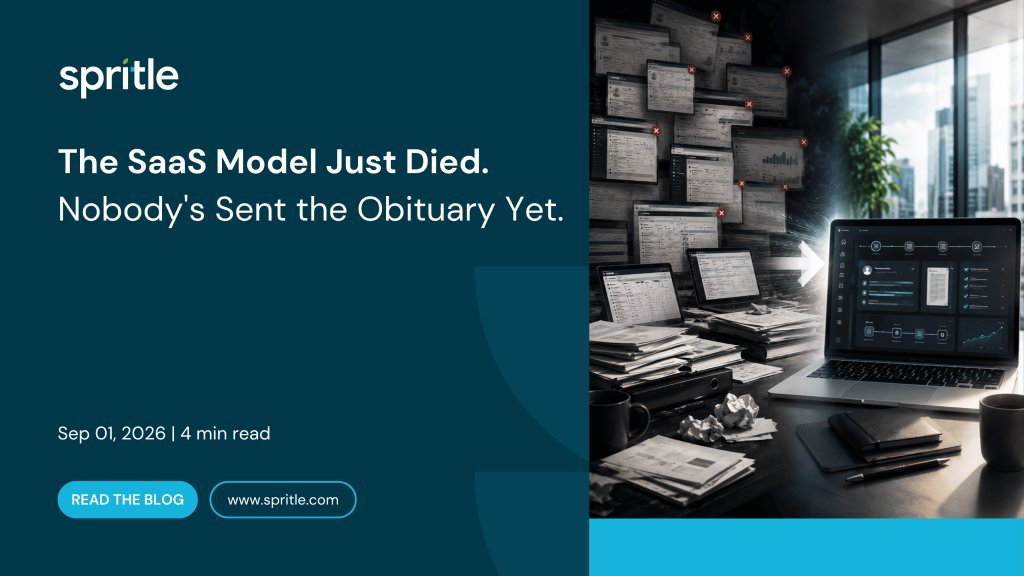
For twenty years, every software company sold you the same deal: you don’t own it, you rent it. Multi-tenant architecture, a generic feature set built for the average customer, and a recurring invoice that lands whether you used the product or not.
That deal made sense for exactly one reason building custom software was expensive, slow, and required a team you probably couldn’t afford. So renting a slightly wrong tool beat building the right one. Every SaaS company on the market is a monument to that trade-off.
The trade-off just disappeared.
The Bet Every SaaS Vendor Is Making
Claude can now build a working application not a demo, not a prototype, an actual internal tool around exactly how your business operates. Not a generic CRM with your logo bolted on. Not a project tool with 40 features you don’t use and one you desperately need but can’t get road mapped. Something built for you, that you own outright, with nobody else’s tenant sitting on the same infrastructure.
That changes the math completely. The entire justification for per-seat, multi-tenant SaaS was: custom is too expensive, so rent the compromise. When custom stops being expensive, the compromise stops being worth paying for.
Every SaaS company still selling annual contracts is making a quiet bet that you won’t notice this shift for another few years. That bet has an expiration date, and it’s a lot closer than their pricing page suggests.
What This Actually Looks Like
This isn’t theoretical. We’ve already built internal tools this way purpose-built applications, owned outright, with no recurring license fee attached to them. Work that would have meant a six-figure SaaS contract, a lengthy vendor evaluation, and a multi-year lock-in done and shipped in weeks, tailored to the exact workflow it needed to serve.
No tenant architecture deciding what you’re allowed to customize. No vendor roadmap deciding which feature ships next year based on what’s good for their other 10,000 customers. No seat count creeping up every renewal cycle regardless of whether headcount actually grew.
The tool exists because your business needed it not because a vendor decided enough companies like yours needed the same generic version of it.
Why This Isn’t Just Cost Savings
The obvious argument here is cost and yes, a monthly SaaS bill disappearing matters. But that’s the smaller point.
The bigger shift is control. A rented tool means someone else decides your roadmap. Every feature request goes into a backlog you don’t control, prioritized against every other customer’s requests, shipped on their timeline, not yours. Owned software means the roadmap is whatever your business needs it to be, whenever it needs it.
That’s the part most companies haven’t priced in yet. It’s not “we saved money by not renting.” It’s “we stopped needing permission from a vendor to change how we work.”
The Companies That Will Feel This First
Every industry with heavy per-seat software spend sales tooling, internal operations platforms, compliance and approval workflows, vendor and procurement systems is sitting on exactly the kind of software that was always a compromise. Generic enough to sell to everyone, specific enough to be mildly annoying to everyone using it.
Those are the first tools that get replaced. Not because AI is trendy, but because the underlying economics that justified renting instead of building have quietly collapsed.
The Question Worth Asking This Quarter
If you could own your core software stack instead of renting it built exactly for how you work, with no per-seat pricing and no vendor roadmap deciding your next feature why are you still paying a monthly invoice for the compromise version?
That’s not a rhetorical question. It’s the first budget-line conversation every leadership team should be having right now, before the vendors currently selling you the rented version quietly reprice around the fact that you don’t need it anymore.
The post The SaaS Model Just Died. Nobody’s Sent the Obituary Yet. appeared first on Spritle software.