
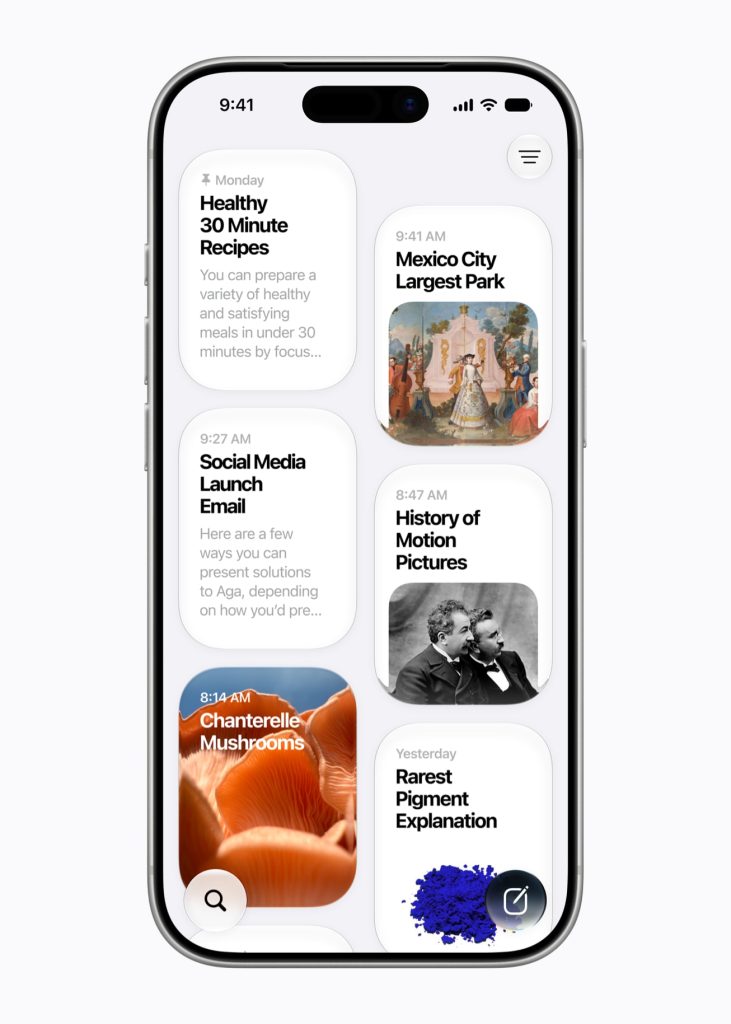
“We’ve all had that moment where you search for something you know is there, but it just won’t show up.” Apple’s Stacey Ford, vice president of OS Program Management, was talking about Spotlight at WWDC 2026, but she could have been describing the company’s AI ambitions.
On Monday at Apple Park, the thing that wouldn’t show up finally did: Siri AI, the assistant rebuilt from scratch after years of underdelivery. The new Siri sustains genuine multi-turn conversation, draws on what’s in a user’s mail, messages and photo library, fields live queries from the web, and carries out tasks across applications.
Apple is giving the assistant its own dedicated app alongside system-wide integration, with iPhones showing Siri activity in the Dynamic Island as requests run. That is the version Apple presented on stage. The version worth examining sits in the footnotes: who is actually powering Siri AI, and who gets to use it.
Google under the hood
Apple’s most consequential disclosure was a quiet one. The company said it collaborated with Google and the Gemini family of models to develop the next generation of Apple Foundation Models that power its Apple Intelligence experiences, the architecture on which Siri AI runs. After two years of insisting its in-house models would close the gap, Apple has answered the question of how it caught up: it didn’t, alone.
The company spent considerable keynote time pre-empting the obvious objection. “We believe privacy in AI is non-negotiable,” senior vice president Craig Federighi said, adding that “data is only used to execute your request, and outside experts can continue to verify this promise at any time.”
The privacy architecture may well hold. The strategic picture is harder to soften. Apple now depends on its largest search rival for the intelligence layer of its own assistant; at the same time, Google is shipping Gemini across Android, Workspace and its own hardware. Whatever the terms of the arrangement, Apple has conceded that the frontier model race is one it could not win on its own timeline, and that admission carries weight far beyond Cupertino.
If the world’s most valuable hardware company, with its silicon advantage and effectively unlimited budget, chose to license rather than build, the sovereign AI ambitions being drafted in capitals around the world deserve a more honest read of what “building our own model” actually costs.
The Siri AI rollout map tells its own story
Then there is the question of who gets Siri AI at all. The initial beta, due later this year, supports English only. China is off the map entirely, with Apple citing unresolved regulatory requirements, and EU users won’t see the assistant on iPhone or iPad at launch. Apple has said a path forward is being worked on; in the meantime, its updated press release confirms EU availability is limited to macOS 27 and visionOS 27 at first.
Read that map from Asia, and the gaps are glaring. China, Apple’s most contested market, is excluded outright, while domestic assistants from Chinese vendors ship without restriction. An English-only beta leaves Mandarin, Japanese, Korean, Bahasa and Hindi speakers, which is to say most iPhone users in the world’s fastest-growing smartphone markets, on the old Siri for an unspecified period.
Apple gave no timeline for additional languages. The company that built its reputation on shipping the same product to everyone, everywhere, on the same day, has shipped its most important software in years to English speakers only, minus China entirely and minus iPhone users in the EU.”
Catching up, by Apple’s own staging
The keynote’s structure was telling. TechCrunch noted that Apple opened by repairing what was broken before showing off what was new, and positioned the upgraded Siri as one entry on a lengthy list rather than the headline act.
It was also a transition moment. This was Tim Cook’s final WWDC as CEO before John Ternus, Apple’s senior vice president of hardware engineering, takes over on September 1. “I truly believe the best is still ahead at Apple,” Cook said in his closing remarks.
Perhaps. Siri AI is a real product at last, and the demos suggest Apple’s integration instincts remain intact. But Ternus inherits an assistant that thinks with Google’s models and a rollout plan that asks most of the planet to wait. The catching up, it turns out, has only just started.
(Photo by Apple)
See also: Apple plans big Siri update with help from Google AI
Want to learn more about AI and big data from industry leaders? Check out AI & Big Data Expo taking place in Amsterdam, California, and London. The comprehensive event is part of TechEx and is co-located with other leading technology events, click here for more information.
AI News is powered by TechForge Media. Explore other upcoming enterprise technology events and webinars here.
The post Siri AI arrives with Google inside, and much of the world is locked out appeared first on AI News.