
Monashees, one of Latin America’s oldest and most influential VC firms, believes the next phase of the region’s startup ecosystem requires a permanent Silicon Valley presence. The firm, which was founded more than two decades ago in São Paulo, last year opened a San Francisco office to connect LatAm’s startup entrepreneurs with the money and AI research coursing through the Bay Area.
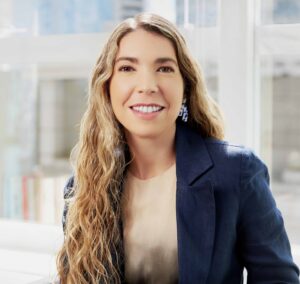
We spoke with Fabiola Quinzaños to talk through the firm’s evolution and how it is meeting this AI moment. She is a partner at the firm who relocated to Silicon Valley from Mexico City.
When the firm was founded in 2005, Brazil didn’t yet have a startup ecosystem — there was no network of founders, no LPs backing VC firms based there, and no follow-on investors. That has changed drastically in the couple of decades since, with the country emerging as LatAm’s startup powerhouse and a place where U.S. investors and tech giants are increasingly courting business.
Brazil is an exceptionally digitally savvy market. It is the highest-volume market for Uber and the third-largest by visitor share for ChatGPT. Its real-time payment rail Pix, created by the Central Bank of Brazil, was rolled out in 2020 and is used by more than 90% of adults in the country.
Latin America has also become an important market for U.S. AI labs and technology companies. Monashees recently announced a partnership with Google called the Gama Fund in which the two companies co-invest up to $2 million in AI-native and deep tech pre-seed or seed-stage startups in Brazil. Its first summit is planned for later this year in San Francisco, where it will gather Latin American startup founders building businesses with AI.
Monashees makes around eight to 10 new investments per year and is finalizing the deployment of its $370 million fund into roughly 35 companies.
The firm opened an office in Mexico City in 2022 and in September 2025 set up an office in San Francisco.
The interview has been edited for brevity and clarity.
Gené Teare: To set this up, tell me about Monashees.
Fabiola Quinzaños: Monashees is the pioneer of venture capital in Latin America. It started 20 years ago, in 2005, with the premise that what had happened in Silicon Valley with tech could also happen in LatAm — that many of the structural problems could be solved with tech.
Eric Acher and Fabio Igel, Monashees’ co-founders, were crazy enough to believe this could happen, so that’s when they started Monashees. Just to give you a little context, back in the day there was nothing. It really took time for this flywheel to get started, because if you don’t have funding, you don’t have great talent.
Finally, after five years, they managed to crack that. In 2010, you started to have the first wave of tech companies in the region, and Monashees started positioning Brazil on the global tech map.
As a second phase, the team realized that what was happening in the Brazilian ecosystem was also starting to happen in other countries in the region. Great teams were starting to build great companies. That’s when Monashees decided to expand across Latin America and back these teams. That’s when we led Rappi’s seed round, one of the flagship companies of Latin America.
The third wave, which is what we’re focused on right now, is Global LatAm: backing Latin American founders who are building global businesses, regardless of whether they are building in Latin America or globally.
That has also been the rationale for opening an office in San Francisco. In the context of AI, you have many Latin American founders starting businesses from here because you have to be close to the labs and the talent.
We’re early-stage investors. We invest at pre-seed, seed and Series A. Seed and Series A are our sweet spot, and we are lead investors. We’re also generalists. We’re not sector-specific, we’re mostly sector-agnostic.
I see this trend when I talk to a lot of European VCs with earlier-stage investors, establishing a U.S. presence. It seems fairly recent, and it seems to be driven by this AI wave. Do you think it’s the VCs coming here and the founders following, or are the founders coming first and the VCs realizing they need more of a presence here?
Quinzaños: I think initially it was mostly founders. Now, it’s a little bit of both; they’re feeding each other.
The reason we started the office in San Francisco is that the pace at which AI evolves is unseen, even compared with other technology paradigms in the past. If you’re not here, it’s very difficult to keep pace and stay up to speed with where the AI frontier is going. You even have a gap with Wall Street, so imagine the gap with Latin America.
If you want to build an AI-native company as a Latin American founder, part of that is coming to San Francisco and Silicon Valley. San Francisco is now the magnet for all of this. It’s highly dense and concentrated. You have to be here to absorb the tools and understand what other people are doing.
I also think it’s super important because founders realize that Silicon Valley is the champions league. In Latin America, you do have great talent, but you don’t know what great looks like if you’ve never worked here.
The reason we opened an office here is to bridge that gap: to help founders be here, see what is happening at the frontier, and understand what the best companies are doing so they can replicate that back in LatAm.
The talent in the region is now sophisticated enough. It has been a 20-year process to get to a point where you have great, ambitious founders who believe they can build global businesses.
You already have success stories like Vercel from Guillermo Rauch or Kalshi from Luana Lopes Lara. Founders realize they can build globally.
In the context of AI, many of these global companies have to be based here because you have access to AI talent, but also to funding. Being close to all the Silicon Valley funds is also crucial for them.
I do think several founders are coming here to build, but that also creates some issues. One important thing to note is that many of these founders are building for the Latin American market, where your revenue is in Brazilian reais or Mexican pesos. In terms of headcount, you need to be very careful that you don’t have a U.S. cost basis when your revenue is in Brazilian reais or Mexican pesos.
These very early-stage startups also cannot compete with the big labs here that are paying a lot of money for talent. Right now in San Francisco, finding AI talent is really difficult and it’s very expensive.
I think it’s more about coming here, learning and bringing back the best practices. That’s where the real arbitrage opportunity comes from. You have amazing talent in LatAm, and you can teach them. Now, in the context of AI, you have much better ways to do that and you can operate with a smaller headcount.
That’s the rationale for founders coming here and for us being here as a bridge. We help our portfolio companies stay close to AI innovation, but we also get access to Latin American founders who are building from the U.S.
We hired a researcher for the Monashees team. Andrés [Campero] has a Ph.D. from MIT in AI. He’s one of the disciples of Josh Tenenbaum, who is a very renowned researcher. The rationale for having Andrés, who is Mexican, on the team is to help us connect with the research diaspora here in San Francisco. It’s very different to talk about business than it is to talk to researchers.
This is important because most researchers from Latin America don’t stay in Latin America. They come to the U.S. and work at the different universities here. It’s important for us to be connected to where most of the innovation is happening. Andrés also helps us identify the best companies emerging in the region from a technology standpoint.
Of those, how many are coming to the U.S. at the earlier stages? What proportion do you expect to come here?
Quinzaños: Some of the companies we’re seeing start in LatAm and then expand to the U.S.
We have a portfolio company called Tractian. It’s AI-native, and it develops preventive-maintenance software. The company started in Brazil.
Its customers were global businesses, and those customers started pulling the company into the U.S. Its product was much better than what was available here. The company is now headquartered in Atlanta, so you could say it’s a U.S. company now.
Most of its revenue comes from the U.S. I think examples like that — companies born in LatAm that expand globally — will tend to be around 30% of the portfolio.
Companies we invest in from the U.S., where most of the revenue will be U.S.-based, will probably be around 20%, because we continue to be a LatAm-focused fund. But we’re also going to see more LatAm-born companies coming here.
You mentioned the focus on Latin America, and talent is obviously very difficult to find here in the U.S. right now. For the companies that are based here, do you see them setting up offices in LatAm to attract talent? Are most of them using a hybrid model, or are some completely U.S.-based?
Quinzaños: It depends on the stage they’re at. Later-stage companies — think Series C or Series D — tend to have most of their technology teams in Brazil, Argentina or elsewhere in LatAm.
Another example is Music AI. It’s headquartered in Salt Lake City, but most of its technology team is in Brazil, in a smaller city called João Pessoa.
The company is building very sophisticated AI infrastructure. It was able to do that because it was very good at hiring a senior team that could teach and transfer knowledge to the local team.
We’re seeing more of that. You start with senior people, senior researchers or senior data scientists in the U.S., while much of the junior team is in LatAm.
Now, with AI, you can have fewer junior people. But you also have talent in Latin America that is strong enough to act as the senior engineers.
What are the standout companies in the Monashees portfolio that you would highlight?
Quinzaños: I’ve shared a couple. One is Tractian, the preventive-maintenance software company. The company has been growing. It’s a success story for us because it started in Brazil, and it has proprietary technology. It combines software and hardware, and it owns the patents for its hardware.
Today, it is really conquering the U.S. market. It’s a perfect example of an AI-native company born in Brazil, where the AI lab lives in Brazil, but the company is competing at the global level.
We also have Music.AI, which is in a fun industry. If you’re an amateur musician, its platform allows you to play whatever song you want and play with the instruments in the background. You can play the drums, the flute or whatever you want while having the other instruments behind you. The company has both a B2B and a B2C business. It has more than 50 million users or downloads and is growing very fast. It won iPad App of the Year two years ago. It’s another success story. It is based in Salt Lake City, but has its technology team in Brazil.
We recently invested in a company called Shiva. It’s an accelerator, so it’s similar in some ways to what we’re doing with Google. Shiva is trying to capture this new wave of entrepreneurs who might not have pursued entrepreneurship if Shiva and AI didn’t exist. Lucas [Marques], the founder, is a second-time founder. He was one of the early co-founders of one of our portfolio companies, which later went public. You can think of Shiva as the YC of Latin America in the sense that it is very community-driven. It is also trying to capture these solopreneurs: companies started by just one person that can go global from day one and have revenue from day one.
I think it’s a super-interesting and very different investment. It speaks to how we’re always trying to keep pace with how the ecosystem is going to evolve, because this ecosystem is also likely to be disrupted by AI.
I can also tell you about some of the companies in the portfolio that are focused specifically on Latin America.
We have a company called Flash. It’s an HR platform. It’s very specific to the Brazilian ecosystem because regulation requires employers to provide certain benefits to employees. Flash managed to build a technology product around that, and now the company is expanding into a full HR platform. It’s one of the flagships of Fund IX. It’s growing very fast, and it has become a flagship company in Latin America. Fintech is one of the largest and most important markets in Latin America.
Another company was actually the first investment I made at Monashees. It’s a payment-orchestration platform called Yuno. The company is at the Series B stage. We invested at seed back in the day. It gives an e-commerce company a single integration through which it can manage all of its payment methods. If you’re a multinational company — think about Uber — and you want to enter Brazil, Colombia and Peru, you have to deal with so many payment methods. With Yuno, you have just a single integration. In the context of AI, Yuno has developed a very strong agentic platform that helps with fraud and conversion. Fraud in LatAm is a big issue, and the platform helps companies manage fraud and increase conversion across these marketplaces.
Related Crunchbase queries: